
Abergavenny Steeple Chase: ‘Taking the Wall’ : Pontiff, General, Thurgarton, Dearest Mae, Ploughboy — History & Facts
Can beauty exist without sorrow? The scene captured in Abergavenny Steeple Chase: ‘Taking the Wall’ stirs a poignant reminder that in the pursuit of grace, violence often lurks nearby. Look closely at the center, where a powerful horse leaps over a barrier, muscles taut with both athleticism and tension. The jockey, a figure of determination, grips the reins tightly, embodying the precarious balance between triumph and failure. Surrounding them, the blurred crowds of onlookers mirror the excitement and apprehension, their vivid clothing contrasting with the earthy tones of the landscape, and the chaotic energy is underscored by a stormy sky that threatens rain. The juxtaposition of motion and stillness creates an unsettling atmosphere, as the victors and potential casualties coexist within a single frame.
Each detail, from the strained expression of the horse to the distant flinches of spectators, hints at the underlying violence intrinsic to competition. The artwork presents a celebration of skill and speed, yet it also serves as a reminder that beauty can be wrought from the very edge of danger. Charles Denton painted this piece in 1853, during a period when the steeplechase was gaining popularity in England, reflecting a society enamored with sporting culture. Denton himself was a notable figure in the art world, often drawing from the vibrant life around him, and at this time, he was exploring the interplay of motion and emotion in his work.
More Artworks by Charles Denton
Browse all →
Abergavenny Steeple Chase: ‘Taking the Brook’ : Dearest Mae, The Nun, Pontiff, General, Physician, Thurgarton, Ploughboy
Charles Denton
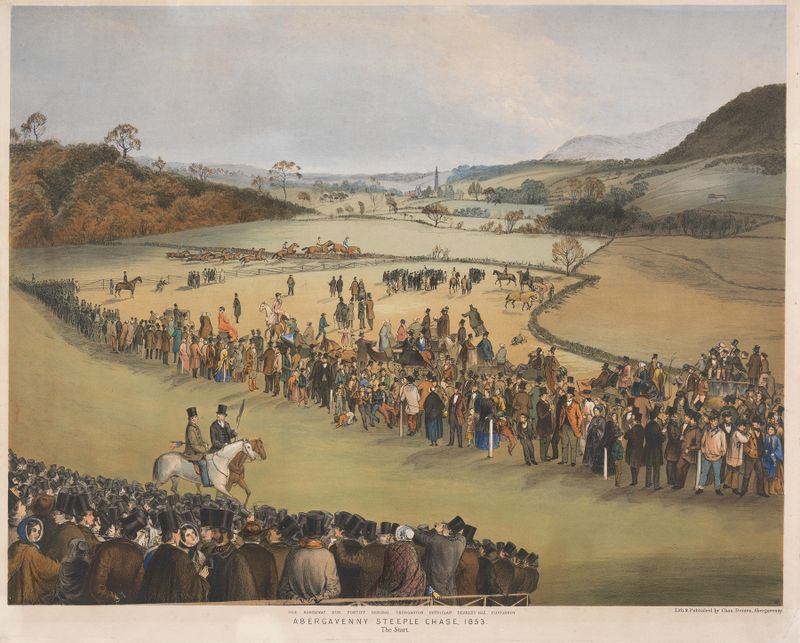
Abergavenny Steeple Chase: The Start : Doe, Harkaway, Nun, Pontiff, General, Thurgarton, Physician, Dearest Mae, Ploughboy
Charles Denton
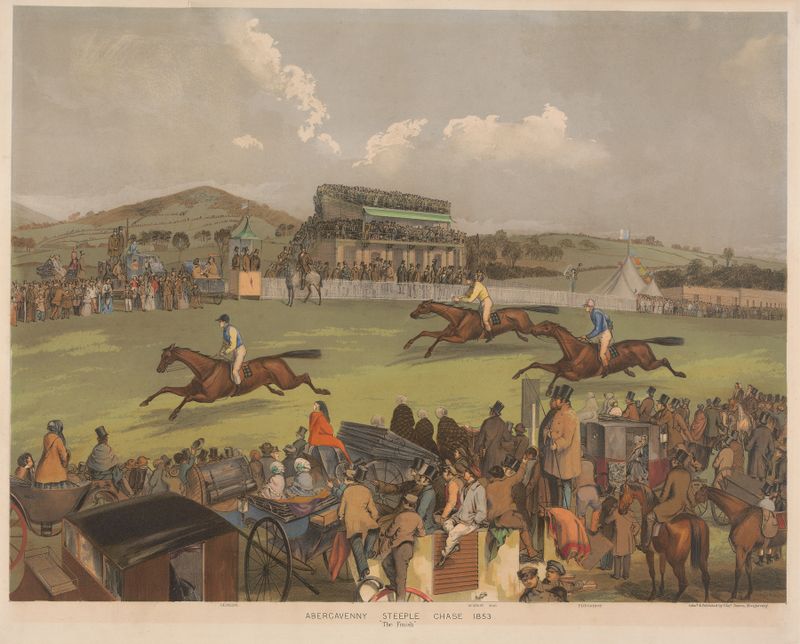
‘The Finish’ : (1) General (2) Dearest Mae (3) Ploughboy
Charles Denton





