
Abschied des Julius Sabinus von seiner Familie im Kerker — History & Facts
In Abschied des Julius Sabinus von seiner Familie im Kerker, the fragility of human emotion is laid bare, revealing the delicate interplay between love and despair. Look to the center of the canvas, where a somber figure, Julius Sabinus, stands locked in a moment of farewell. His weary face, softly illuminated by the dim light filtering through the prison bars, draws the eye first. Notice the way his hand reaches out, trembling, towards his family—a gesture filled with desperation and longing.
The muted palette of browns and grays underscores the oppressive atmosphere, contrasting with the flickers of warmth in the family members’ expressions, hinting at the love that persists, even in the depths of anguish. The emotional tension is palpable—the yawning distance between the father and his family amplifies the sense of loss. Look closely at the tear glistening on the cheek of the woman, her expression a blend of sorrow and resilience. The children, holding onto her, embody the innocence threatened by impending separation.
Each figure captures a poignant blend of strength and fragility, reflecting the complexity of their bond in this moment of crisis. Josef Platzer painted this work in 1786, during a period marked by dramatic shifts in both his personal life and the broader art world. Living in Vienna, he was influenced by neoclassical ideals, yet he infused his work with a strong emotional undercurrent. This painting captures a tumultuous era, navigating the fine line between the suffering of humanity and the hope that persists in the face of despair, a theme that resonates throughout his oeuvre.
More Artworks by Josef Platzer
Browse all →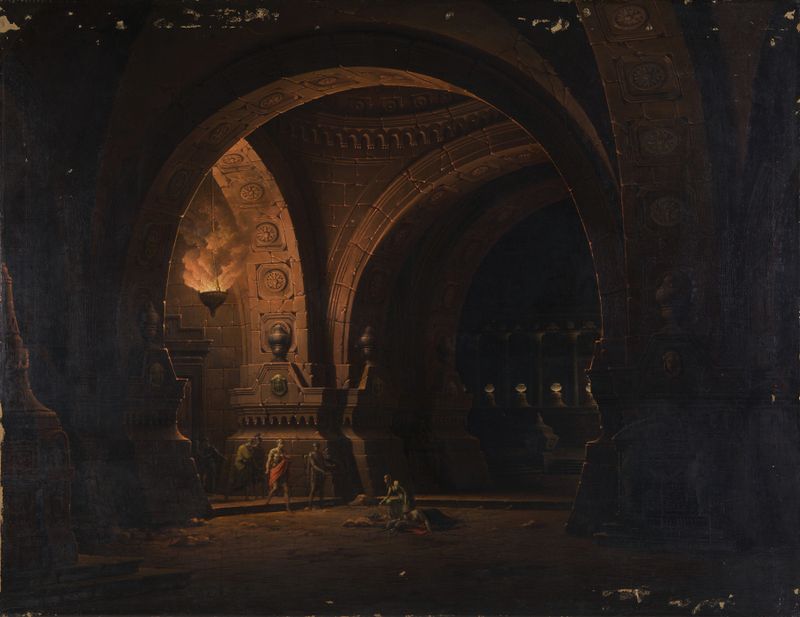
More Historical Art
Browse all →
The Night Watch Militia Company of District II under the Command of Captain Frans Banninck Cocq
Rembrandt van Rijn

Lincoln Memorial
Henry Bacon

The Third of May 1808
Francisco de Goya

Isaac and Rebecca, Known as ‘The Jewish Bride’
Rembrandt van Rijn

The Charge of the Mamelukes (1814)
Francisco de Goya

De vier ruiters van de apocalyps
Albrecht Dürer