
Caesar Octavianus findet Kleopatra an der Leiche des Antonius — History & Facts
In a world adorned with riches, it is the weight of longing that often etches the deepest scars upon the soul. Focus first on the contrasting expressions of the figures; the radiant beauty of Cleopatra juxtaposed with the somber resignation of Octavian. Notice how the artist employs warm, golden hues that envelop Cleopatra, capturing her tragic elegance. Meanwhile, the cooler tones surrounding Octavian hint at his inner turmoil.
The intricate drapery of fabric, falling softly over both characters, becomes a silent witness to their intertwined fates, drawing the viewer's gaze toward the tension of their final meeting. Delve further into the composition, where the delicate play of light reveals hidden emotions beneath the surface. The languid posture of Cleopatra speaks of a profound surrender, while Octavian’s tight grip on his sword conveys an internal conflict between duty and desire. Each detail—the opulent jewelry, the blood-stained ground—tells a story of ambition cut short, illuminating the bittersweet nature of victory, marked by loss and regret. Created in 1802, this painting emerged during a time when Platzer was influenced by the neoclassical movement, which sought to reflect historical narratives with refined elegance.
Living in Vienna, he was part of a vibrant artistic community that celebrated both myth and history, striving to evoke emotional resonance through a classical lens. In Caesar Octavianus findet Kleopatra an der Leiche des Antonius, Platzer captured not only a moment in time but also the timeless struggle of love overshadowed by fate.
More Artworks by Josef Platzer
Browse all →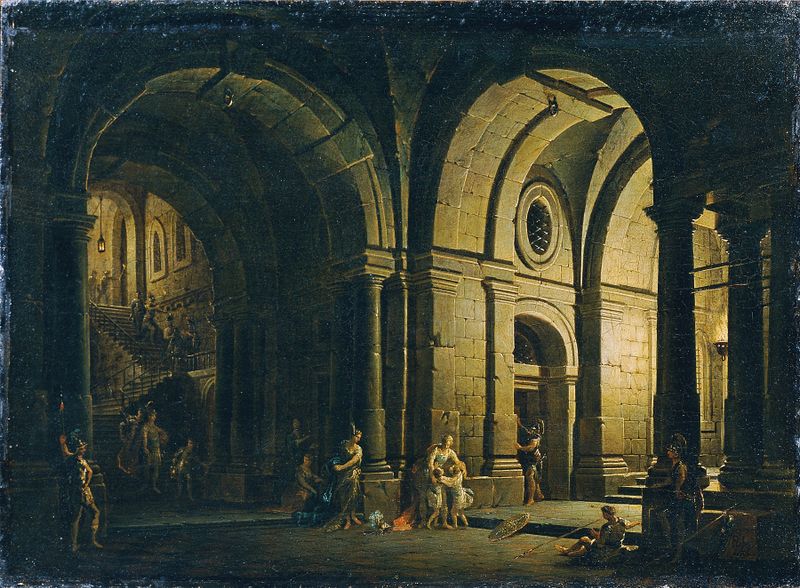
More Historical Art
Browse all →
The Night Watch Militia Company of District II under the Command of Captain Frans Banninck Cocq
Rembrandt van Rijn

Lincoln Memorial
Henry Bacon

The Third of May 1808
Francisco de Goya

Isaac and Rebecca, Known as ‘The Jewish Bride’
Rembrandt van Rijn

The Charge of the Mamelukes (1814)
Francisco de Goya

De vier ruiters van de apocalyps
Albrecht Dürer