
Alaska Building With Totems At St. Louis Exposition — History & Facts
What if beauty was never meant to be finished? In the intricate totems adorning the Alaska Building, we find a haunting reminder of the violence that often lurks beneath the surface of cultural representation. Look to the left at the towering totem, its carved figures merging into a narrative of nature and spirit. The intricate details capture a world where each face tells a story, yet the wood's rough texture speaks to a history marred by exploitation. The interplay of light and shadow emphasizes the craftsmanship, while the muted colors evoke a sense of somber reverence, suggesting that these symbols of identity are more than mere decoration—they are layered with significance. In the totems, we witness a juxtaposition of strength and fragility; they stand resolute, yet their existence is a testament to the cultural violence faced by Indigenous peoples.
The absence of vibrant colors betrays a deeper melancholy, hinting at lost legacies and the struggle for recognition. One can’t help but feel the weight of history embedded within the grain of the wood, a reminder that beauty can often be a veneer for pain. Richardson created this work during the 1904 St. Louis Exposition, a World’s Fair that aimed to showcase American progress.
Amid the prevailing narratives of manifest destiny and cultural supremacy, he reflected on the complexities of Indigenous heritage. This period was marked by a growing interest in ethnographic studies, but it also coincided with the commodification of Native cultures, creating a tension that resonates through his artistic representation.
More Artworks by Theodore J. Richardson
Browse all →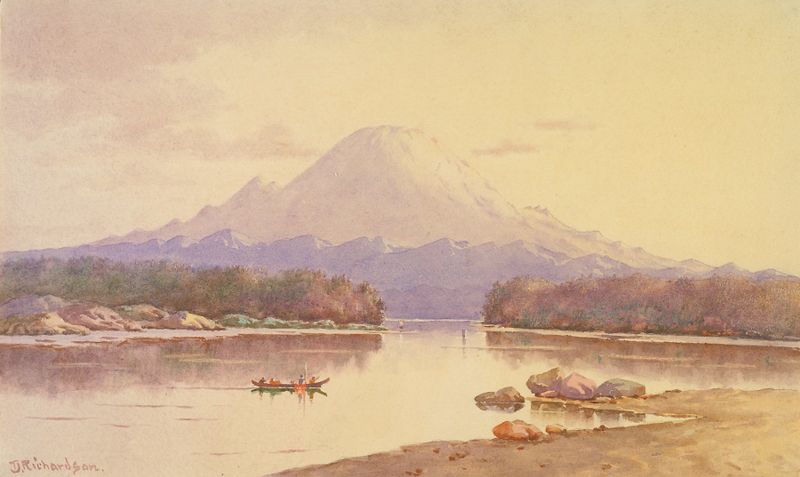
Mount Rainier
Theodore J. Richardson
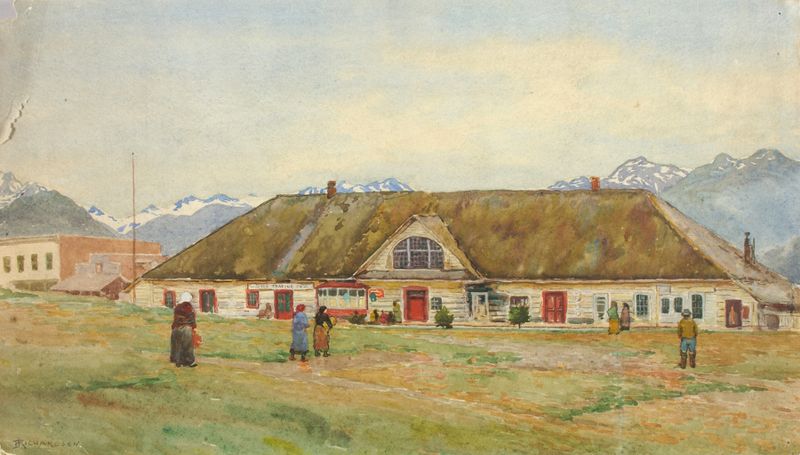
Old Russian Trading Post, Sitka
Theodore J. Richardson

The Ranch Native Village, Sitka, 1884
Theodore J. Richardson

Rear View Of Greek Church, Sitka, 1888
Theodore J. Richardson
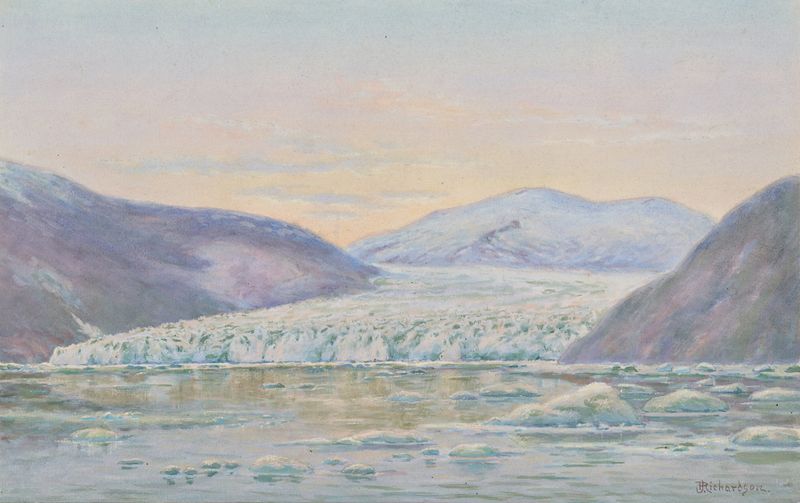
Taku Glacier, Evening
Theodore J. Richardson

St. Elias Alps
Theodore J. Richardson

Drying Blankets Over Canoes
Theodore J. Richardson

In The Old Quarter, Sitka, 1900
Theodore J. Richardson
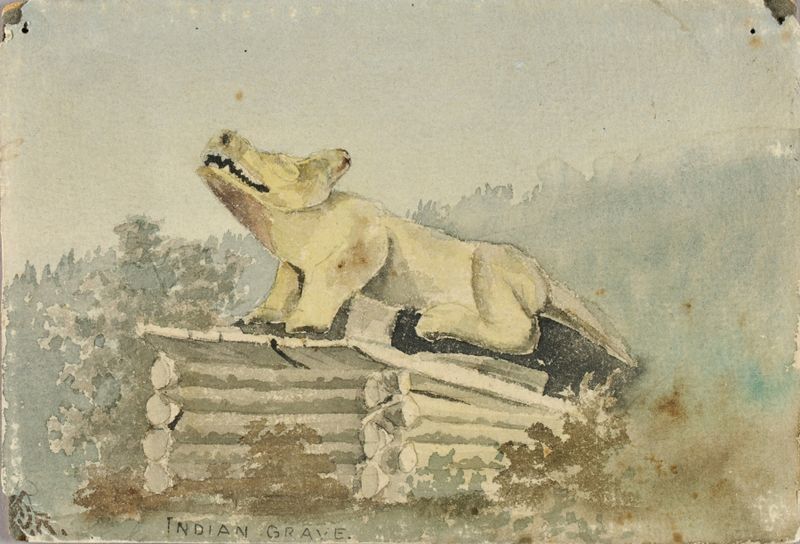
Indian Grave. Wolf Totem Over Medicine Man Grave, Wrangell
Theodore J. Richardson
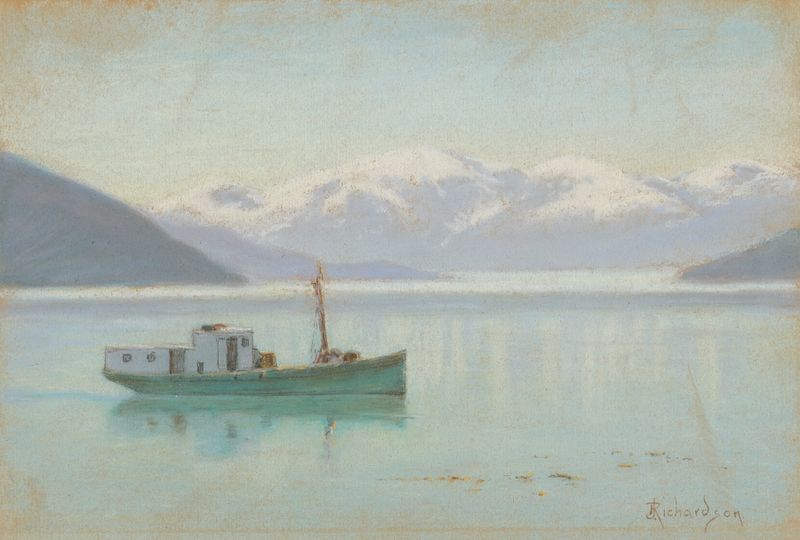
Jack Mantle’s Boat
Theodore J. Richardson
More Architecture Art
Browse all →
The statue of Liberty
Frédéric Auguste Bartholdi

View of Houses in Delft, Known as ‘The Little Street’
Johannes Vermeer

View of Houses in Delft, Known as ‘The Little Street’
Johannes Vermeer

The Cathedral in Rouen. The portal, Grey Weather
Claude Monet

The yellow house
Vincent van Gogh

The Church in Auvers-sur-Oise, View from the Chevet
Vincent van Gogh