
Alexander at the Tomb of Cyrus the Great — History & Facts
Can beauty exist without sorrow? In Alexander at the Tomb of Cyrus the Great, a profound interplay of reverence and melancholy unfolds, inviting us to ponder the weight of history and ambition. Look to the center of the canvas, where Alexander stands resolute, his figure draped in regal garb, an embodiment of power and vulnerability. Notice the soft, atmospheric light that bathes the scene, casting long shadows and creating a sense of ethereal detachment. The delicate brushwork enhances the monumentality of the tomb, a silent witness to the legacy that binds Alexander to Cyrus, hinting at the burdens of greatness through the contrast of their stark destinies. Beneath the surface, echoes of divine ambition intertwine with the human experience.
The mournful gaze of Alexander suggests a deep introspection, as if he is grappling with the weight of his own aspirations and the fleeting nature of glory. The flowers adorning the tomb resonate with themes of remembrance, beauty intertwined with decay, emphasizing how divinity and mortality coexist in the wake of monumental achievements. This tension reveals a universal truth about the struggles of those who seek greatness amidst the shadows of their predecessors. In 1796, Pierre Henri de Valenciennes was in Paris, amidst a cultural milieu marked by the rise of Romanticism.
This period saw artists exploring themes of nature, history, and emotion, as societal upheaval reshaped perceptions of power and identity. Valenciennes, who was deeply influenced by both classical ideals and contemporary thought, created this work at a time when art was becoming a profound reflection of individual sentiment against a backdrop of historical consciousness.
More Artworks by Pierre Henri de Valenciennes
Browse all →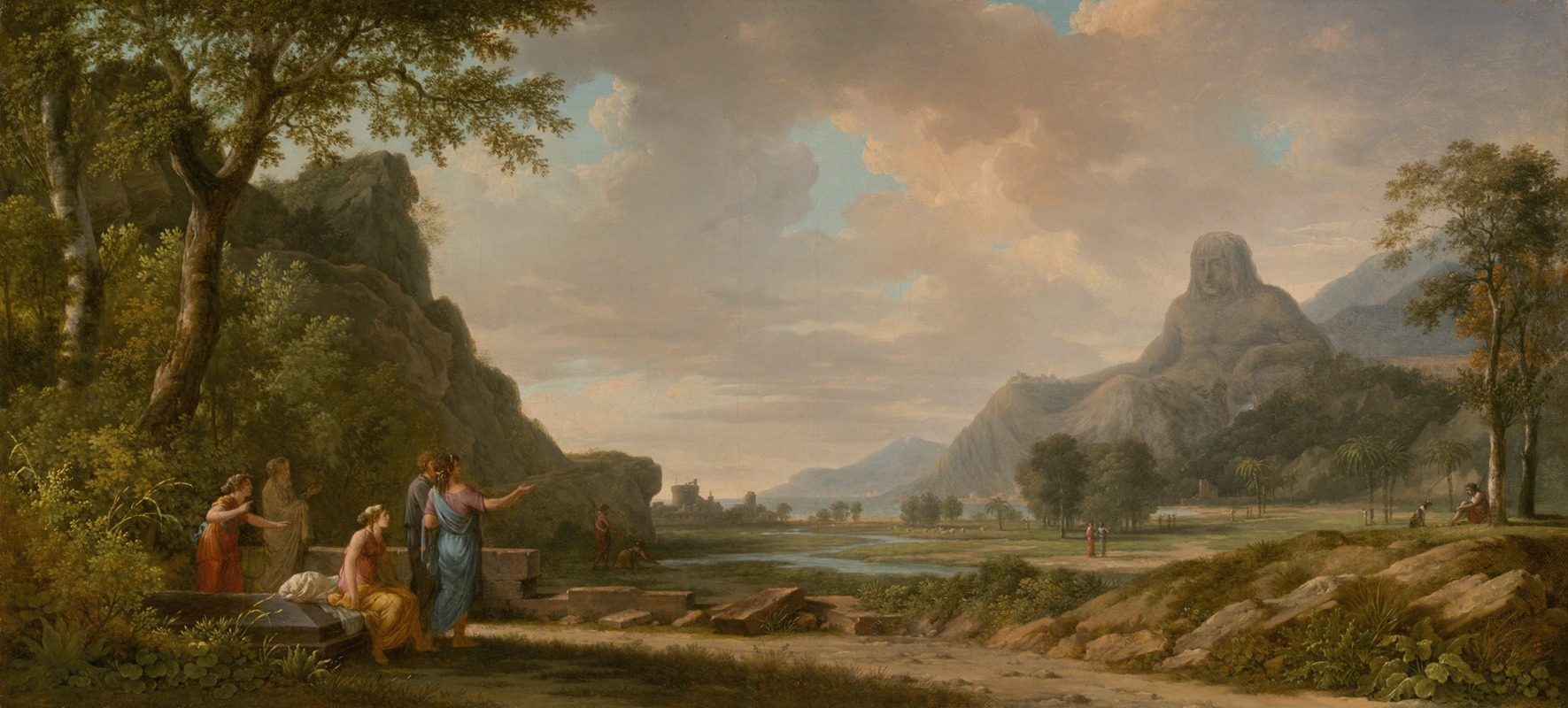
More Historical Art
Browse all →
The Night Watch Militia Company of District II under the Command of Captain Frans Banninck Cocq
Rembrandt van Rijn
Lincoln Memorial
Henry Bacon
The Third of May 1808
Francisco de Goya

Isaac and Rebecca, Known as ‘The Jewish Bride’
Rembrandt van Rijn
The Charge of the Mamelukes (1814)
Francisco de Goya

De vier ruiters van de apocalyps
Albrecht Dürer