Altaussee — History & Facts
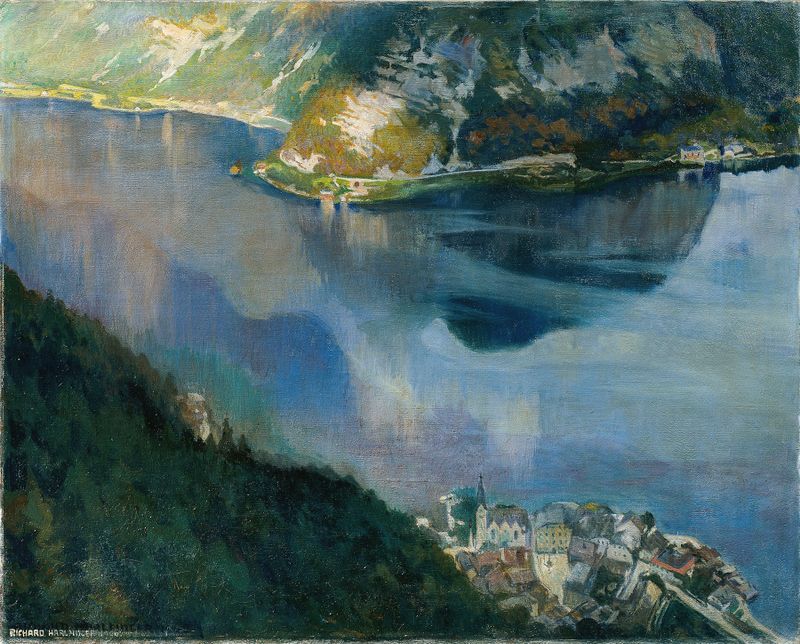
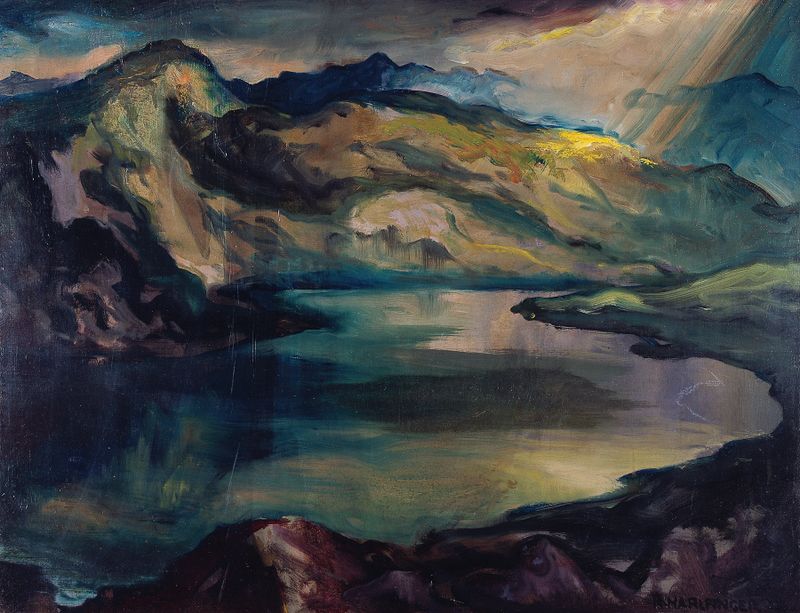
The stillness of the landscape echoes unspoken secrets, inviting the viewer into a world where time halts and nature speaks in hushed tones. In this moment, the weight of silence transcends mere absence of sound, becoming a profound testament to the emotions that linger beneath the surface. Look to the sweeping expanse of the lake, its surface a mirror reflecting a tangle of muted greens and browns. Notice how the gentle brushstrokes create a soft texture, blurring the lines between water and land.
The play of light is subtle yet powerful; it dances delicately on the ripples, drawing your gaze toward the distant mountains that loom, both majestic and imposing, along the horizon. Each element is carefully composed, allowing the viewer to sink into a reflective state, much like the still waters before them. Within this serene setting, there lies an underlying tension. The juxtaposition of the tranquil lake against the towering mountains evokes a sense of insignificance in the face of nature’s grandeur.
The absence of human presence adds to the weight of solitude, prompting reflections on isolation and introspection. Rich hues of green and blue suggest a lush vitality, yet the stillness hints at an unspoken melancholy, as if the landscape itself bears witness to the passage of time and the stories left untold. Richard Harlfinger painted Altaussee in 1940 while living in Austria amidst the tumultuous backdrop of World War II. This period marked a significant transition in his life, as the encroaching conflict deeply influenced his artistic vision.
The painting captures a moment of calm before the storm, reflecting both personal and collective realities, as society grappled with the profound uncertainties of the times.