Bergsee — History & Facts
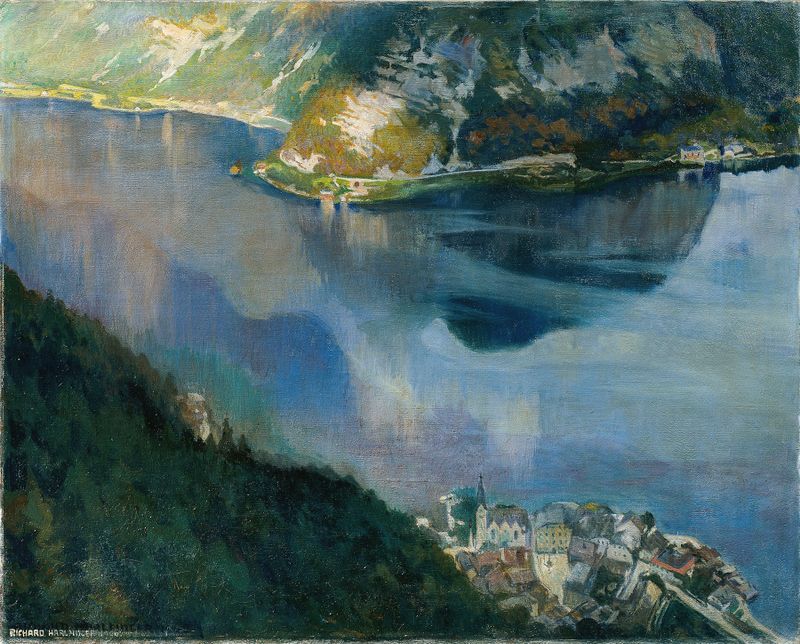
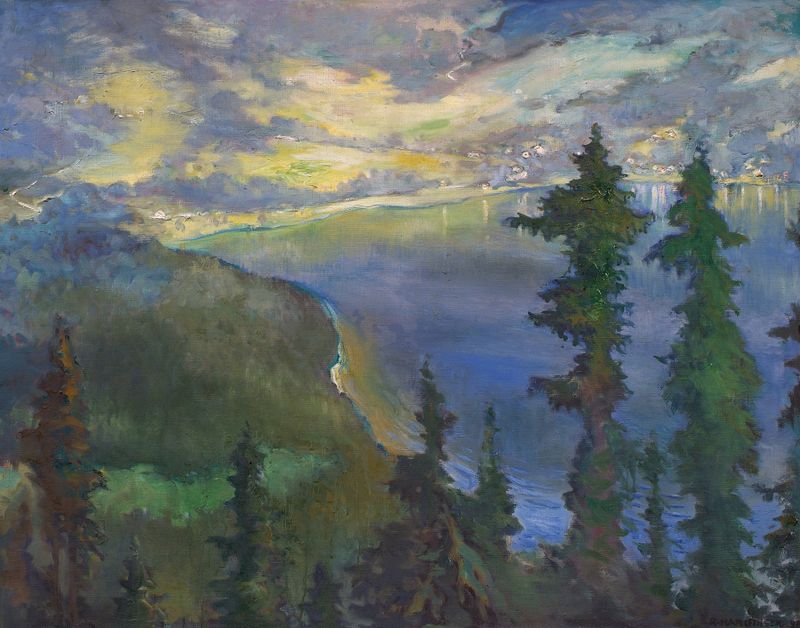
Who listens when art speaks of silence? In Richard Harlfinger's Bergsee, the tranquil lake mirrors not only the mountain peaks but the chaos simmering beneath its still surface. Look to the center of the canvas, where the lake's glassy expanse holds your gaze, its fluidity disrupted only by the whispered hints of brushstrokes. Notice how the artist employs soft blues and greens, creating a serene palette that invites calm, yet feels charged with unexpressed energy. The shadowy silhouettes of the mountains loom in the background, their jagged edges contrasting the softness of the water, establishing a tension that speaks between tranquility and turmoil. In examining the details, one can discern the interplay of light and shadow—the sun breaks through clouds, casting fleeting reflections that dance upon the water.
This ephemeral quality suggests the ever-shifting nature of reality, where chaos lurks just beneath the surface. The absence of human presence heightens the emotion; nature stands alone, embodying both a serene beauty and an underlying disquietude, provoking introspection about what lies beneath the calm exterior. Harlfinger created Bergsee in 1925 while immersed in the Weimar Republic, a period of cultural upheaval and artistic innovation in Germany. This work reflects his exploration of landscapes that evoke feelings beyond the visual, as society grappled with the tensions of post-war recovery and existential uncertainty.