Hallstätter See — History & Facts
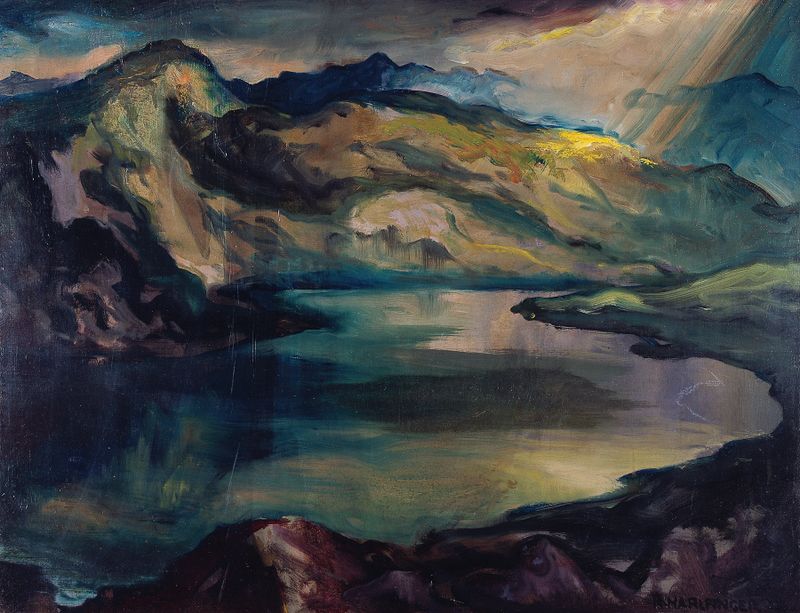
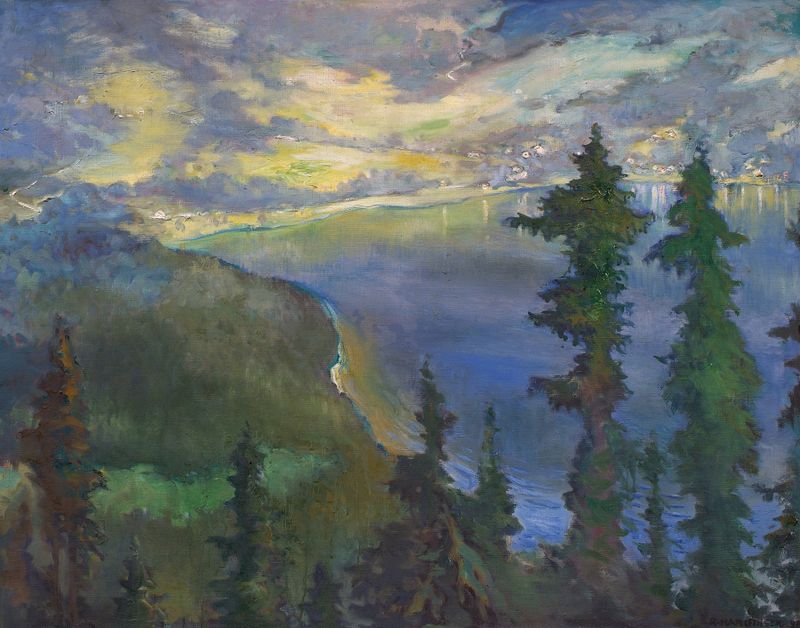
Here, the delicate interplay between memory and impermanence unfurls before us, capturing the fragile beauty of existence. Look to the left, where the stillness of Hallstätter See mirrors the soft hues of the surrounding mountains. The gentle strokes of blue and green blend seamlessly, creating an ethereal landscape that invites you to linger. Notice how the light dances across the water’s surface, imbuing the scene with a sense of tranquility, yet hinting at the transience of each moment captured.
The composition draws your eye towards the horizon, where an almost dreamlike quality emerges, evoking nostalgia for a place you’ve never been. In the depths of the painting's colors lies a tension between serenity and fragility. The shimmering reflections can remind us of both the beauty of nature and its fleeting nature, urging contemplation of life itself. The soft cloud formations above suggest an impending change, while the stillness of the lake embodies a poignant pause, inviting viewers to grapple with their own memories and longings.
It is both an invitation and a challenge—the sense that beauty, however fleeting, is worth capturing and cherishing. Richard Harlfinger painted this piece in 1908, during a time marked by artistic exploration and the rise of modernism across Europe. Living in Austria, he sought to capture the natural beauty of his surroundings, reflecting a broader movement that prioritized emotion and perception over traditional representation. This period of Harlfinger's life was characterized by a deep engagement with the interplay of light and landscape, shaping his unique voice in the art world.