Am Canal Grande in Venedig — History & Facts
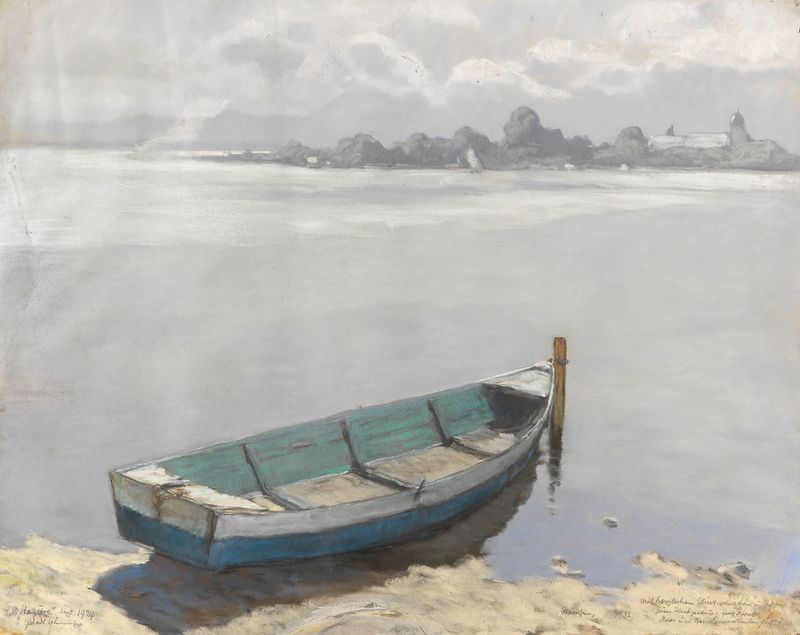
In the delicate balance of color and form, revelation unfolds, transforming fleeting moments into a lasting imprint on the canvas of our minds. Look to the left at the soft hues of blue and green that mirror the tranquil waters of the Grand Canal. The gentle brushstrokes evoke rippling reflections, capturing the essence of a moment suspended in time. Notice how the warm sunlight bathes the intricate architecture lining the canal, the yellows and ochres harmonizing with the cool reflections, inviting your eye to wander through this Venetian reverie. Beneath the serene facade lies a contrast between the bustling life of the city and the calmness of its waterways.
The vessels bob gently, hinting at the myriad stories they carry, from the exuberance of daily life to whispered secrets shared among lovers. The rhythm of the canal, however, remains undisturbed, suggesting an unspoken tension between the chaos of humanity and the enduring beauty of nature, a delicate interplay that resonates through the composition. In 1895, Stagura painted this piece amidst a period flourishing with the Impressionist movement in Europe. Living in Venice, he was influenced by the vibrant scenes around him as artists sought to capture everyday life through the lens of light and color.
This work exemplifies his unique perspective, weaving the familiarity of urban existence with the ethereal charm of the city’s waterways, a harmonious blend that reflects both his personal journey and the artistic evolution of the time.