Am Heimweg von der Feldarbeit — History & Facts
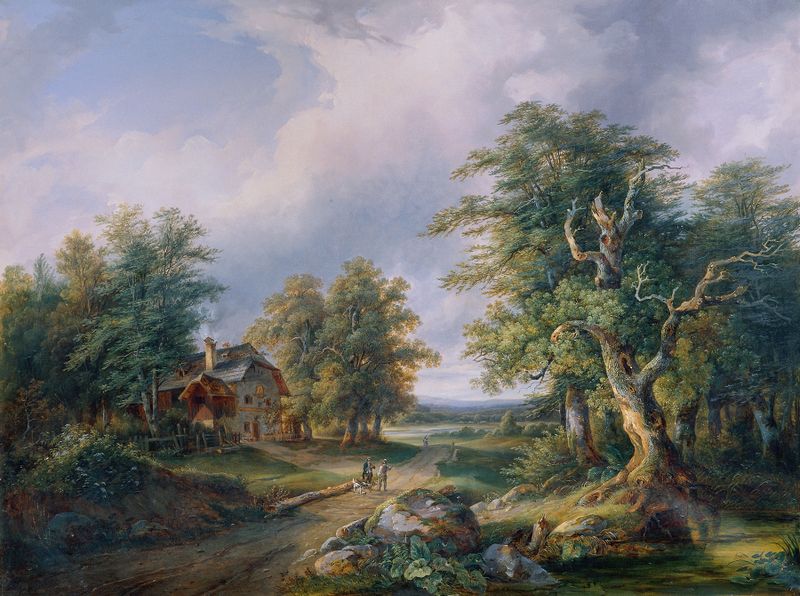
In the stillness of a moment captured, we are drawn into a world of labor and life, where movement hangs in the air like a whispered promise. Focus on the left side of the painting, where a tired farmer trudges home, his weary figure imbued with a sense of purpose. The earth beneath his feet is a rich mix of browns and greens, suggesting the labor that has woven itself into the fabric of his being. Notice how light dances across his back, illuminating the sweat that speaks of toil and perseverance.
The gentle curves of the landscape guide the eye toward the horizon, where the golden glow of the setting sun bathes the scene in warmth, hinting at the relief that awaits him. Hidden within the simplicity of the farmer's journey are layers of meaning. The contrast between the vibrant colors of the countryside and the muted hues of the figure underscores the emotional weight of daily life, as if nature itself acknowledges his struggle. The path leading home signifies not just a return but the rhythm of life — an endless cycle of labor and rest.
Each brushstroke echoes the unspoken stories of every person who has walked this path, embodying the relentless human spirit. In 1846, the artist created this piece while navigating the burgeoning Romantic movement, which celebrated individual experience and nature's beauty. Living in Germany, Altenkopf was immersed in a landscape drenched in transformation, reflecting both the struggles of the rural populace and the emerging industrial age. This painting became not only a personal narrative but also a visual testament to the resilience of humanity amidst change.