
Am Kreuzteich Tragöss — History & Facts
Can beauty exist without sorrow? In Am Kreuzteich Tragöss, the artist invites us to dwell in a space where tranquility and emptiness intertwine, challenging our perceptions of joy and melancholy. Focus first on the serene water, its surface almost glassy, reflecting the muted hues of the surrounding landscape. The soft greens and browns create an atmosphere of calm, while the misty background suggests a distant world beyond the immediate stillness. Notice how the subtle strokes of the brush evoke an ethereal sense of place, drawing you into the painting's quiet embrace.
The composition leads the eye through the tranquil scene, inviting contemplation of the void that lies between beauty and isolation. Delve deeper into the juxtaposition of light and shadow, where the gentle illumination captures the essence of longing. The solitary tree on the bank stands as a silent witness, its bare branches reaching out, yearning for connection. This contrast between the lush foreground and the faded horizon evokes a palpable tension — a reminder of the fragility of beauty in the face of emptiness.
Each element, from the delicate ripples in the water to the distant mountains, speaks to an unfulfilled promise, as if the landscape itself mourns. In 1911, Lach created this piece during a period of great artistic exploration in Europe, where artists were increasingly drawn to the complexities of emotion and the natural world. Living in Austria, he was influenced by the emerging modernist movements, yet he retained a distinct sense of place that bridges the modern with the traditional. This work reflects his desire to encapsulate the quiet moments that resonate deeply within us, capturing both the beauty and the sorrow that coexist in our experiences.
More Artworks by Fritz Lach
Browse all →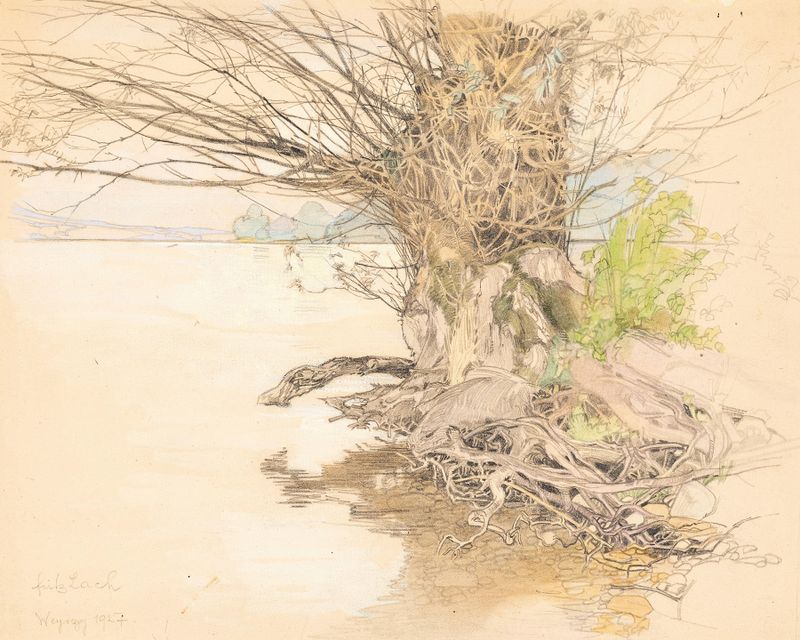
A willow tree at the lake shore
Fritz Lach
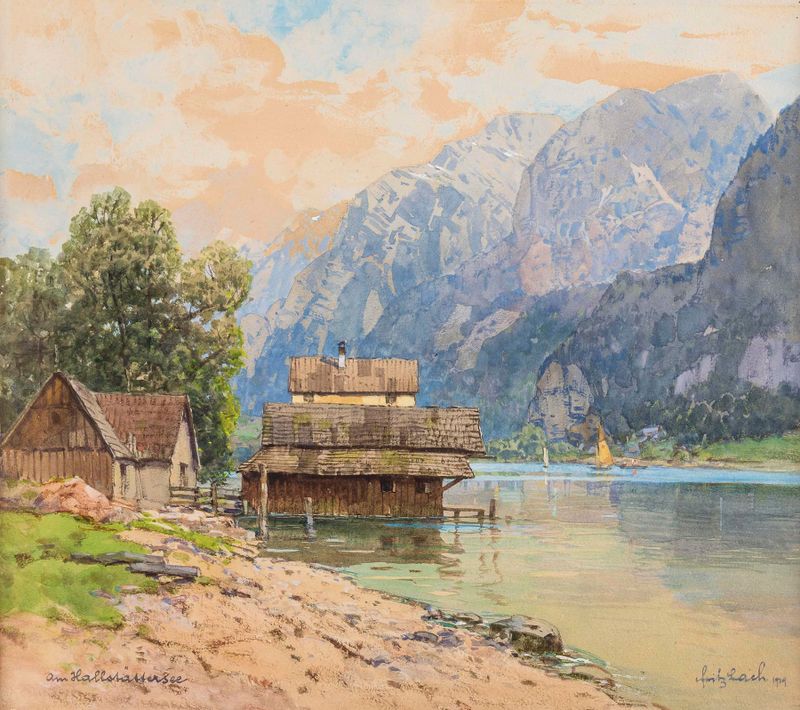
Bootshäuser am Hallstätter See
Fritz Lach
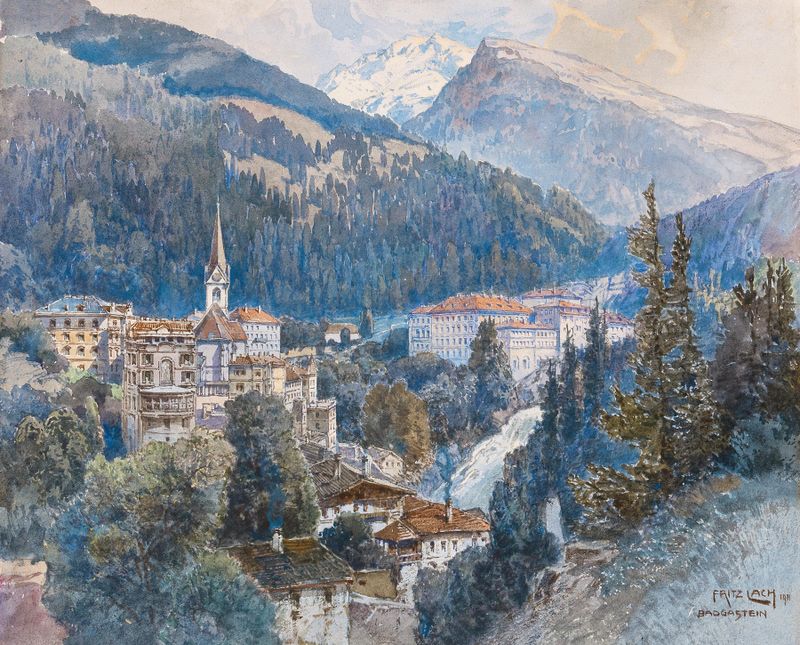
A view of Bad Gastein and the waterfall
Fritz Lach
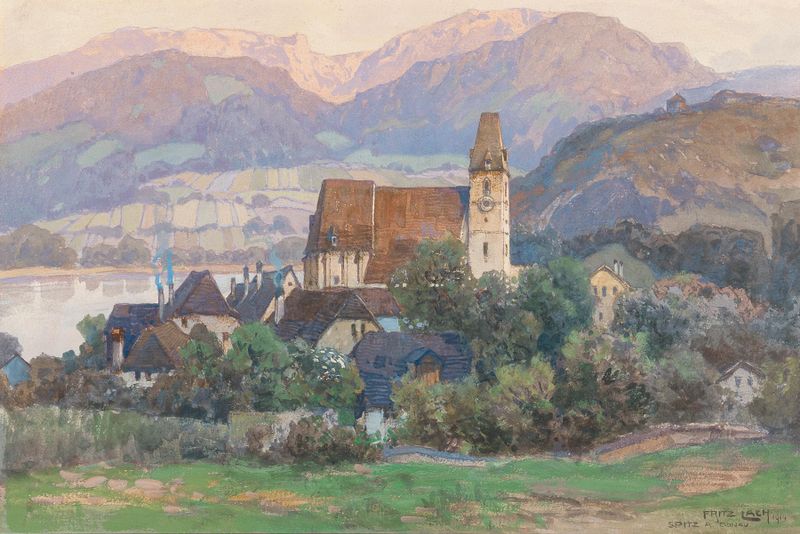
A view of Spitz in the Wachau valley
Fritz Lach
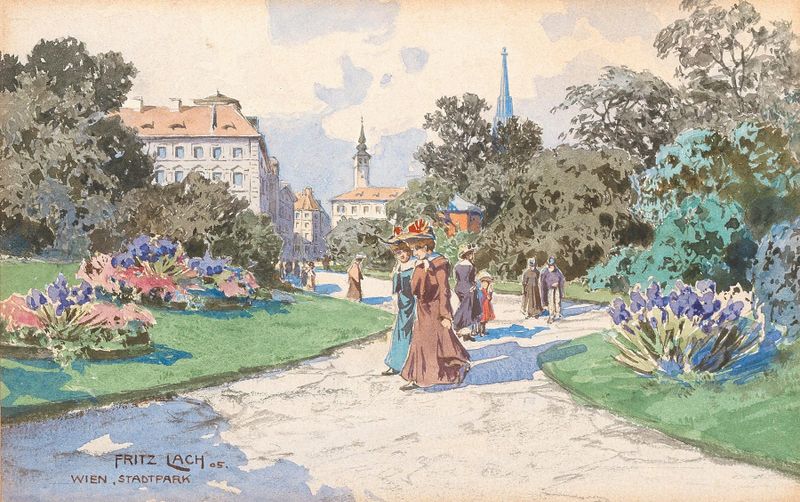
A walk in Vienna’s Stadtpark
Fritz Lach
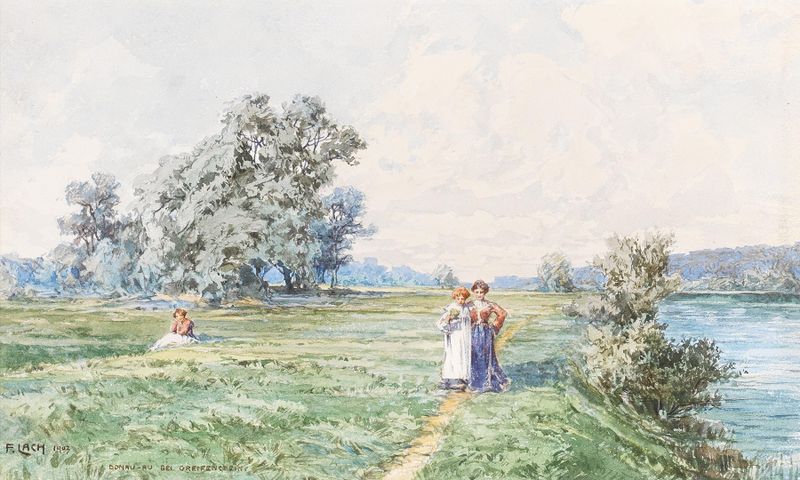
At the Danube near Greifenstein
Fritz Lach
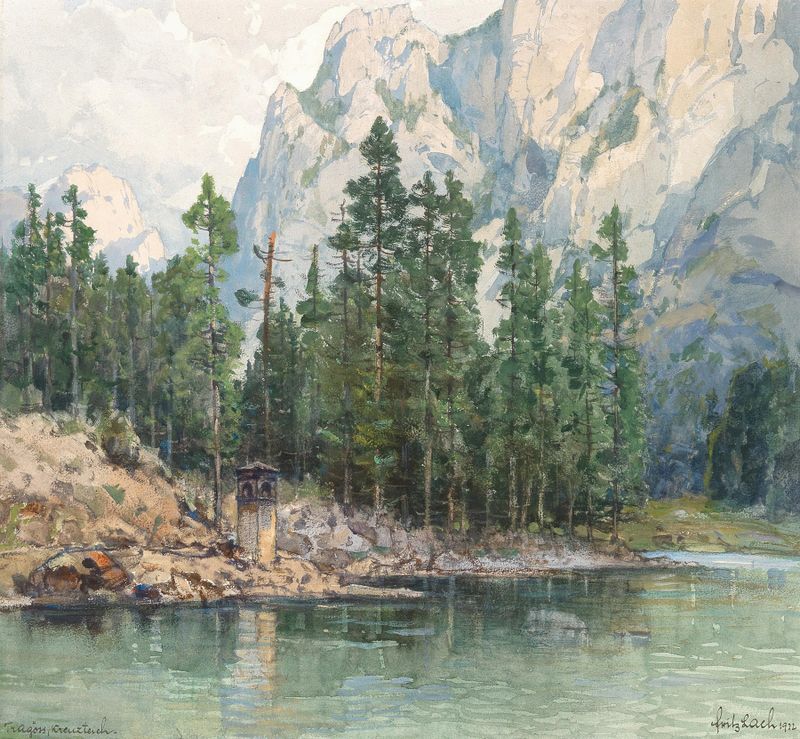
Kreuzteich near Tragöss
Fritz Lach
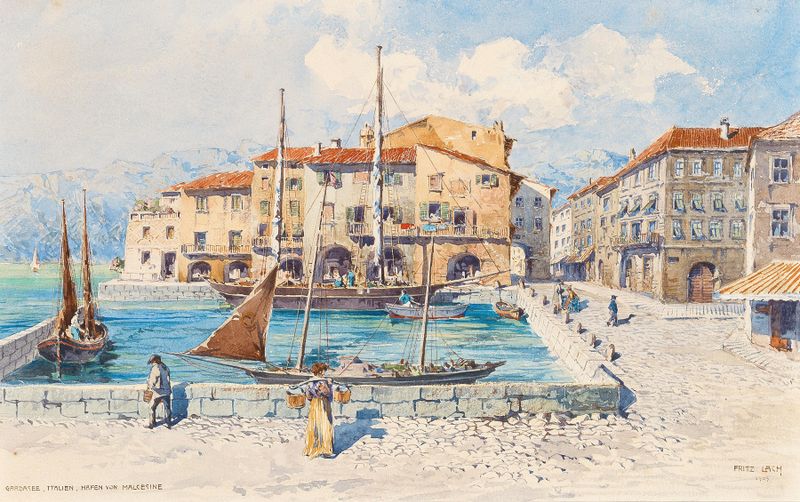
Malcesine near Gardasee
Fritz Lach
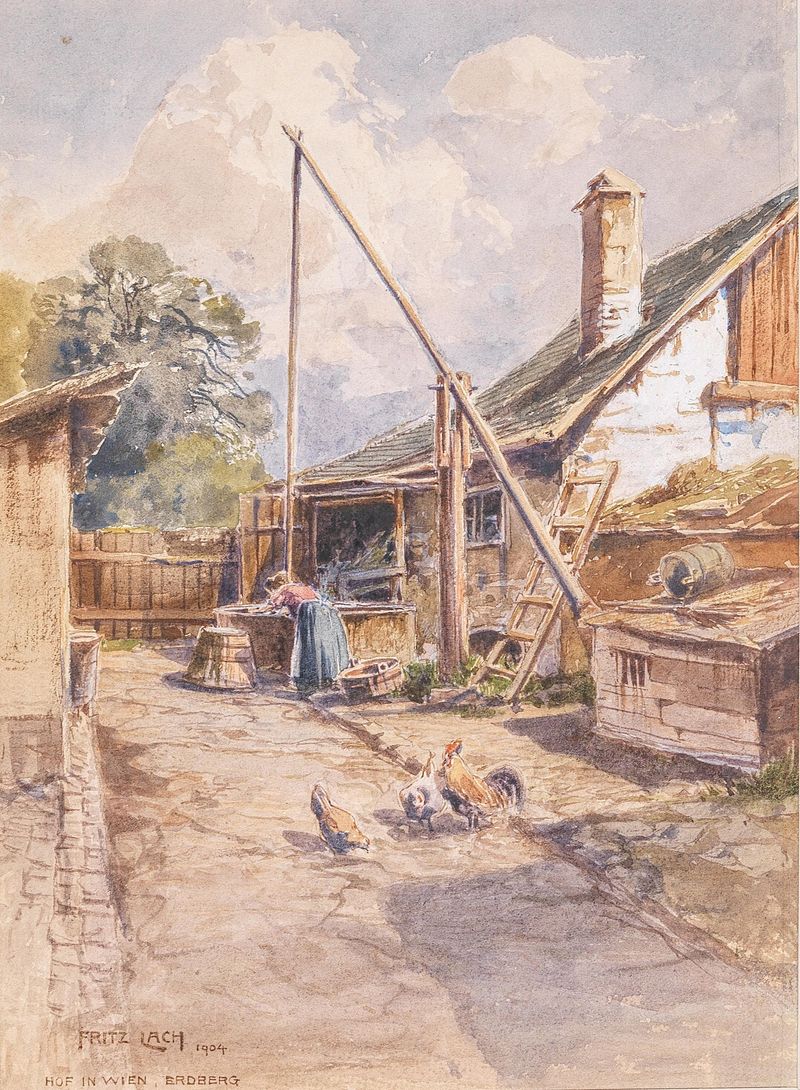
Hof in Wien Erdberg
Fritz Lach
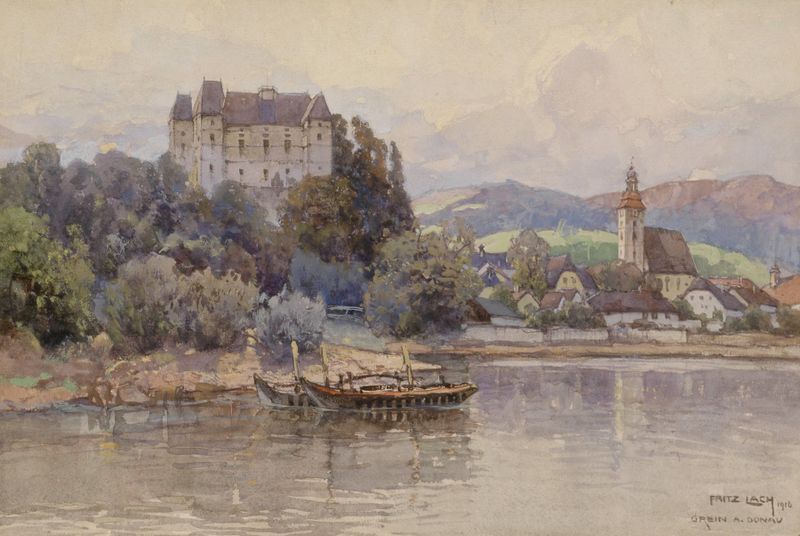
Blick auf Grein an der Donau
Fritz Lach





