
Am Weg zum Gmundnerberg — History & Facts
In the interplay of hues, a dialogue unfolds, revealing layers of emotion and reflection that pulse beneath the surface. Look to the vibrant greens that dominate the foreground, where brushstrokes dance lightly across the canvas, inviting the viewer into a serene landscape. Notice how the light falls upon the gentle slopes, casting soft shadows that breathe life into the scene. The silvery blues of the distant mountains draw the eye upward, creating a sense of depth and vastness, while the delicate interplay between color and form guides the journey through this tranquil vista. Yet, within this peaceful landscape lies a subtle tension.
The juxtaposition of the vivid foreground against the cooler, muted background suggests a moment of transition, perhaps the crossing between reality and the idealized nature of memory. Each brushstroke captures fleeting moments, while the colors resonate with an emotional charge, evoking nostalgia and contemplation. The rich palette not only celebrates nature but also hints at the complexity of human experience, where beauty often coexists with longing. In 1922, during a period of tumultuous change in Europe, the artist found solace in the beauty of the landscapes that surrounded him.
Living in Germany, Ramberg was influenced by the shifting currents of post-war sentiment and the burgeoning modernist movement, which sought to redefine artistic expression. It was in this context that Am Weg zum Gmundnerberg emerged, encapsulating both the peace of nature and the turbulence of human emotion, reflecting his inner world against the backdrop of a changing society.
More Artworks by August von Ramberg
Browse all →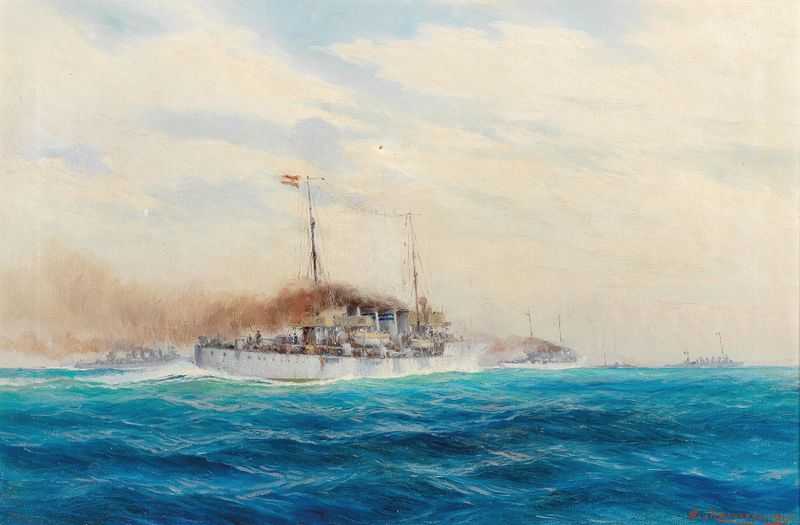
Bombardment of Palagruža in 1915
August von Ramberg
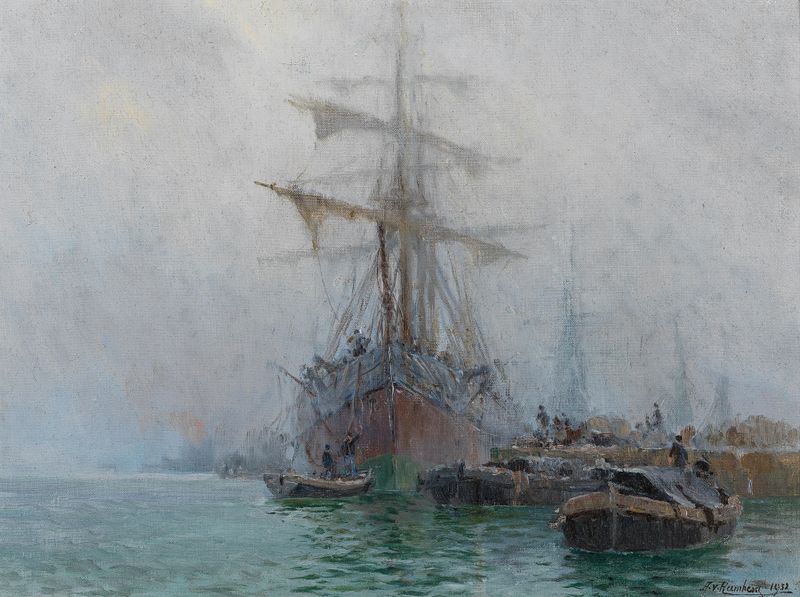
Fishing Boats by the Jetty
August von Ramberg
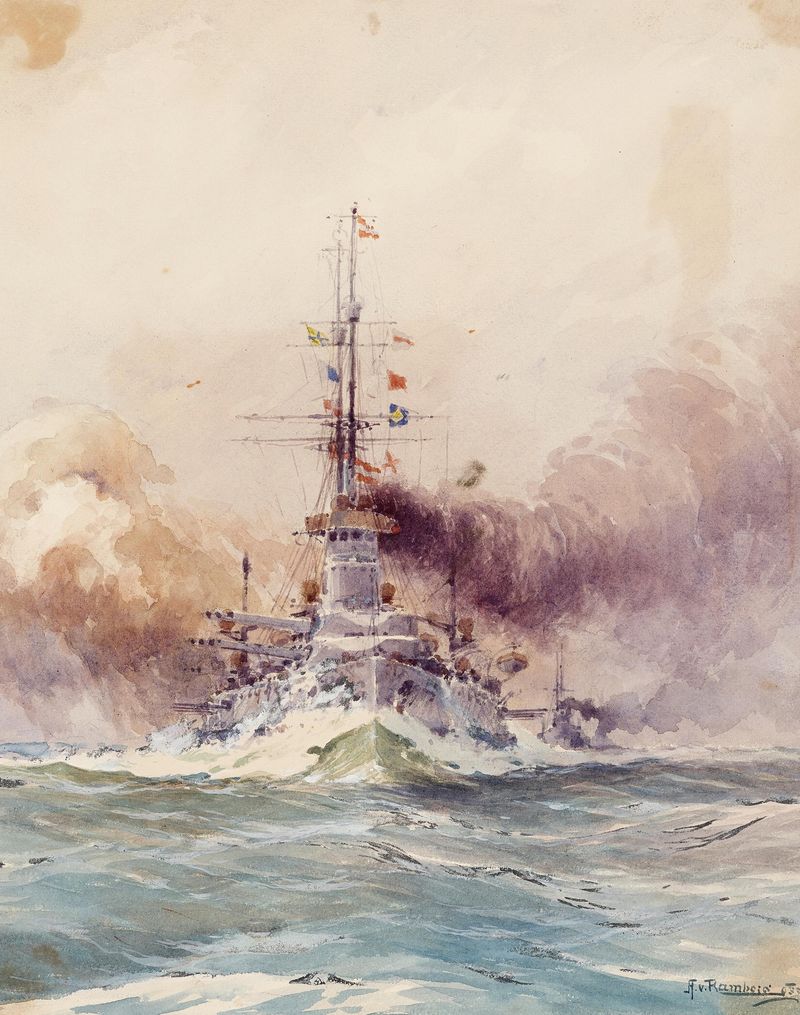
The Imp. Royal Battleship VIRIBUS UNITIS at full speed accompanied by the fleet
August von Ramberg
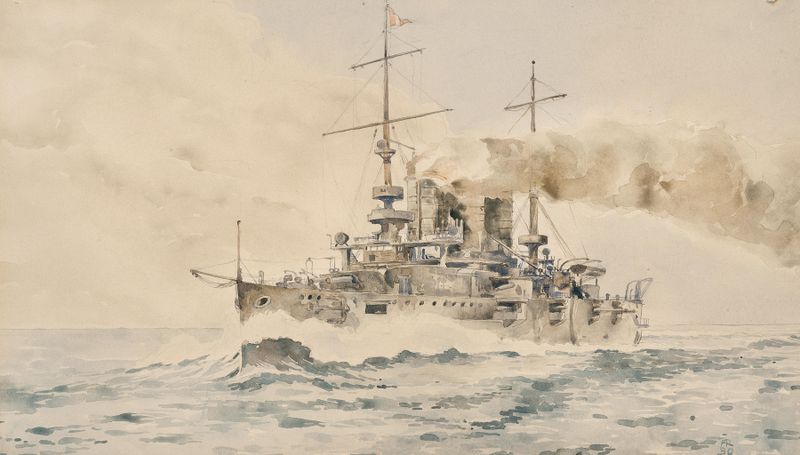
Imperial and Royal Battleship of the SMS Erzherzog Karl Class in full sail
August von Ramberg
A Three-Master off a Southern Coast
August von Ramberg





