
Fishing Boats by the Jetty — History & Facts
Who listens when art speaks of silence? In the stillness of Fishing Boats by the Jetty, one finds an echo of obsession, a resonance that pulls the viewer into a world both tranquil and charged with unspoken stories. Start your exploration at the foreground, where the boats rest near the weathered jetty. The gentle ripples of the water reflect muted hues of blue and gray, inviting you to wander into their depths. Notice the careful brushwork that defines the subtle imperfections of the wood, each stroke creating an intimate connection with the viewer.
The composition is balanced yet dynamic, leading the eye across the canvas, from the boats to the distant shore, blending the real with the dreamlike. Beneath the calm exterior lies a tension between the boats’ stillness and the restless movement of water. The interplay of light and shadow reveals a narrative of solitude, suggesting a longing or a wait—perhaps for return, perhaps for something lost. The juxtaposition of the soft colors with the sharp edges of the jetty embodies a deeper contrast between nature and human intervention, evoking themes of obsession with both solitude and belonging. In 1932, August von Ramberg painted this scene during a period marked by significant shifts in the art world as modernism began to take hold.
He was immersed in his own artistic exploration, seeking to capture the essence of everyday life, yet infusing it with emotional depth. Contextually, this was a time of political tension in Europe, which may have influenced his contemplative approach to themes of isolation and yearning.
More Artworks by August von Ramberg
Browse all →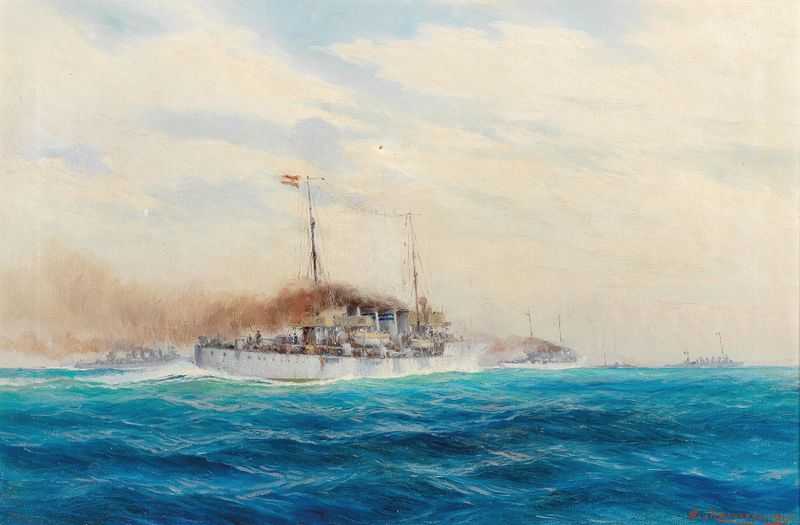
Bombardment of Palagruža in 1915
August von Ramberg

Am Weg zum Gmundnerberg
August von Ramberg
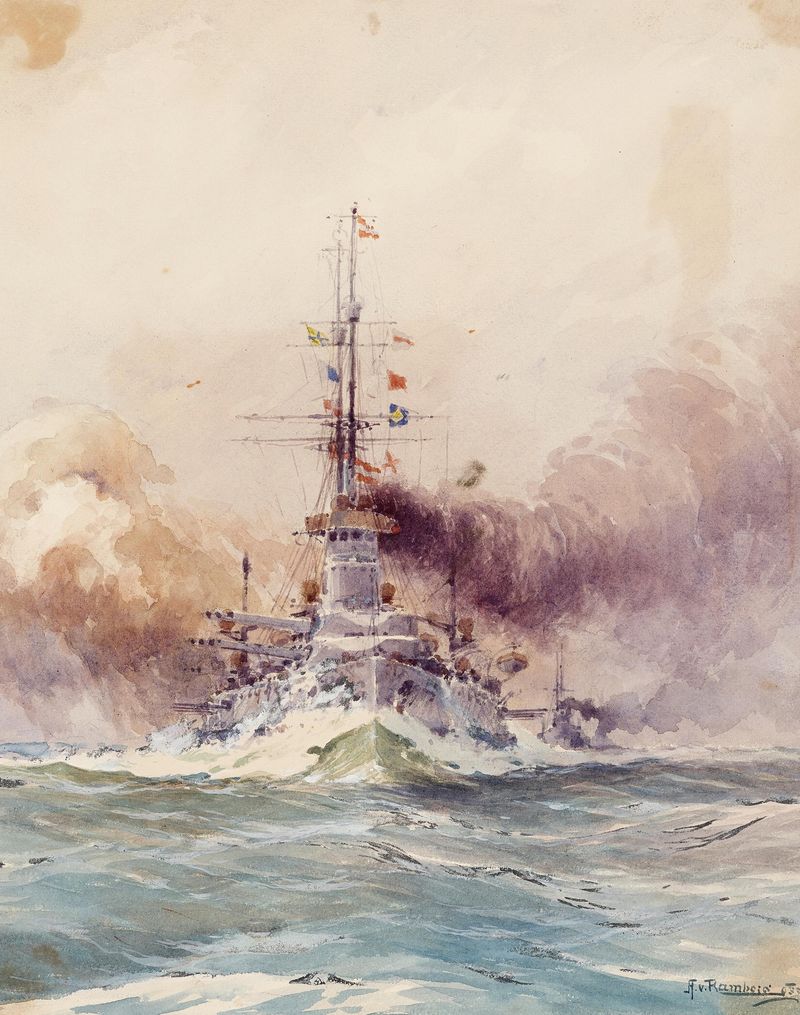
The Imp. Royal Battleship VIRIBUS UNITIS at full speed accompanied by the fleet
August von Ramberg
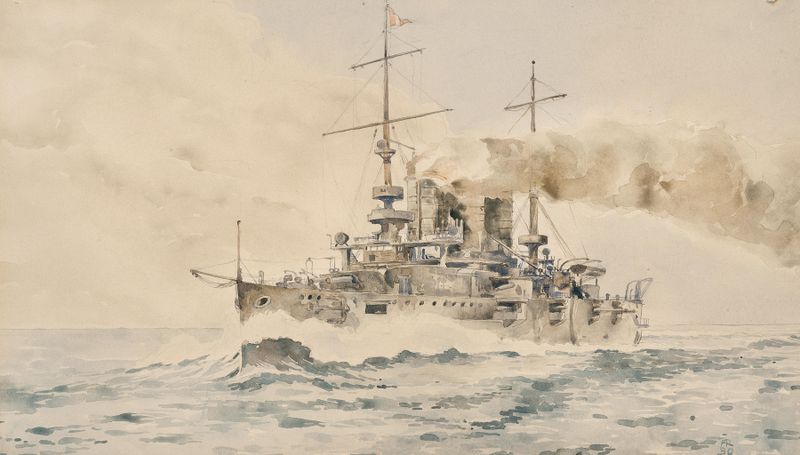
Imperial and Royal Battleship of the SMS Erzherzog Karl Class in full sail
August von Ramberg
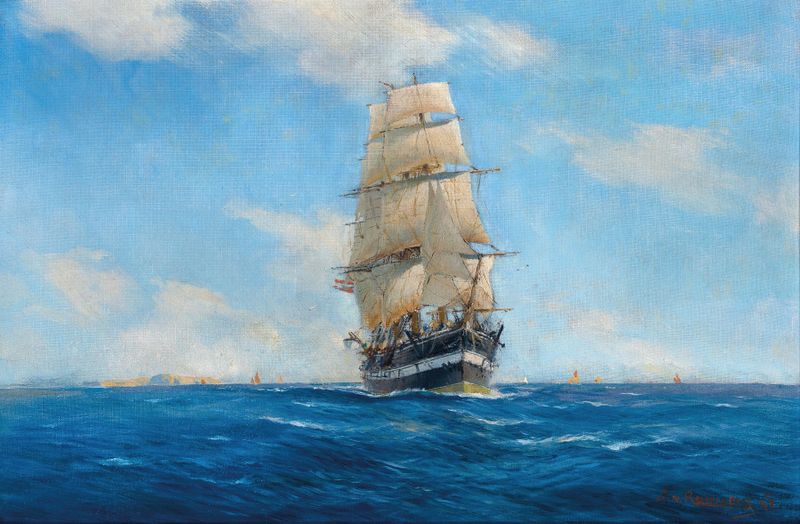
A Three-Master off a Southern Coast
August von Ramberg





