The Imp. Royal Battleship VIRIBUS UNITIS at full speed accompanied by the fleet — History & Facts
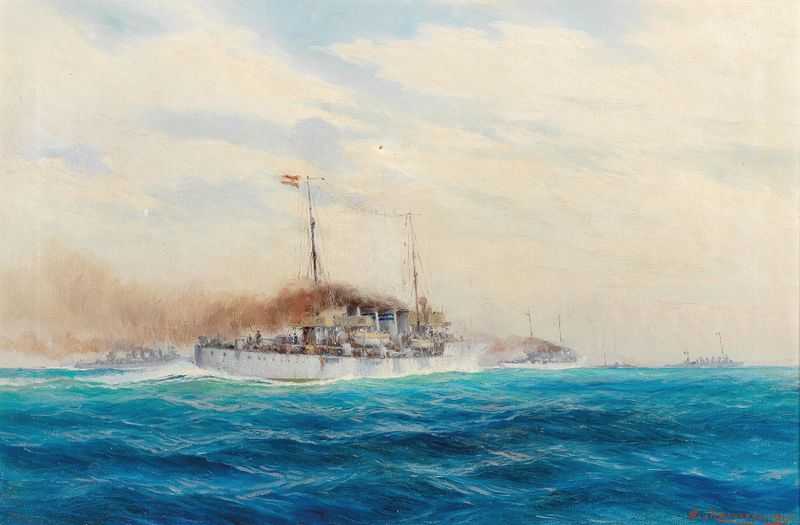
The roar of the ocean fills the air as the majestic battleship slices through the waves, its hull gleaming under the sun's bright gaze. Crew members scramble on deck, their figures blurred by the urgency of action, while the distant fleet follows in an elegant formation — a spectacle of might and discipline. Clouds gather ominously at the horizon, hinting at an impending storm that contrasts starkly with the vibrant energy of the ship's movement. Look to the left at the ship's bow, where the rich colors of deep blue and glistening white collide, creating a dynamic sense of speed.
The artist employs sharp, angular lines to direct the viewer’s gaze along the vessel's length, emphasizing its grandeur and power. Notably, the shimmering reflections upon the water's surface masterfully capture both light and motion, enhancing the illusion of speed and urgency in this nautical ballet. Beneath the surface of this vivid scene lies a tension between human achievement and nature's potential fury. The battleship represents technological prowess, yet the encroaching clouds suggest that human endeavors are always at the mercy of the elements.
In the backdrop, the fleet's disciplined formation serves as a reminder of collaboration, unity, and the looming specter of conflict, blurring the lines between celebration and foreboding. In 1933, August von Ramberg created this piece during a time of political unrest in Europe, as nations grappled with the aftermath of World War I. This period saw a resurgence in militaristic pride and naval innovations, both of which informed his depiction of the battleship. At this juncture in his career, Ramberg sought to capture not only the technical marvels of the time but also the emotional weight of a world teetering on the brink of further turmoil.