
Bombardment of Palagruža in 1915 — History & Facts
When did color learn to lie? In a canvas awash with hues that dance between despair and resilience, hope glimmers even amid chaos. Focus on the bold strokes that depict the tumultuous waters, where waves clash against the battered coastline, creating a visceral sense of motion. Notice how the artist employs a palette of grays and deep blues, emphasizing the stormy sky that looms overhead. To the left, fragmented forms of boats are silhouetted against the tumult, their struggle against nature’s fury encapsulating a moment of desperation.
Yet, amidst the turmoil, patches of warm color peek through, suggesting the possibility of dawn breaking over a fractured world. The turmoil in the painting speaks to a deeper emotional tension—the duality of destruction and rebirth. Each wave crashing against the rocks can be seen as a metaphor for human resilience, while the boats symbolize the fragile hope that persists even in dire circumstances. The contrast of dark, foreboding skies against the radiant hints of dawn begs the viewer to consider the interplay of despair and optimism, and how the two can coexist in moments of crisis. August von Ramberg painted this piece in 1937, a period marked by rising tensions in Europe and the shadows of conflict looming over the continent.
As a prominent artist in Germany, he witnessed a world on the brink of upheaval, with art movements transitioning toward expressionism and surrealism in response to societal chaos. His work reflects not only the historical context but also a personal testament to the enduring spirit of humanity even in the face of uncertainty.
More Artworks by August von Ramberg
Browse all →
Am Weg zum Gmundnerberg
August von Ramberg
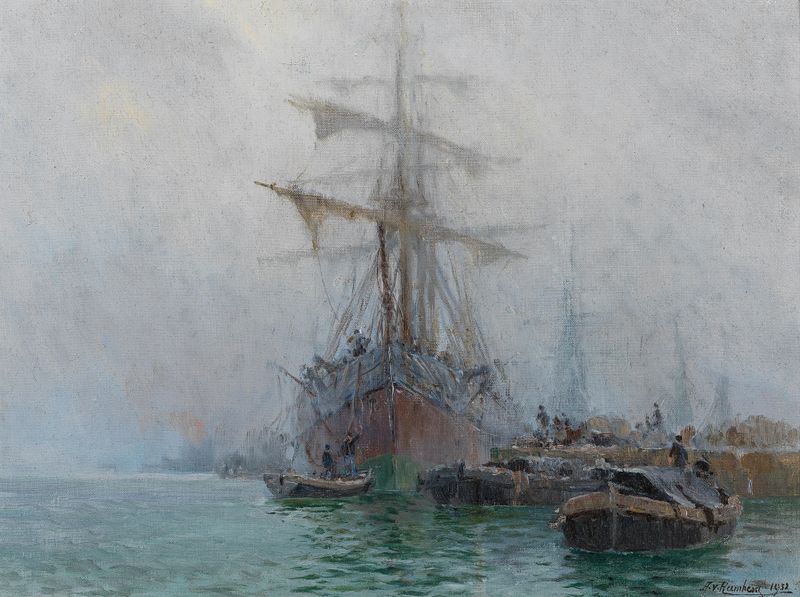
Fishing Boats by the Jetty
August von Ramberg
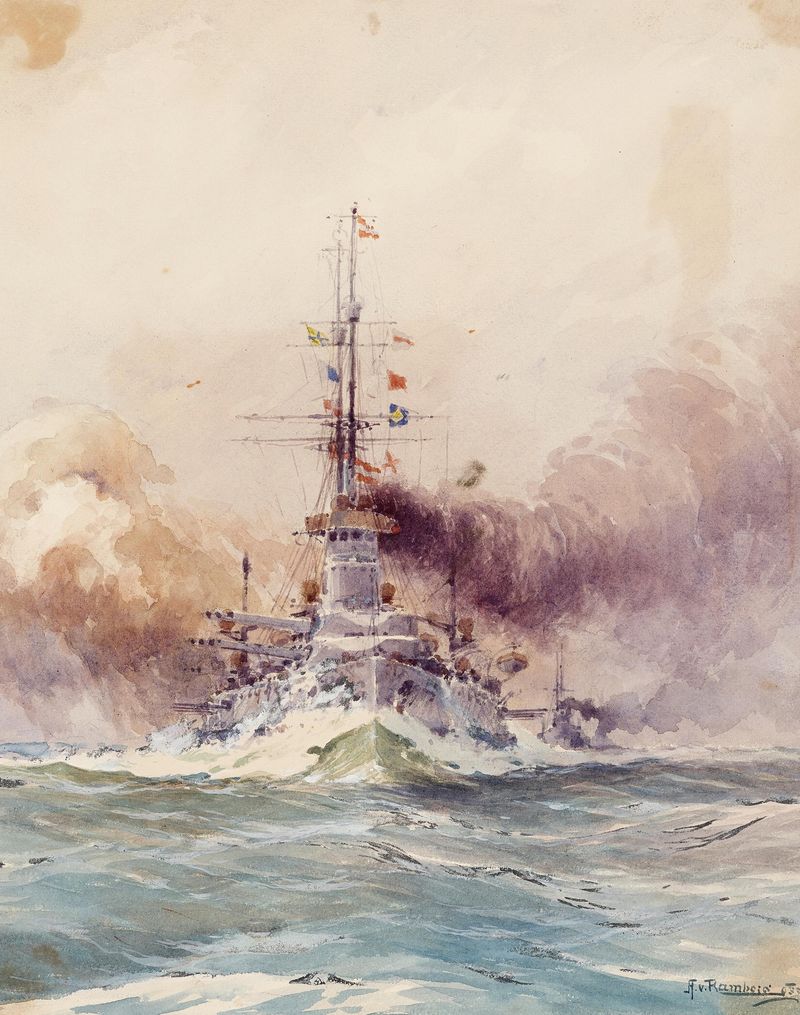
The Imp. Royal Battleship VIRIBUS UNITIS at full speed accompanied by the fleet
August von Ramberg
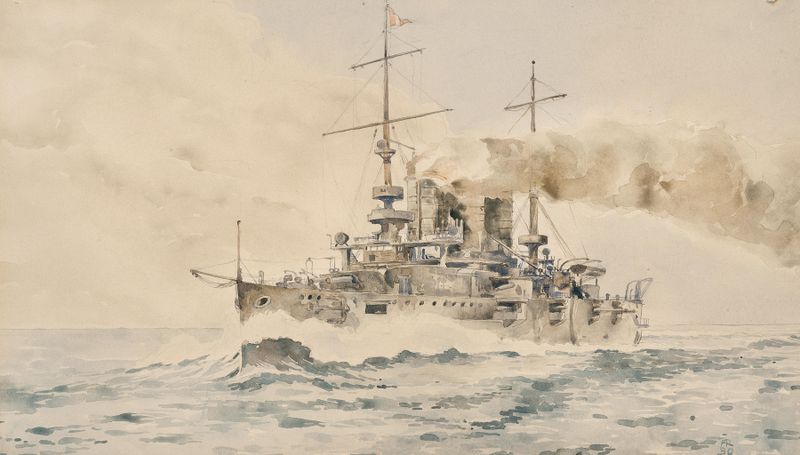
Imperial and Royal Battleship of the SMS Erzherzog Karl Class in full sail
August von Ramberg
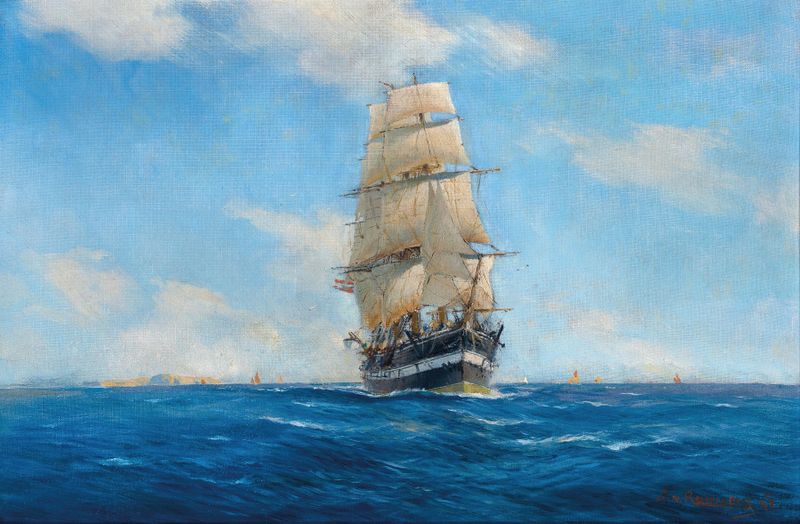
A Three-Master off a Southern Coast
August von Ramberg





