
Am Wolfgangsee — History & Facts
Did the painter know this moment would outlive them? In Am Wolfgangsee, the essence of betrayal hangs in the air, whispering secrets of fleeting connections and timeless landscapes. Look to the left at the serene waters of Wolfgangsee, where gentle ripples catch the light, reflecting the soft hues of twilight. The composition draws your gaze across the tranquil lake, with the distant mountains bowing under the weight of the dusk. Notice how the brushstrokes blend seamlessly, evoking a dreamlike quality; the palette of blues and grays intertwines with warm notes of ochre, creating a delicate contrast that speaks to both calm and unease. In the spaces between the trees and the figures, one can sense an emotional tension—a juxtaposition of the idyllic scene and the underlying feeling of betrayal.
The lone figure by the water, seemingly lost in thought, suggests an introspection that hints at personal conflict or unspoken sorrow. The placement of the figures underscores a disconnect, as if they are together yet worlds apart, embodying the fragility of relationships against the backdrop of nature's permanence. Anton Romako painted Am Wolfgangsee in 1877 during a productive period in his career while living in Vienna. This was a time when the art world was shifting, embracing realism and impressionism, mirroring the complexities of modern life.
Romako, known for his ability to capture both the external beauty of landscapes and the internal struggles of his subjects, was navigating his own artistic identity amidst this evolving landscape, infusing his works with profound emotional depth and resonance.
More Artworks by Anton Romako
Browse all →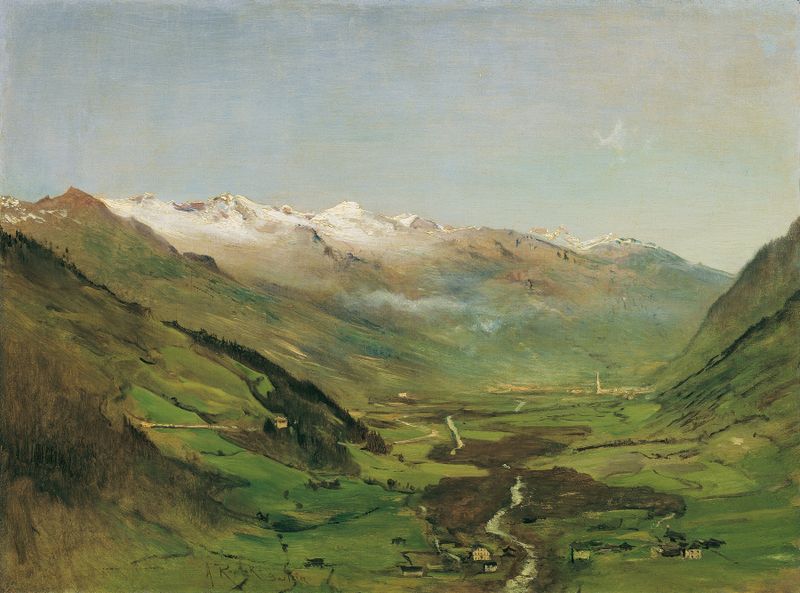
Das Gasteinertal I
Anton Romako
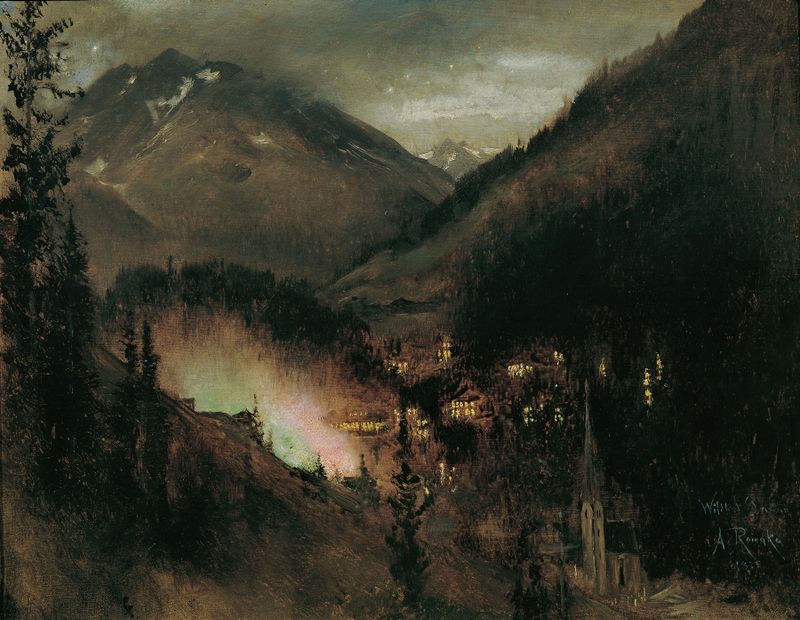
Wildbad Gastein am Abend (bei bengalischer Beleuchtung)
Anton Romako

Das Gasteinertal II
Anton Romako

Fischerknabe am Meeresstrand
Anton Romako

Waldlichtung mit Disteln
Anton Romako
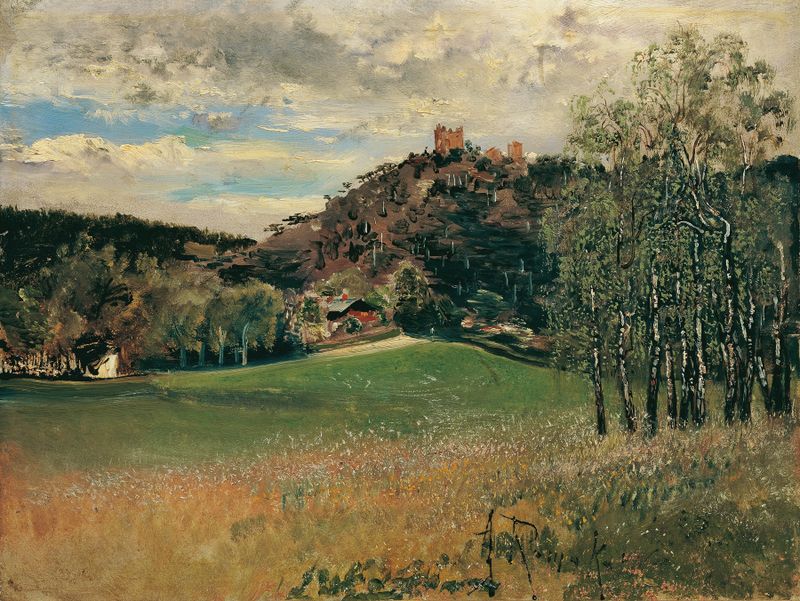
Die Meiereiwiese in der Vorderbrühl mit der Ruine Mödling
Anton Romako
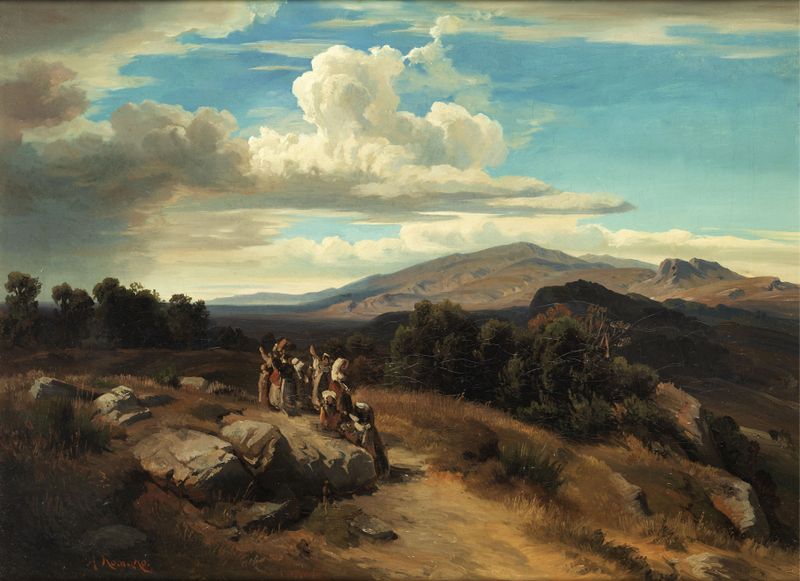
Spanische Landschaft
Anton Romako
Seesturm
Anton Romako
Die Weilburg bei Baden
Anton Romako
Abend in der Prossau bei Gastein
Anton Romako





