
An Arab Encampment — History & Facts
In An Arab Encampment, a world unfolds that invites viewers to pause and reflect on the beauty of a distant life. Look to the left at the vibrant tents, their rich hues contrasting against the warm desert sands, while the gentle curves of the landscape guide your gaze toward the small figures gathering around a flickering fire. Notice how light dances across the canvas, illuminating the intricate patterns of the textiles and the sharp shadows that provide a sense of depth. The artist’s brushwork evokes movement, capturing the flicker of flames and the gathering shadows, as if the moment is suspended in time. Within the composition lies a broader narrative — a juxtaposition of stillness and action, tradition and transience.
The way the figures are painted, positioned both together and apart, hints at the communal bonds shared in this encampment while simultaneously suggesting a deep solitude. The hand-stitched details on the tents reflect a sense of belonging, yet the sparse environment evokes a quiet awe for the vastness of the desert, inviting contemplation on the lives led in such isolation. In 1861, the artist created this piece in the backdrop of a shifting art world, grappling with the influences of Romanticism and Realism. Having traveled to North Africa, Pils sought to capture the essence of a culture that fascinated many Europeans, mirroring the era's growing interest in exoticism.
This painting not only documents a moment in time but also serves as a testament to the curiosity and complexity of cross-cultural encounters during a period of significant transformation in European art.
More Artworks by Isidore Pils
Browse all →
Fort sous la neige.
Isidore Pils
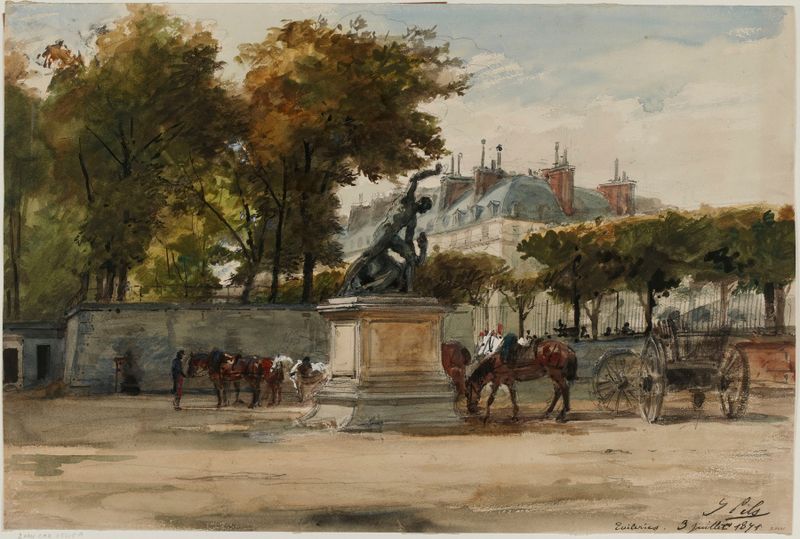
Artilleurs aux Tuileries, 9 juillet 1871.
Isidore Pils

Ruins of the Tuileries Palace
Isidore Pils

La place Vendôme après le renversement de la colonne.
Isidore Pils

Soldats du 37e de Ligne boulevard de Clichy.
Isidore Pils

Le bastion 63.
Isidore Pils

Les Buttes-Chaumont.
Isidore Pils

Le Point du Jour, février 1871.
Isidore Pils
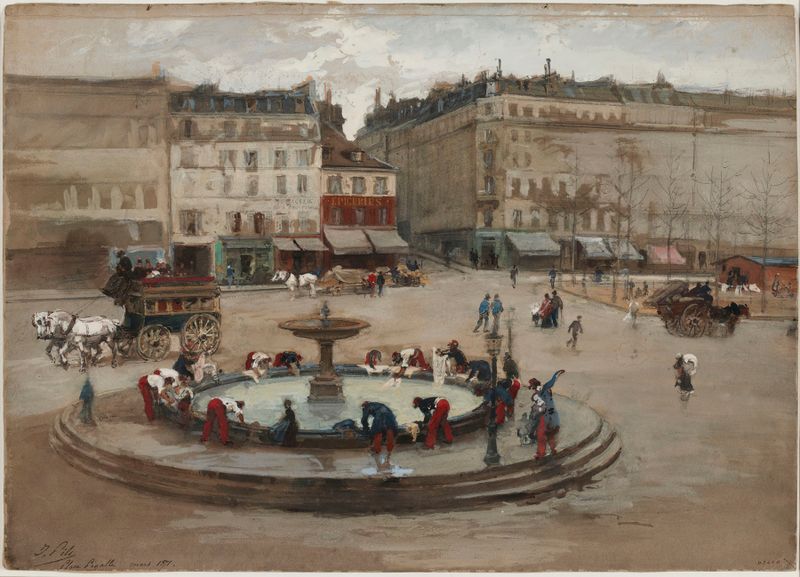
La lessive, place Pigalle, mars 1871.
Isidore Pils
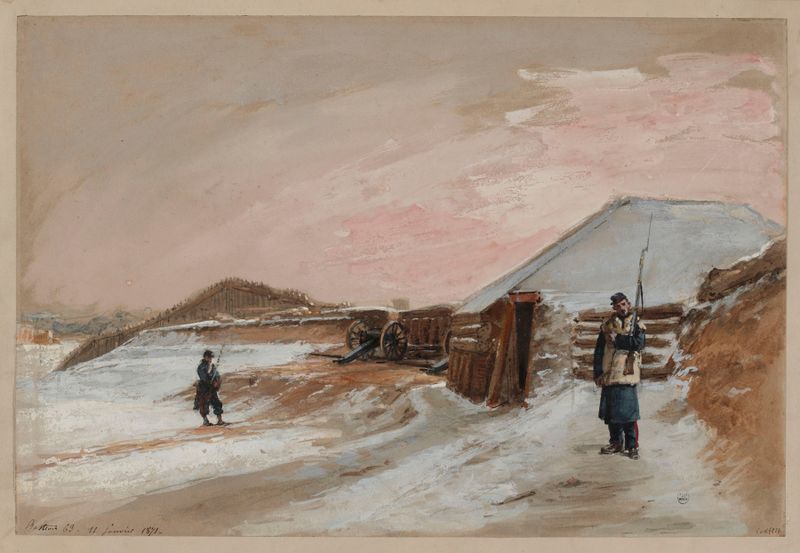
Siège de Paris, bastion 63, le 11 janvier 1871.
Isidore Pils





