
Siège de Paris, bastion 63, le 11 janvier 1871. — History & Facts
Can paint confess what words never could? In Siège de Paris, bastion 63, le 11 janvier 1871, a haunting echo of despair and resilience is masterfully rendered, each stroke teasing out the void of human experience amidst conflict. Look to the center where soldiers, weary and tense, huddle together. Notice the stark contrast of their grimy uniforms against the cold, gray landscape, painted with muted earth tones that reflect the somber atmosphere. The light, wan and uncertain, filters through the clouds, casting elongated shadows that stretch like memories on the ground.
The composition pulls you into the heart of the scene, igniting a sense of urgency and impending desperation. Within this tumultuous moment, the interplay of hope and despair intertwines. The expressions of the soldiers reveal an unspoken camaraderie; their shared glances hint at a collective burden and a flicker of defiance against their fate. There is a void in each face, an absence of answers in the face of overwhelming adversity, yet the solidity of their position suggests an unyielding spirit.
The starkness of the landscape mirrors the emotional terrain they traverse, a place where courage battles against the encroaching storm of hopelessness. In 1871, Isidore Pils created this powerful work amid the Franco-Prussian War, a time when Paris was under siege. As the city was engulfed in turmoil and suffering, the artist, deeply influenced by the brutal realities of war and its impact on the human spirit, sought to depict not merely the struggle but the profound resilience that emerges in the darkest moments. This painting stands as a testament to both the artist's acute sensitivity to human emotion and the historical context that enveloped his brush.
More Artworks by Isidore Pils
Browse all →
Fort sous la neige.
Isidore Pils
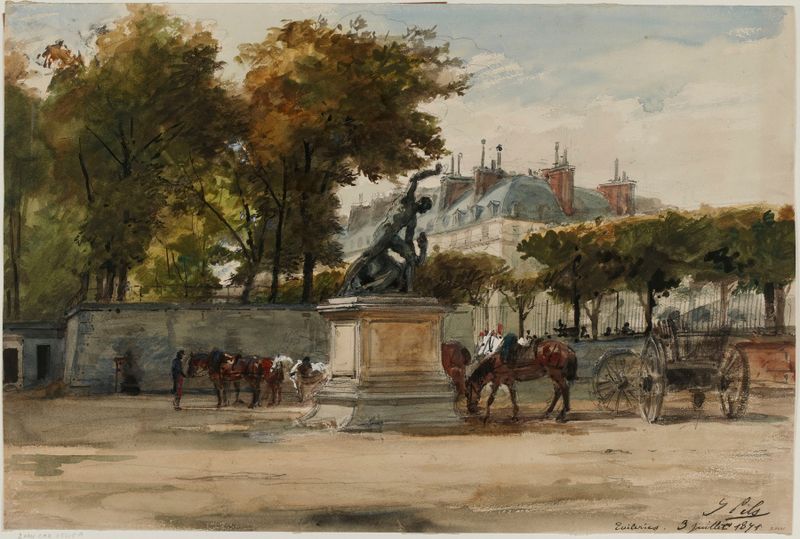
Artilleurs aux Tuileries, 9 juillet 1871.
Isidore Pils

Ruins of the Tuileries Palace
Isidore Pils

La place Vendôme après le renversement de la colonne.
Isidore Pils
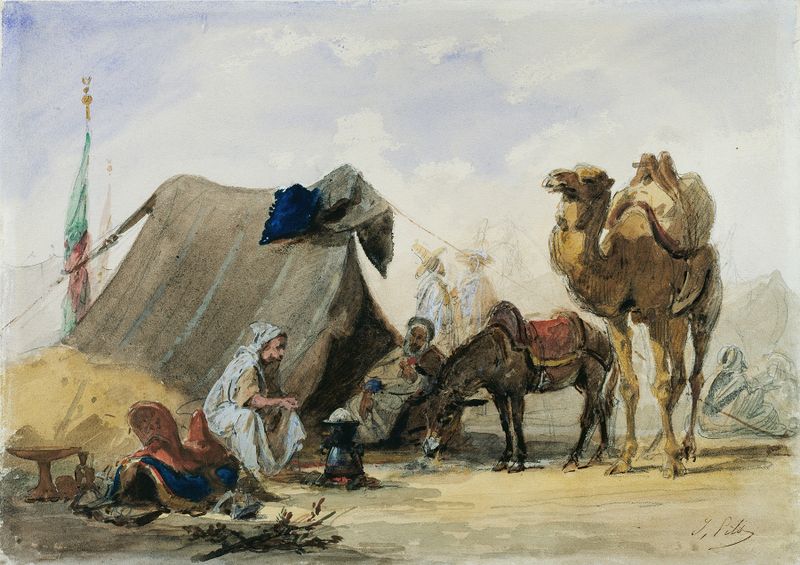
An Arab Encampment
Isidore Pils

Soldats du 37e de Ligne boulevard de Clichy.
Isidore Pils

Le bastion 63.
Isidore Pils

Les Buttes-Chaumont.
Isidore Pils

Le Point du Jour, février 1871.
Isidore Pils
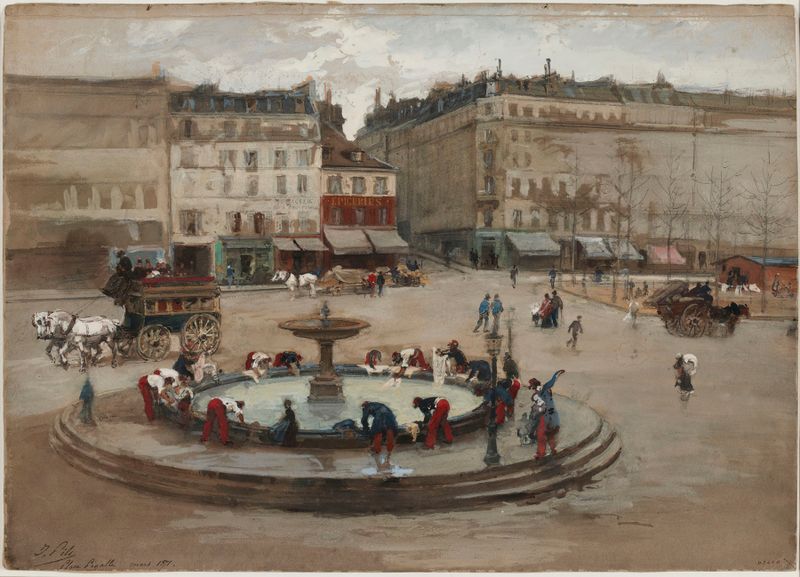
La lessive, place Pigalle, mars 1871.
Isidore Pils
More Historical Art
Browse all →
The Night Watch Militia Company of District II under the Command of Captain Frans Banninck Cocq
Rembrandt van Rijn

Lincoln Memorial
Henry Bacon

The Third of May 1808
Francisco de Goya

Isaac and Rebecca, Known as ‘The Jewish Bride’
Rembrandt van Rijn

The Charge of the Mamelukes (1814)
Francisco de Goya

De vier ruiters van de apocalyps
Albrecht Dürer