
Ruins of the Tuileries Palace — History & Facts
In moments of loss and destruction, creativity becomes a pathway to understanding our destinies. How does one capture the essence of such profound transformations? Look to the left of Ruins of the Tuileries Palace, where a twisted column rises amidst the debris, its spirals echoing the chaos of a fallen empire. The muted palette of grays and browns dominates the canvas, yet it is punctuated by touches of ochre, as if the remnants of grandeur still whisper their stories.
The composition draws the eye from the intricately detailed ruins to the somber figures in the foreground, who appear dwarfed by the monumental devastation that surrounds them, creating a poignant juxtaposition of human fragility against architectural ambition. Within the rubble lies a deeper narrative—the tension between remembrance and erasure. Notice how the figures, some grieving, others contemplative, embody the collective sorrow of a nation that once thrived. This emotional weight invites viewers to reflect on the consequences of fate; the ruins symbolize not only physical destruction but also the haunting echoes of lost potential and broken dreams.
The contrast between the remnants of beauty and the stark reality of decay speaks to the resilience of history, forever marked by the passage of time. Isidore Pils painted this work in the aftermath of the Franco-Prussian War, a period of turmoil and reflection for France. Completed in 1871, the piece emerged during a time when artists grappled with the impact of conflict on society and identity. As Paris faced its own rebirth from the ashes of destruction, the work stands as a testament to both suffering and the enduring spirit of creativity.
More Artworks by Isidore Pils
Browse all →
Fort sous la neige.
Isidore Pils
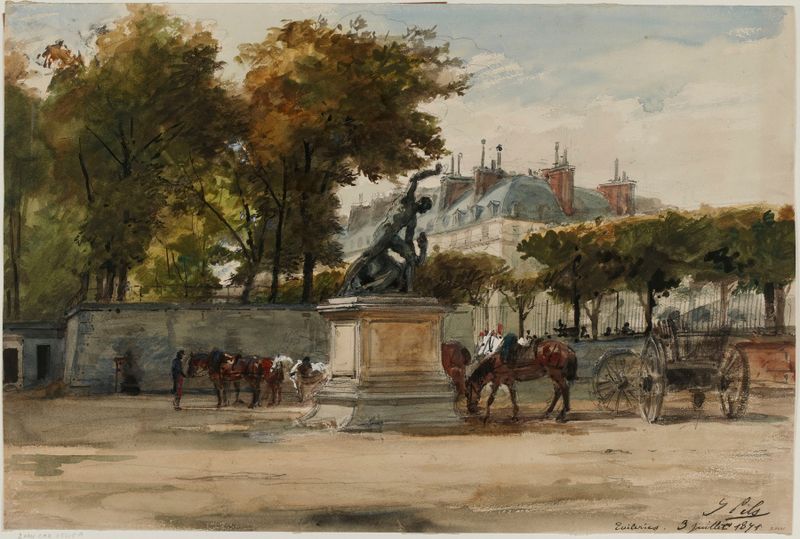
Artilleurs aux Tuileries, 9 juillet 1871.
Isidore Pils

La place Vendôme après le renversement de la colonne.
Isidore Pils
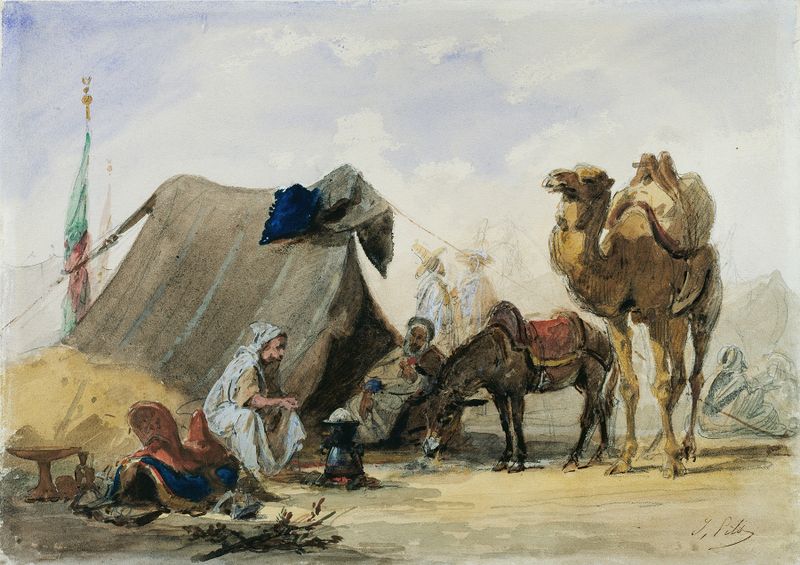
An Arab Encampment
Isidore Pils

Soldats du 37e de Ligne boulevard de Clichy.
Isidore Pils

Le bastion 63.
Isidore Pils

Les Buttes-Chaumont.
Isidore Pils

Le Point du Jour, février 1871.
Isidore Pils
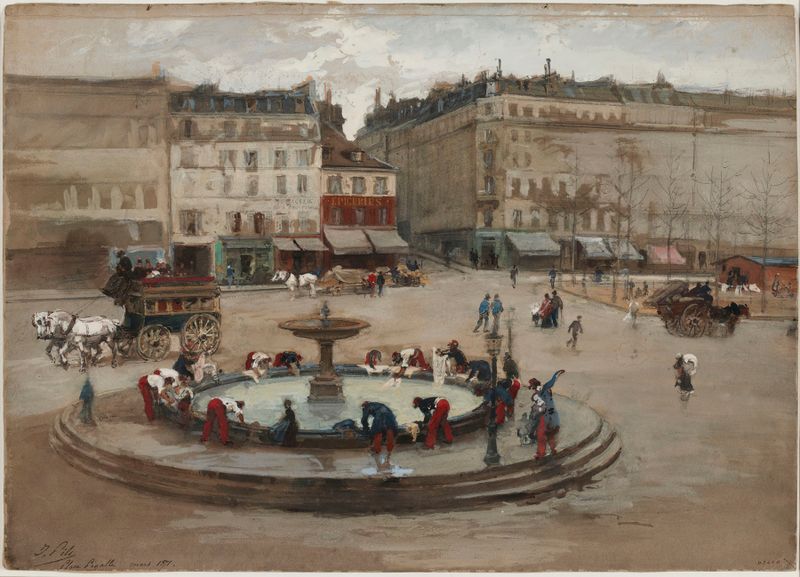
La lessive, place Pigalle, mars 1871.
Isidore Pils
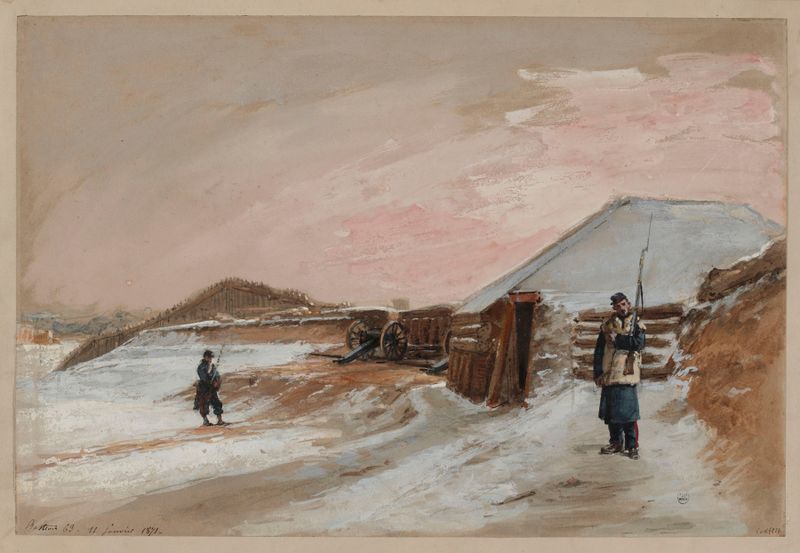
Siège de Paris, bastion 63, le 11 janvier 1871.
Isidore Pils





