
Le bastion 63. — History & Facts
Can paint confess what words never could? In Le bastion 63, a silent but powerful narrative unfolds, capturing the essence of betrayal and the complexities of human emotion. Look to the center of the canvas, where a soldier stands poised, his expression a mix of resolve and uncertainty. Observe the contrasts between the warm hues of his attire and the cold, gray palette of the surrounding fortress. The interplay of light highlights the intricate details of his uniform while casting shadows that suggest the weight of his impending choices.
The composition draws the eye toward his clenched fists, revealing a tension that speaks volumes without uttering a single word. Delving deeper, the layers of meaning become apparent. The soldier’s guarded demeanor hints at a betrayal that looms not just in battle but within the bonds of camaraderie. The looming bastion itself stands as a metaphor for loyalty, its worn stones symbolizing the fragility of trust.
The fog creeping in from the edges evokes a sense of impending doom, suggesting that the uncertainties of war mirror the complexities of human relationships. Created in 1871, Le bastion 63 reflects the tumultuous aftermath of the Franco-Prussian War, a period that deeply influenced Isidore Pils. At this time, he was grappling with personal loss and the changing tides of the art world, which was moving towards realism and away from romanticism. This piece reflects not only the external conflicts of the era but also the internal battles that each soldier—and indeed each individual—must confront.
More Artworks by Isidore Pils
Browse all →
Fort sous la neige.
Isidore Pils
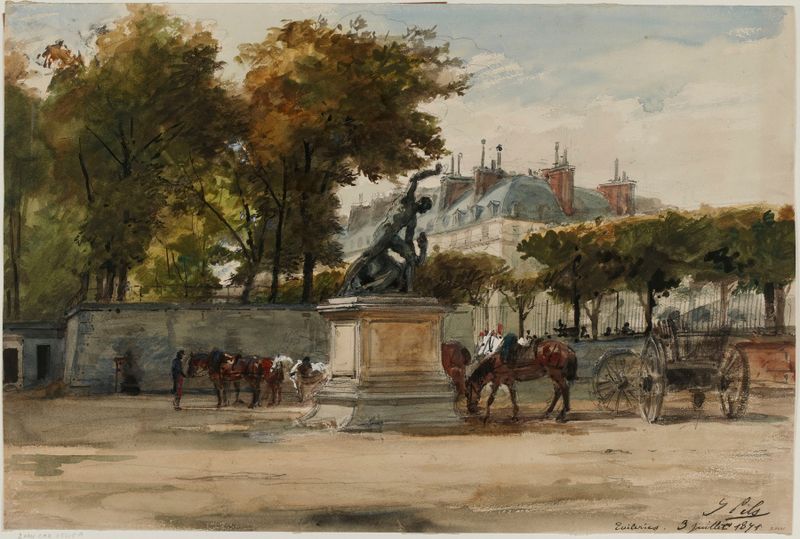
Artilleurs aux Tuileries, 9 juillet 1871.
Isidore Pils

Ruins of the Tuileries Palace
Isidore Pils

La place Vendôme après le renversement de la colonne.
Isidore Pils
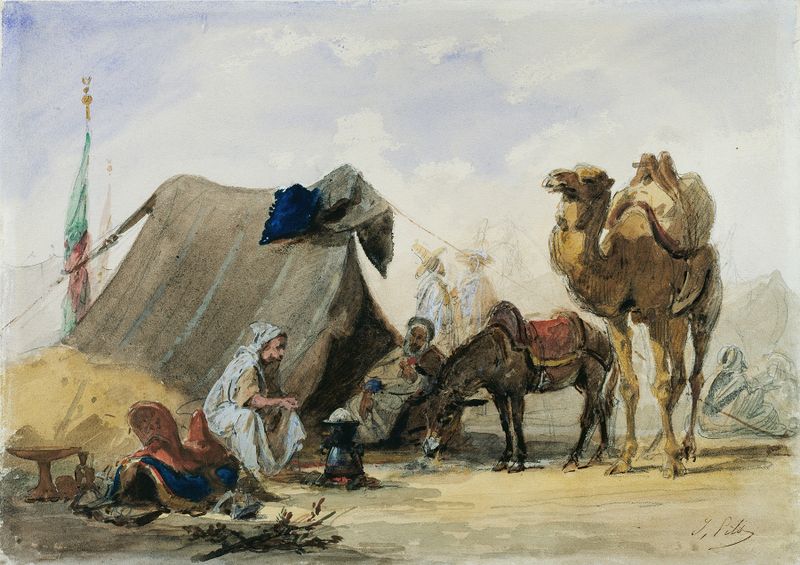
An Arab Encampment
Isidore Pils

Soldats du 37e de Ligne boulevard de Clichy.
Isidore Pils

Les Buttes-Chaumont.
Isidore Pils

Le Point du Jour, février 1871.
Isidore Pils
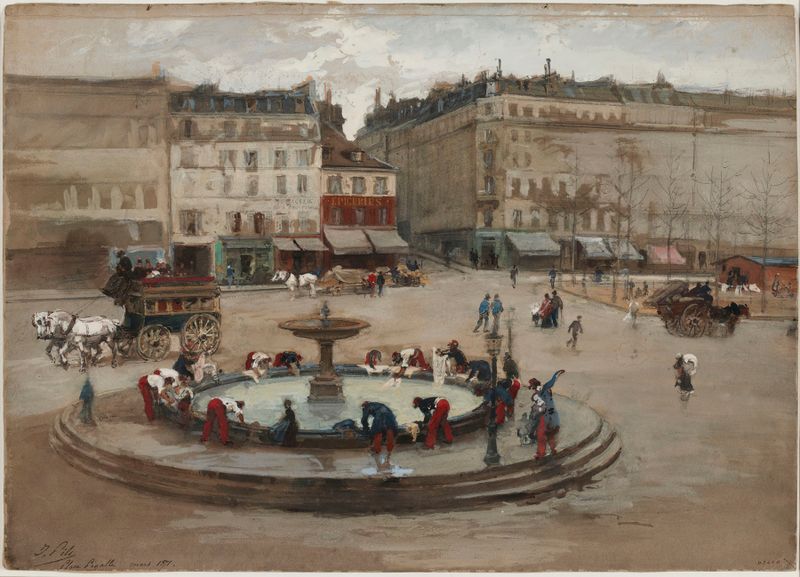
La lessive, place Pigalle, mars 1871.
Isidore Pils
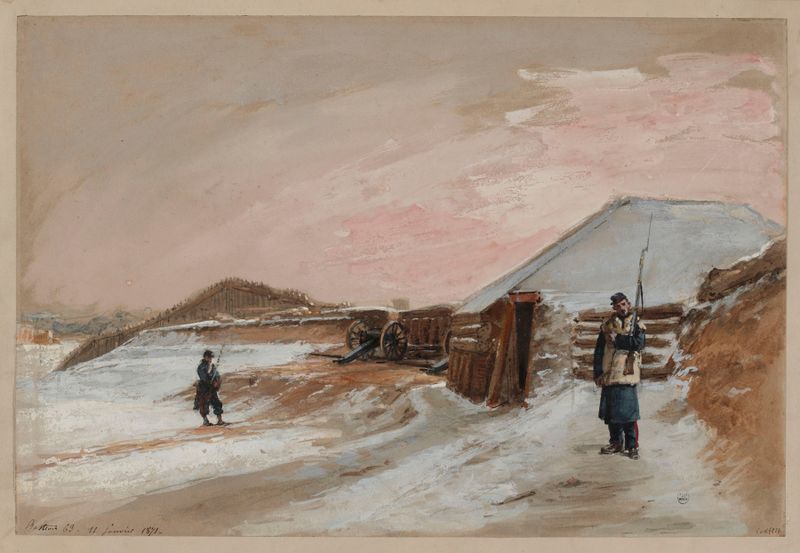
Siège de Paris, bastion 63, le 11 janvier 1871.
Isidore Pils
More Historical Art
Browse all →
The Night Watch Militia Company of District II under the Command of Captain Frans Banninck Cocq
Rembrandt van Rijn

Lincoln Memorial
Henry Bacon

The Third of May 1808
Francisco de Goya

Isaac and Rebecca, Known as ‘The Jewish Bride’
Rembrandt van Rijn

The Charge of the Mamelukes (1814)
Francisco de Goya

De vier ruiters van de apocalyps
Albrecht Dürer