An Eastern Scene — History & Facts
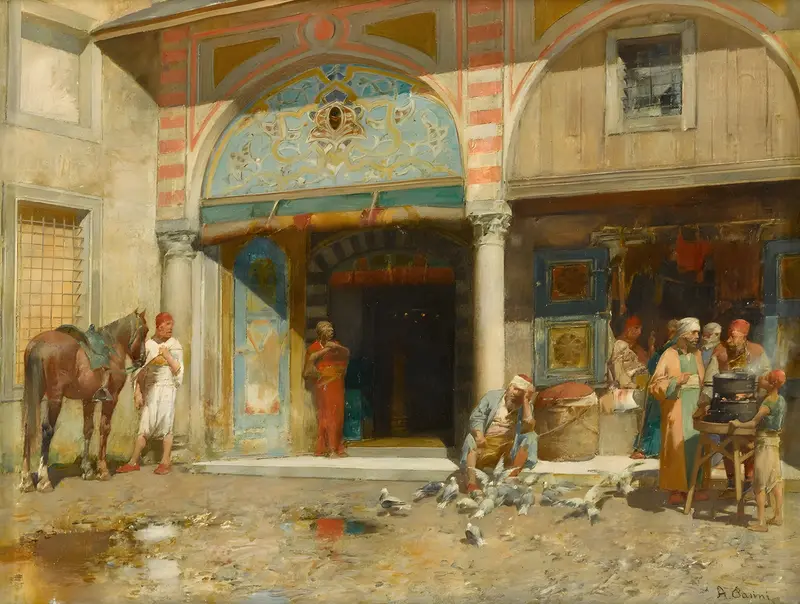
The first thing that draws the eye in An Eastern Scene by Alberto Pasini is the crisp, sunlit geometry of the building, its pale dome and striped stonework glowing against a sky so clear it feels almost weightless. Light pours down, casting sharp shadows that cool the figures gathered at the threshold of the arched shopfront. Horses wait patiently in the foreground, their handlers deep in conversation, while the open door beckons with a tumble of color—textiles, perhaps, or goods for trade—hinting at the bustle within.
The composition leads the viewer from the solidity of the architecture to the intimate, everyday negotiations at its base, suggesting a world where commerce and conversation are inseparable. Painted in 1888, this work belongs to the flourishing genre of Orientalist painting, a style that captivated European audiences with visions of the “exotic” East. Artists like Pasini—who traveled widely—brought back scenes shaped by their own encounters and the tastes of collectors eager for glimpses of distant lands. Such paintings were often commissioned by wealthy patrons or acquired by institutions seeking to display the breadth of the world, filtered through European eyes.
Today, An Eastern Scene resides in the collection of the National Gallery of Ireland, a reminder of both the era’s curiosity and its complicated gaze. The scene invites us to look closer, not just at the brushwork, but at the world it sought to capture.
More Artworks by Alberto Pasini

Mercato in Oriente
Alberto Pasini
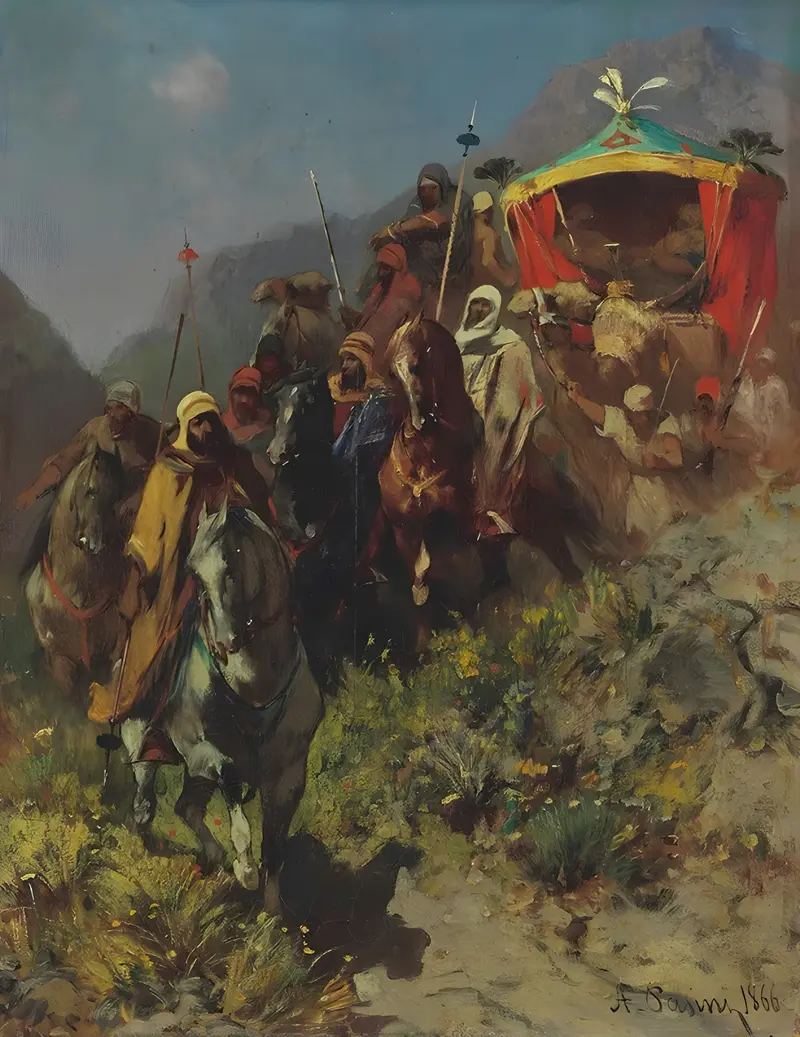
A Caravan on a Mountain Pass
Alberto Pasini

The blacksmith’s shop
Alberto Pasini
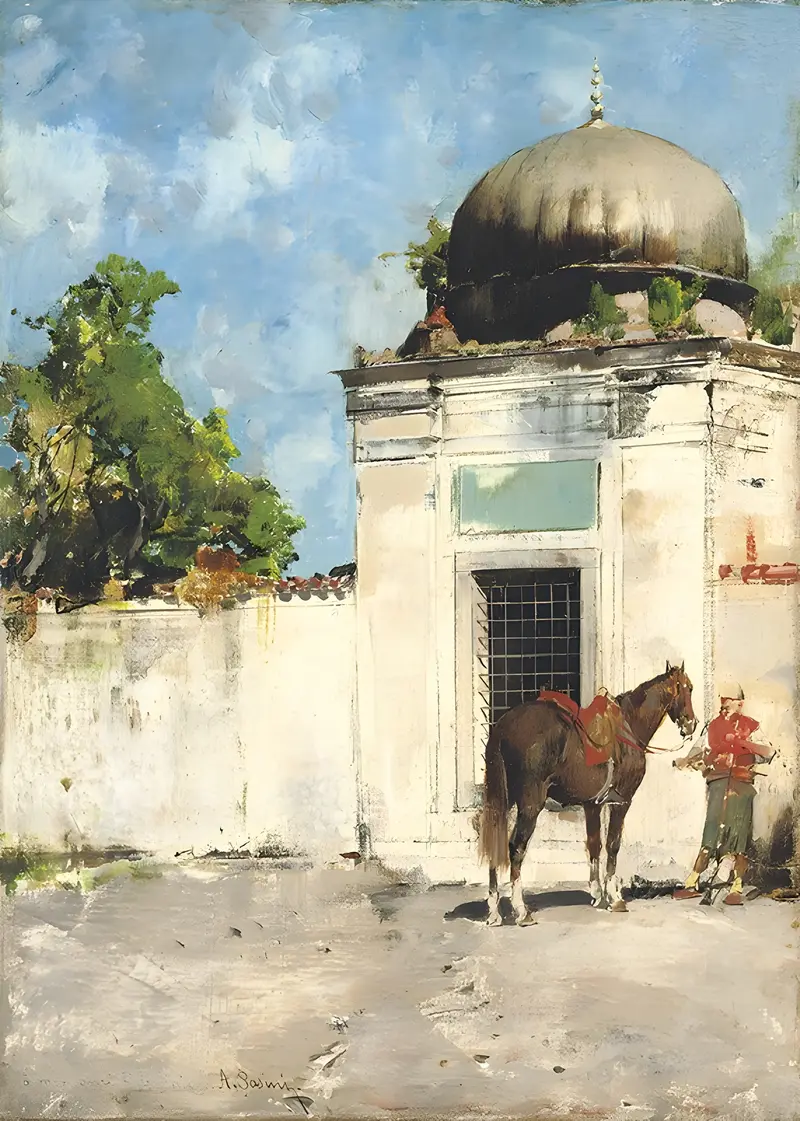
The Sentinel
Alberto Pasini
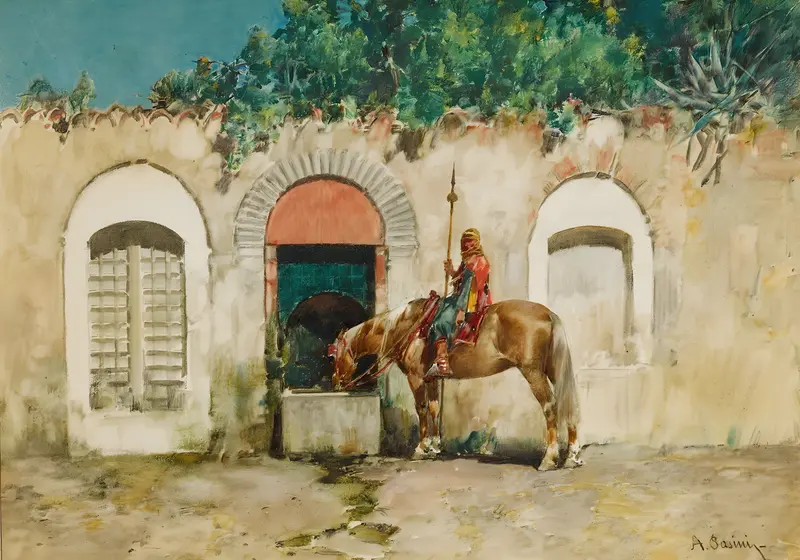
Horseman At A Fountain
Alberto Pasini
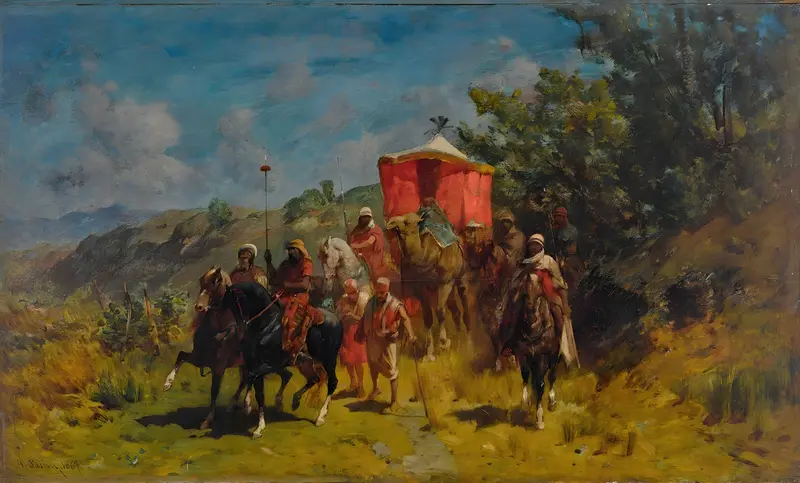
An Arab Caravan
Alberto Pasini
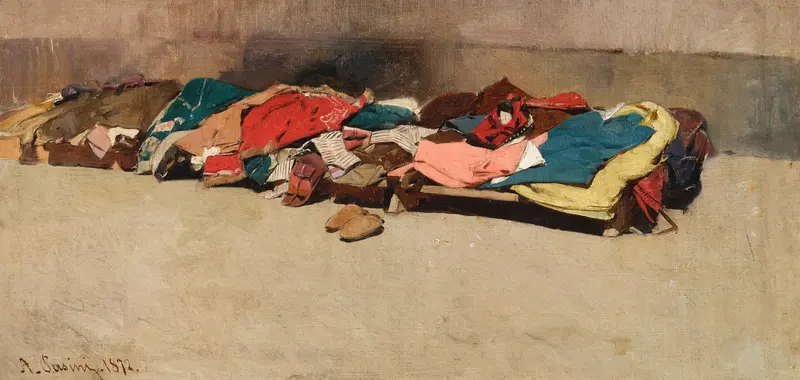
Mercato
Alberto Pasini
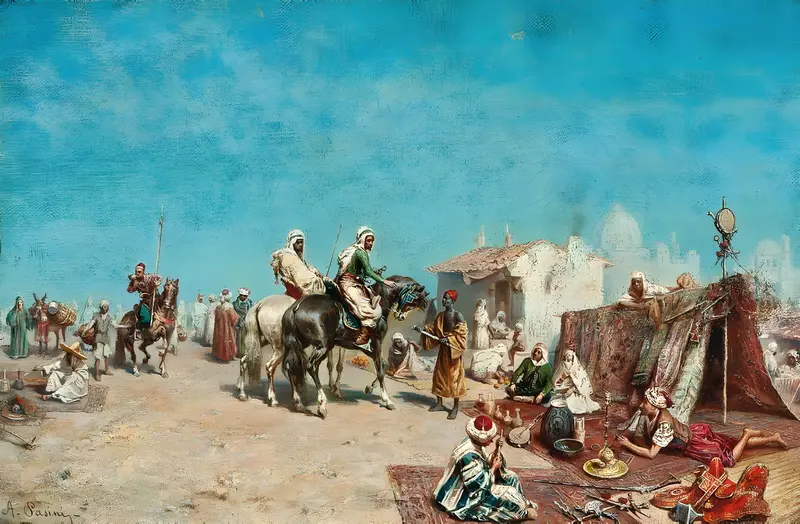
Arab merchants at a market by the city walls
Alberto Pasini
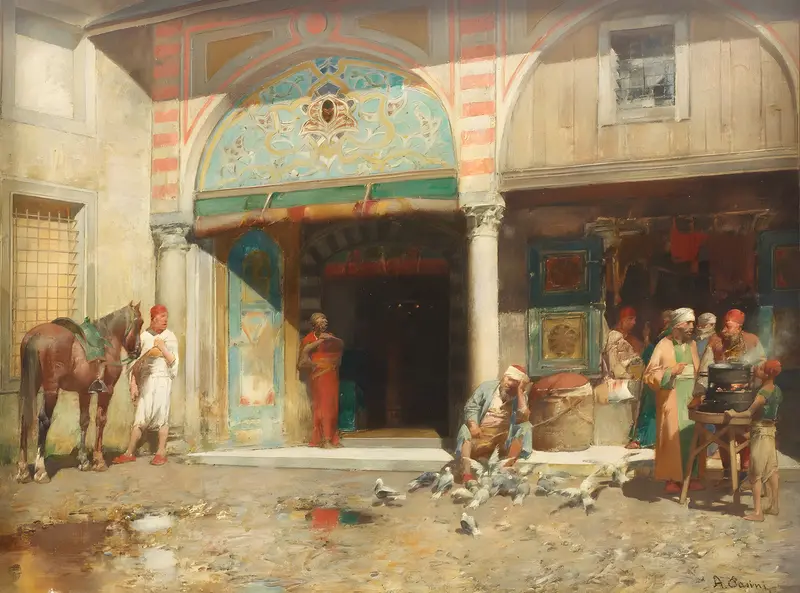
Outside the mosque
Alberto Pasini
Outside the Mosque
Alberto Pasini