
An extensive landscape near Paris — History & Facts
In the stillness of an expansive landscape, the viewer stands on the precipice of nature's embrace, staring into a realm that teeters on the edge of beauty and madness. Here, tranquility masquerades as a haunting echo of what lies beyond the horizon, inviting contemplation of the unseen. Look to the right at the gentle undulations of the rolling hills, their lush greens and muted browns intermingling under a sky dappled with clouds. The soft brushstrokes delineate trees that sway in a whispering breeze, while in the distance, a monumental structure hints at civilization's encroachment on the pastoral wilderness.
Robert’s deft use of light spills across the canvas, illuminating key features and casting elongated shadows that evoke a sense of both longing and impermanence. Within this vast expanse lies a subtle tension: the idyllic landscape juxtaposed with hints of human intervention. Notice the dilapidated ruins peeking through the foliage, symbols of past aspirations surrendered to nature's relentless reclamation. The interplay of light and shadow suggests a world on the brink, a shared existence between serenity and chaos, urging the viewer to reflect on humanity’s fragile balance with nature. Hubert Robert painted this scene in 1781 while living in Paris, a period marked by a burgeoning interest in Romanticism.
His works encapsulated the transformative shifts in art and philosophy, mirroring the societal upheaval of the time. As artists began to grapple with the concept of identity and existence, Robert’s landscapes served as a poignant reminder of nature's allure and its fragile coexistence with a rapidly changing world.
More Artworks by Hubert Robert
Browse all →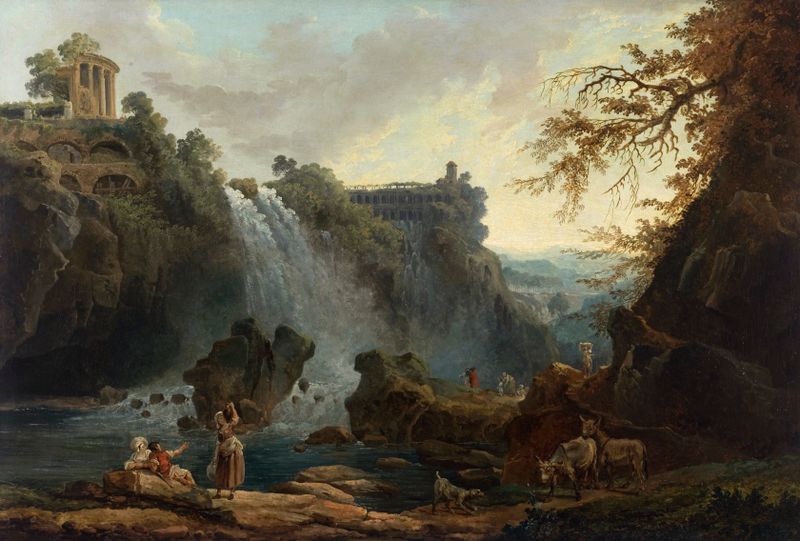
Les Cascatelles de Tivoli
Hubert Robert
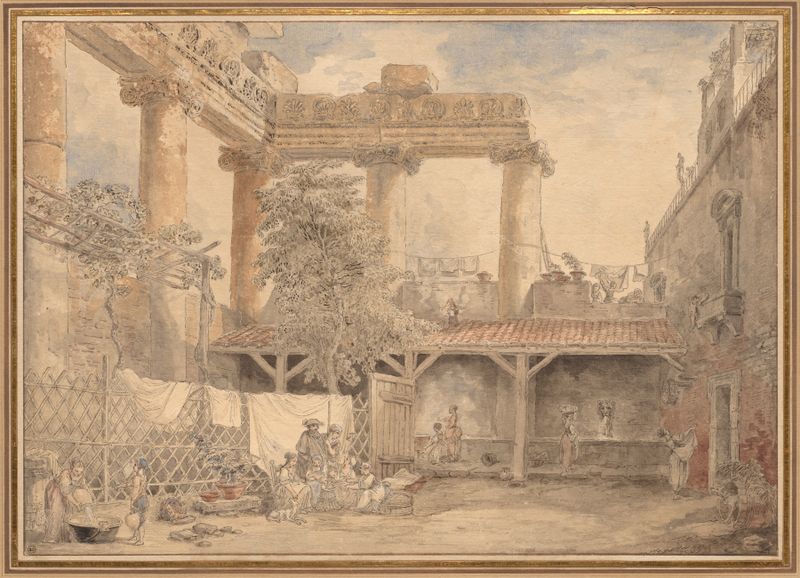
Roman Ruins, Villa Pamfili
Hubert Robert

The Rustic Bridge, Château de Méréville, France
Hubert Robert

The Portico of a Country Mansion
Hubert Robert

Architectural Capriccio
Hubert Robert

The Obelisk
Hubert Robert
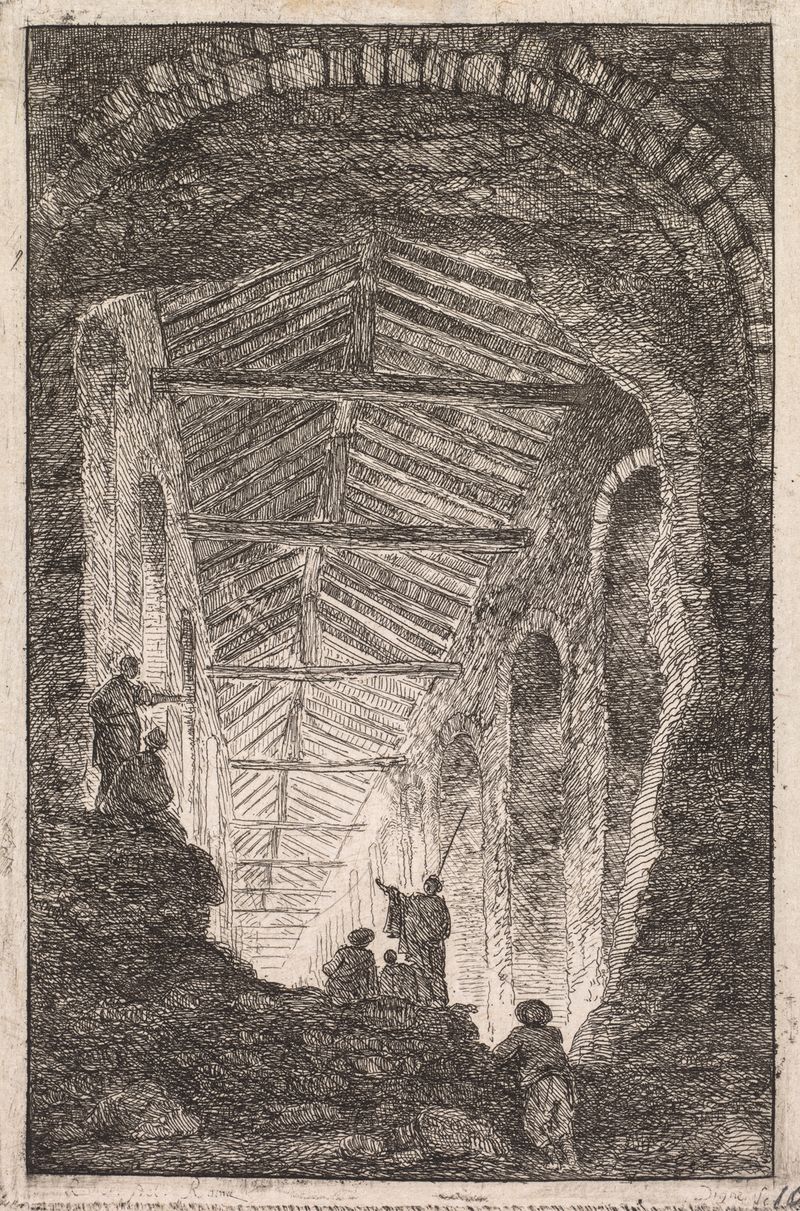
The Antique Gallery
Hubert Robert

L’incendie de l’Opéra, vu des jardins du Palais-Royal, le 8 juin 1781
Hubert Robert
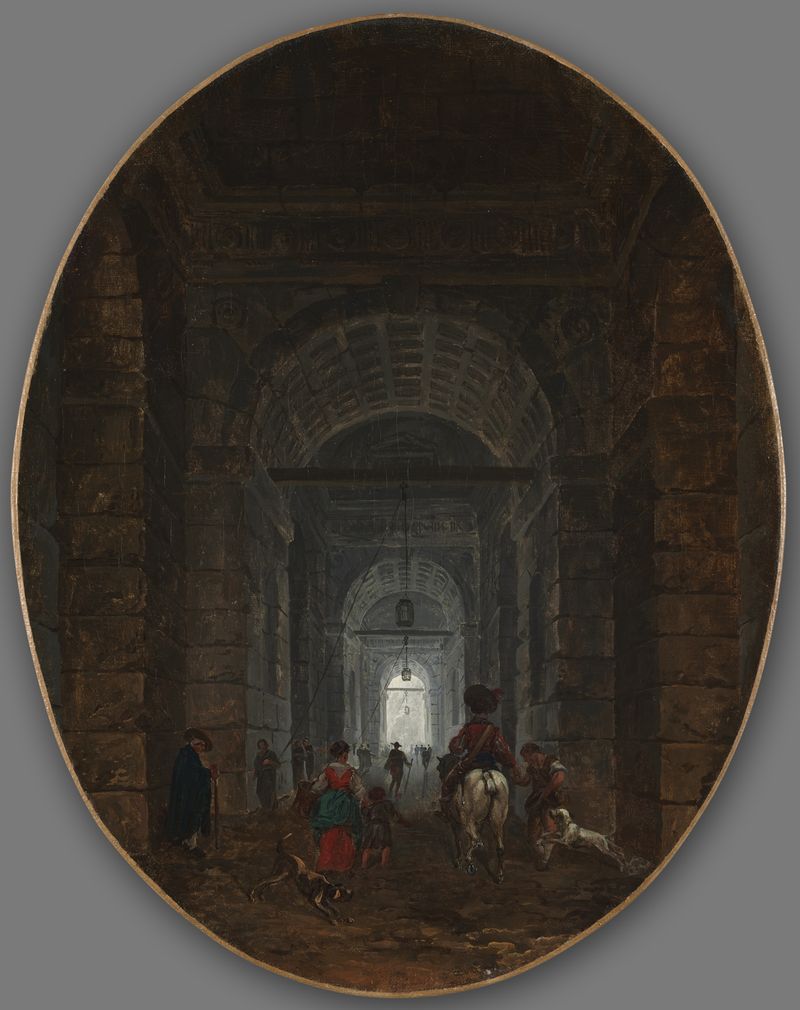
The Grotto of Posillipo
Hubert Robert

Architectural Capriccio with ruins of the Temple of Saturn and the Colosseum in the background
Hubert Robert





