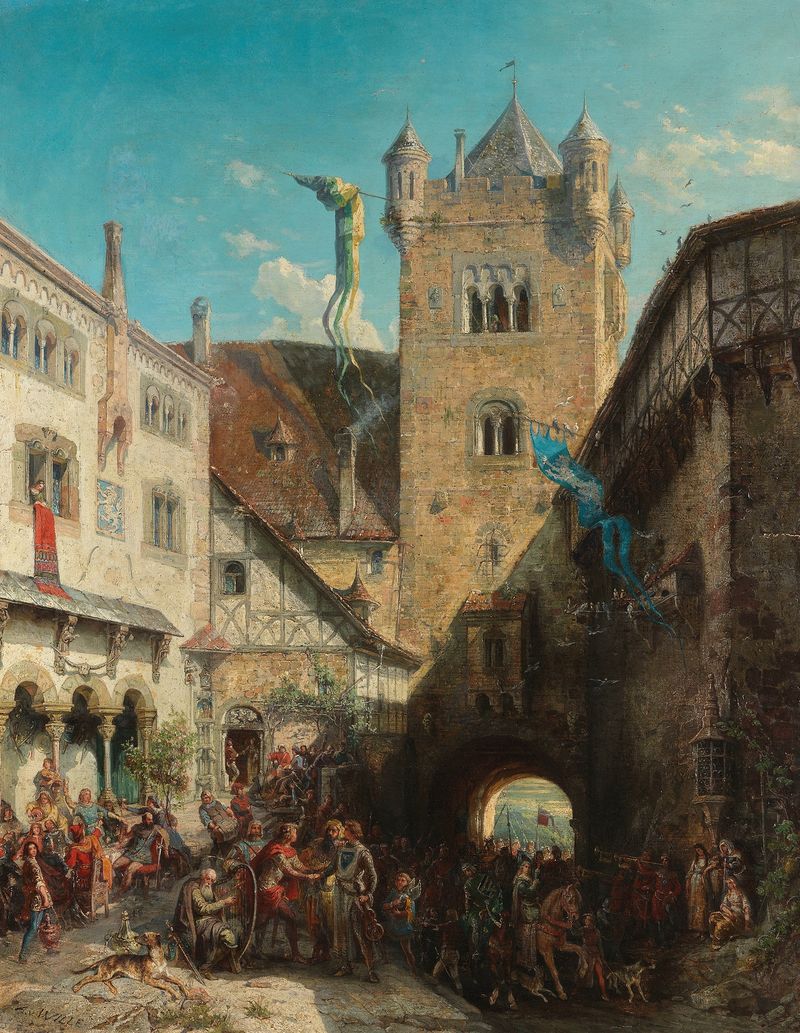
Ansicht von Beilstein mit Soldaten vor einer Schänke — History & Facts
It is in this delicate interplay that fragility can be found, whispering through the canvas’s layers. Focus on the bustling scene that unfolds along the riverbank, where the tender hues of nature blend seamlessly with the earthier tones of soldiers gathered in conversation. The composition draws the eye gently from the foreground figures to the quaint inn in the background, inviting exploration of the harmonizing color palette. Notice how the warm sunlight bathes the soldiers, casting soft shadows that enhance their camaraderie, while the cool blues of the water offer a tranquil contrast, suggesting a moment suspended in time. Yet, beneath this picturesque surface lies an emotional tension, a narrative of transition.
The soldiers represent not just a fleeting moment of leisure but also hint at the impermanence of peace, standing at the edge of an uncertain future. The gentle ripples on the water echo the fragility of human connections and the inevitable passage of time, while the inn symbolizes both refuge and the unpredictable nature of life’s journeys. Painted in 1883, this work emerged during a time when August von Wille was deeply engaged with capturing the essence of daily life and its complexities. Living in Germany, he was part of a broader movement aiming to depict reality with sincerity and emotional depth.
This period marked a shift in artistic expression, as artists began to focus on the stories found in everyday moments, paving the way for impressionism's rise.