Ansicht von Tivoli — History & Facts
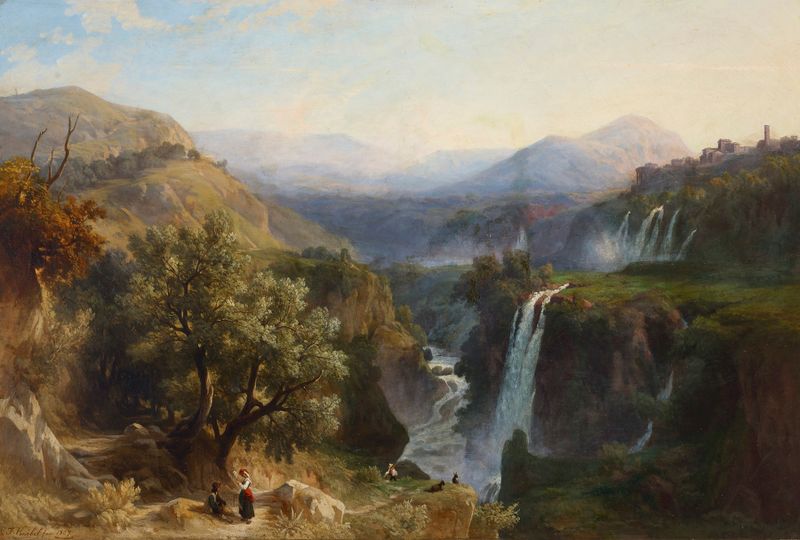
What secret hides in the quiet of the canvas? A world of dreams unfolds in Ansicht von Tivoli as the viewer wanders through the ethereal landscape, where reality and imagination intermingle. Look to the left at the cascading waterfalls, their gentle flow captured with delicate brushstrokes that render the water almost translucent under the warm sunlight. Notice how the lush greenery frames the scene, guiding your gaze toward the distant hills that softly recede into a tranquil horizon. The palette of soft greens and golden hues invites a sense of serenity, enveloping you in a moment suspended in time. Intrigued by the tranquil atmosphere, you may uncover layers of meaning beneath the surface.
The juxtaposition of the vibrant flora against the calming water suggests a harmony of nature, while the distant ruins hint at the passage of time and the impermanence of beauty. Each detail — from the quiet figures strolling near the water's edge to the textured cliffs bathed in light — evokes a contemplative mood, reminding us of the fragility of our dreams. In 1858, Franz Knebel created this evocative piece while immersed in the burgeoning Romantic movement. Living in Germany, he was drawing inspiration from Italy's picturesque landscapes, which captivated artists of his time.
This work reflects not only his personal exploration of nature's beauty but also the broader artistic trend that celebrated the sublime, resonating with the yearning for emotional depth amid an evolving artistic milieu.