The Cascades of Tivoli — History & Facts
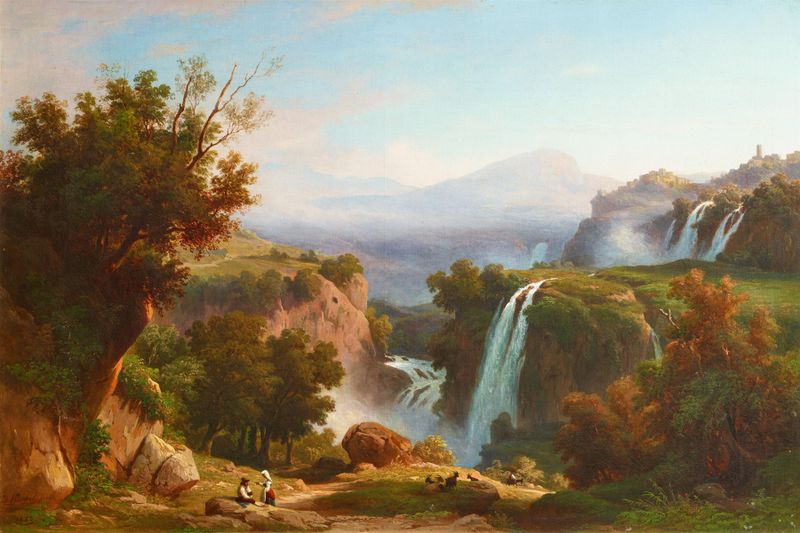
Who listens when art speaks of silence? In the stillness captured by Knebel, it is not just the cascading water that draws our attention, but the quiet reverence that surrounds it. Look to the left at the delicate interplay of greens and blues that suggests the lush foliage. Notice how the artist’s brushstrokes create a rhythmic flow, mirroring the water’s descent, while dappled sunlight filters through, illuminating the rocks. The composition leads the eye through the layers of the cascading falls, inviting you deeper into this tranquil realm.
Every element, from the soft curves of the water to the ruggedness of the cliffs, works in harmony to evoke a sense of serene majesty. Beneath the surface, the painting encapsulates a profound dialogue between nature and human existence. The striking contrast between the gentle flow of the water and the imposing rocks hints at life’s dualities: beauty and struggle, tranquility and tumult. The cascading water serves as a metaphor for the passage of time, a reminder of nature's enduring presence, while the lush surroundings evoke a sense of awe that compels the viewer to reflect on their place within this grand tapestry. Franz Knebel created this evocative work in 1867, during a period of artistic exploration in Europe, particularly around the Romantic movement's embrace of nature's sublime qualities.
Living in Germany, Knebel drew inspiration from his travels, focusing on picturesque landscapes that expressed both beauty and spiritual significance. As the world rapidly modernized, this painting signifies a longing for the tranquil and timeless beauty found in nature.