Antícoli Corrado Square — History & Facts
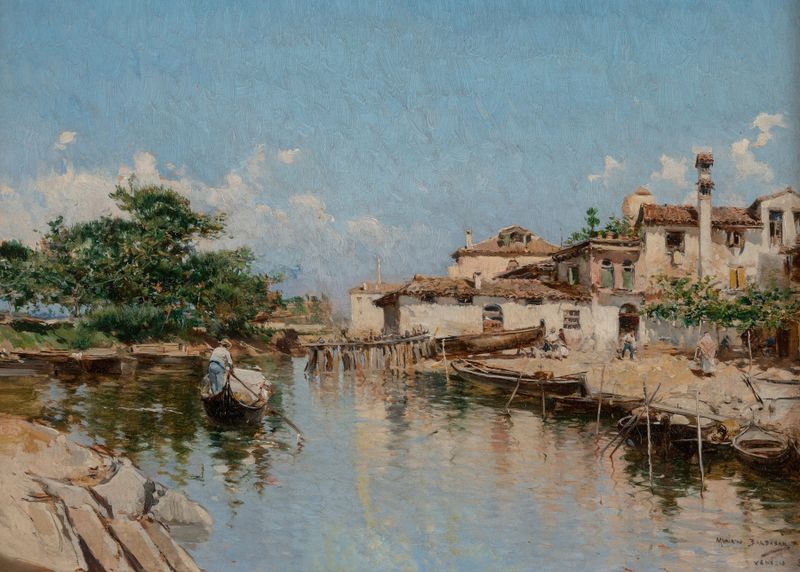
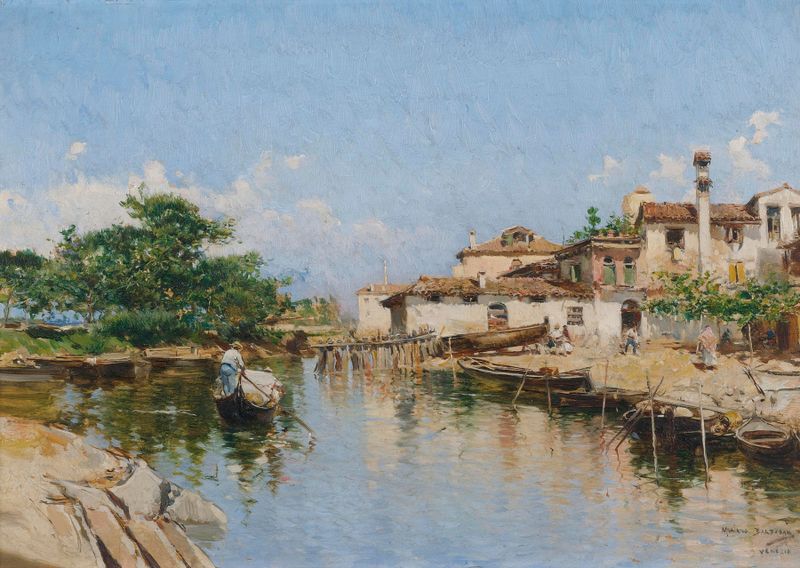
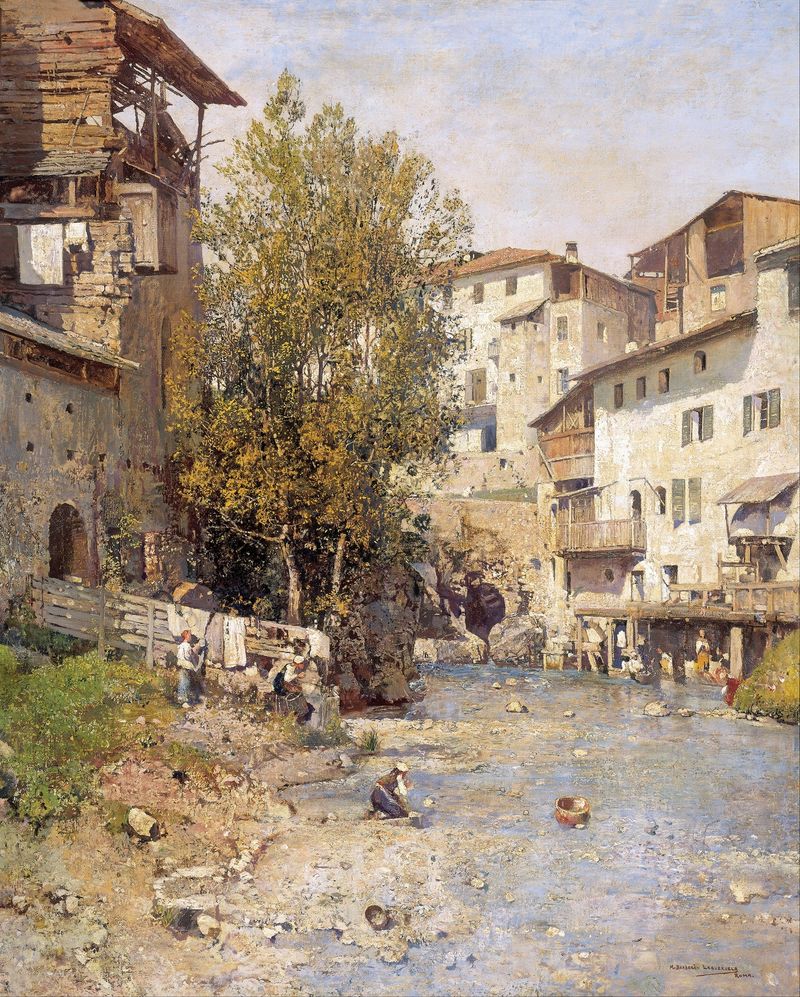
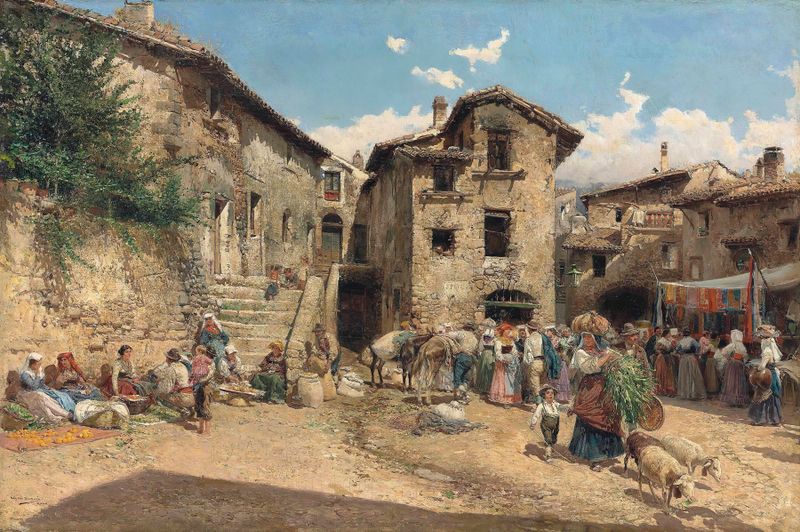
What if beauty was never meant to be finished? A fleeting moment captured in time, nostalgic and vibrant, echoes the whisper of memories long past. Look closely at the corners of the canvas where soft sunlight bathes the cobblestone square. The warm ochres and deep blues dance together, guiding your gaze toward the bustling figures that inhabit this urban landscape. Notice how the artist employs gentle brushwork to render the details of the architecture, allowing the buildings to rise against the sky with a sense of both permanence and transience, as if they are anchored in a moment yet destined to fade. The juxtaposition of light and shadow creates an emotional tension, suggesting life’s dualities—joy and sorrow, presence and absence.
The scattered figures, each lost in their own world, evoke a poignant sense of solitude amidst the crowd, reminding the viewer that even in moments of collective experience, loneliness can linger. The whispers of time resonate through the colors, offering a bittersweet reverie that speaks to the heart’s longing for connection. In 1922, Mariano Barbasán was deeply engaged with the themes of modernity and nostalgia as he painted this work. Living in Spain, a country undergoing significant social and political shifts, he sought to capture the essence of urban life while reflecting on the emotional landscapes of the past.
At this time, the art world was embracing new movements that challenged traditional forms, yet Barbasán’s sensitivity to the interplay of light and memory anchored his practice in the timeless pursuit of beauty.