Goats in the Pasture, Anticoli Corrado — History & Facts
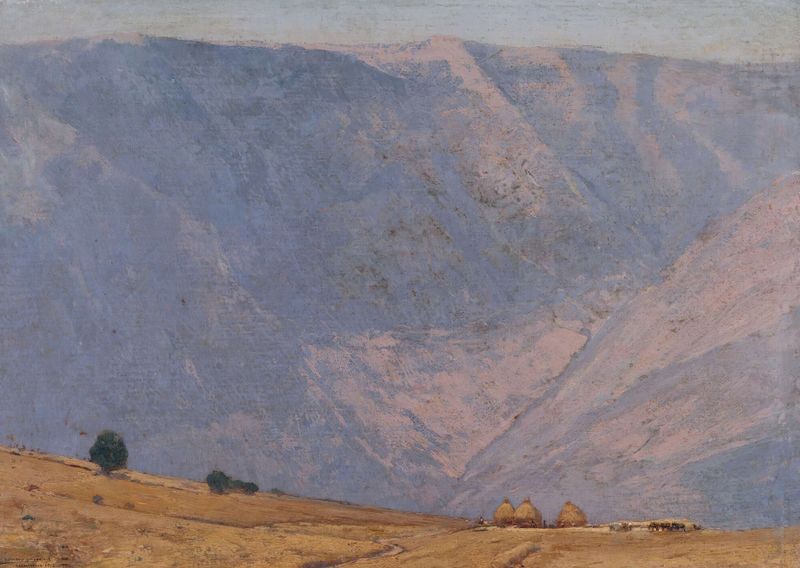
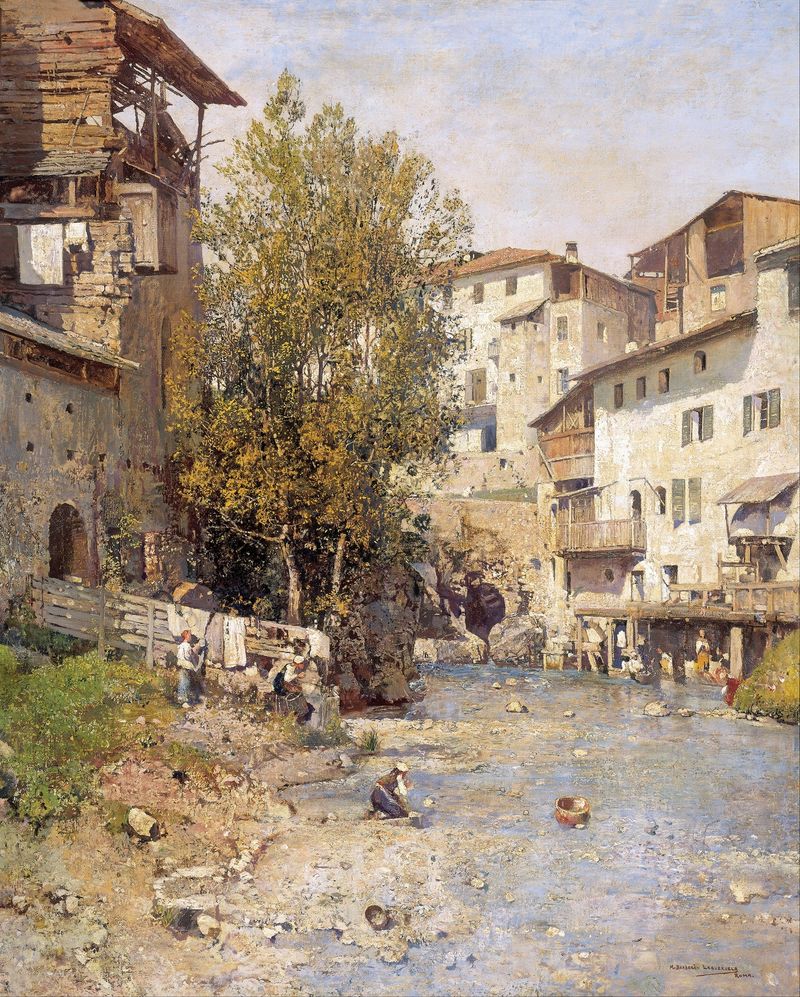
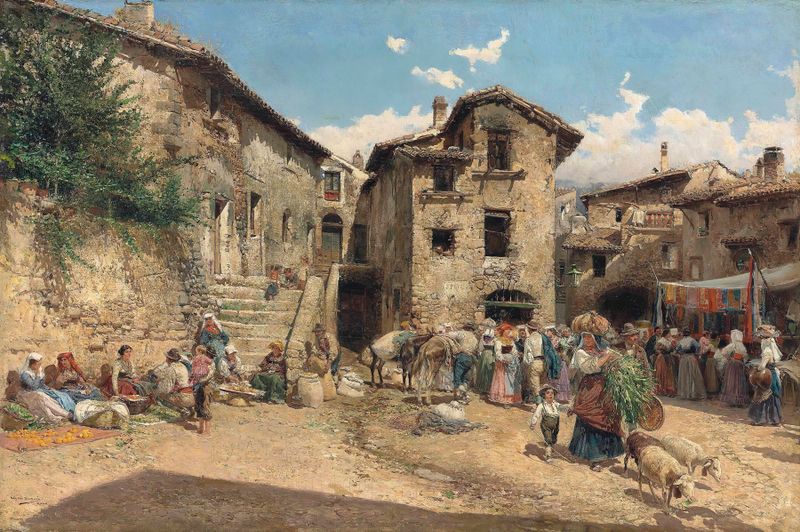
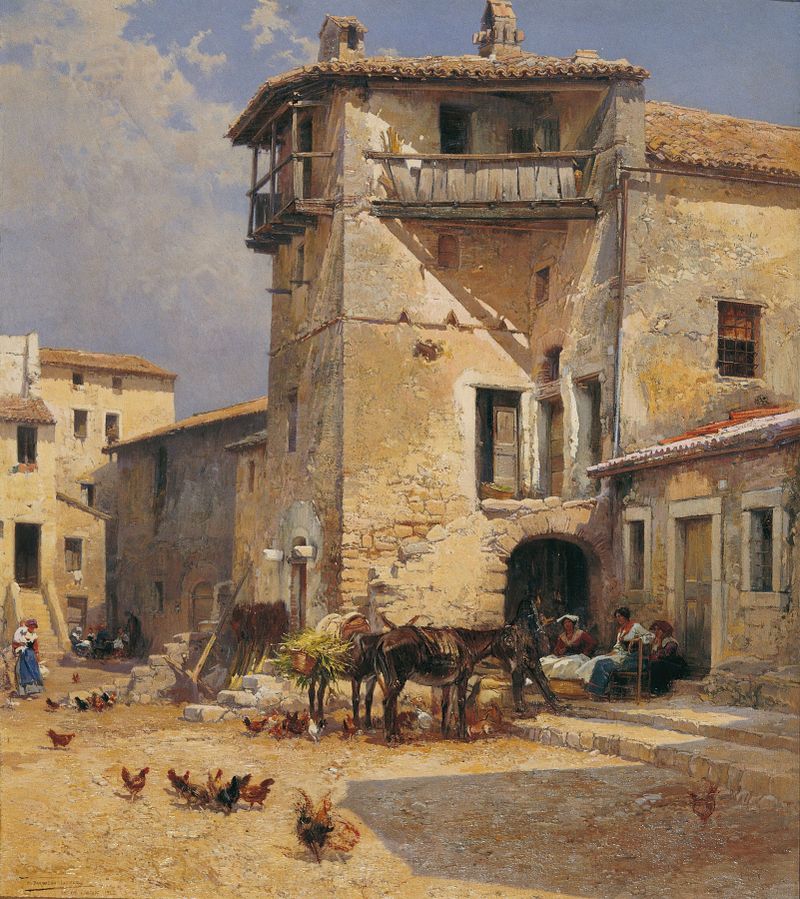
In the stillness of a sun-drenched afternoon, desire pulses beneath the surface of a pastoral scene, whispering of quiet yearnings and the simplicity of rural life. Look to the center of the canvas, where goats graze peacefully, their forms rendered in soft browns and whites, harmonizing with the verdant backdrop of rolling hills. The light filters gently through the leaves, casting playful shadows that dance across the ground, inviting a sense of tranquility. Notice how the artist’s brushwork conveys not just the physicality of the goats but also the emotional warmth of the setting, each stroke infused with a longing for connection to nature. Within this serene tableau lies a contrast between the carefree animals and the underlying tension of human desire—perhaps a longing for the pastoral life, unencumbered by the complexities of modernity.
The lush greenery represents abundance, yet the goats’ solitude hints at a deeper solitude that lingers in the air, a reflection of both contentment and yearning. This interplay encapsulates the delicate balance between nature and human emotion, urging viewers to contemplate their own desires amidst the simplicity of daily life. Painted in 1904 while residing in Anticoli Corrado, the artist captures a moment suspended in time, situated at the intersection of tradition and emerging modernity in art. During this period, Mariano Barbasán was influenced by the Italian landscape and the artistic community that flourished there, seeking to express an intimacy with nature that resonated deeply within the socio-cultural context of his time.