
Appin Rocks — History & Facts
Can beauty exist without sorrow? As we gaze upon the rugged landscape captured by an artist's hand, one feels the weight of both wonder and melancholy in the air. Look to the foreground at the jagged rocks, their dark textures contrasting starkly with the soft hues of the distant hills. The interplay of light and shadow creates an ethereal quality, inviting the viewer's eye toward the horizon where the sky melts into twilight. Notice how the brushstrokes vary in intensity, lending depth and movement to the scene, as if the landscape itself is caught in a dream-like reverie. Delve deeper into the painting's emotional layers.
The smooth gradations of color in the sky evoke a sense of transience, a fleeting moment before nightfall, while the solid, formidable rocks symbolize enduring strength. This juxtaposition begs contemplation on fragility and resilience, suggesting that beauty often emerges from the coexistence of joy and heartache. The solitude of the composition enhances this emotional duality, inviting a quiet introspection. In 1913, David Young Cameron found himself immersed in a changing world as a prominent figure in the Scottish art scene.
Having established his reputation as a landscape artist, he was exploring new techniques and emotional depth in his works. During this time, the art world was shifting towards modernism, but Cameron remained rooted in the romanticism of nature, capturing the essence of the Scottish landscape with a sensitivity that resonated with both personal and universal themes.
More Artworks by David Young Cameron
Browse all →
Ponte Vecchio
David Young Cameron

The Deanery, Winchester
David Young Cameron
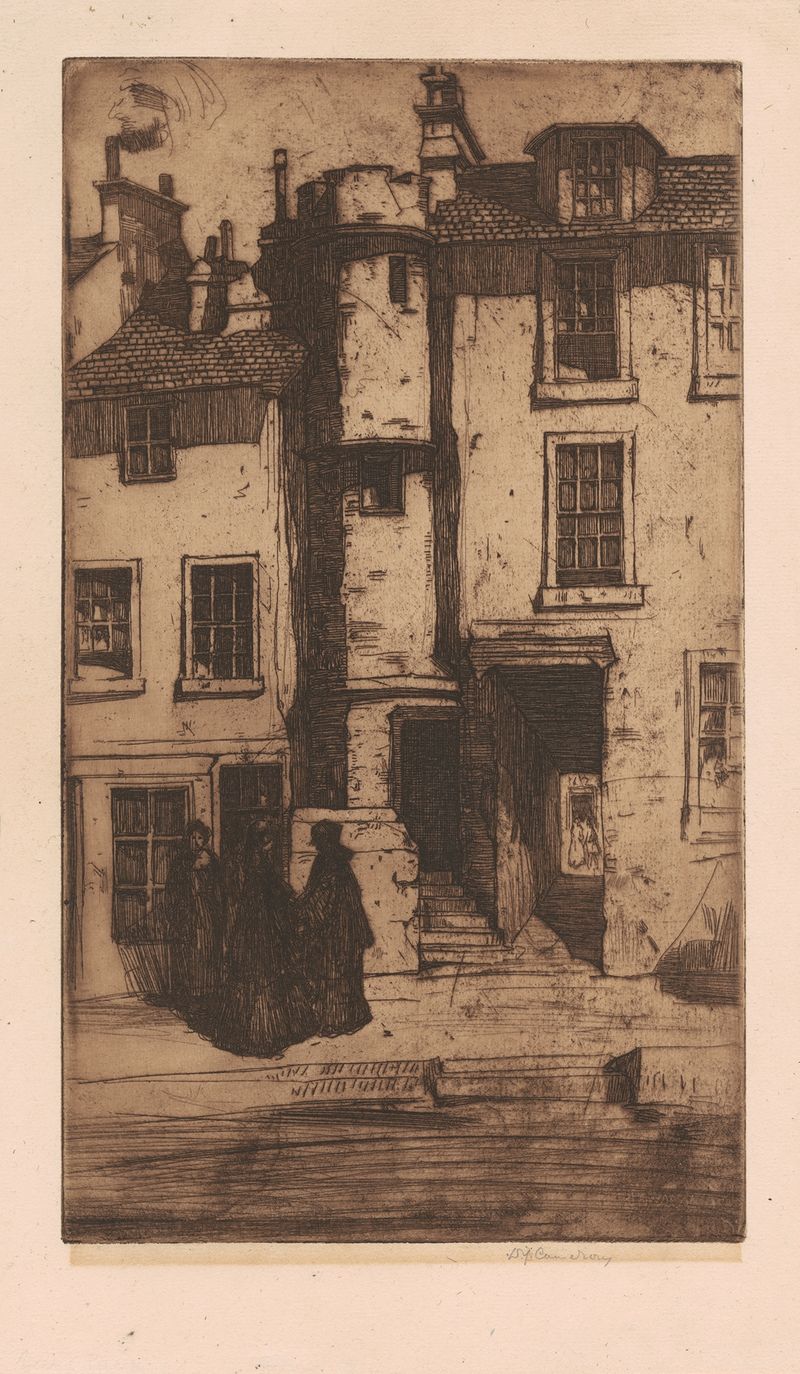
Old Houses, Stirling
David Young Cameron
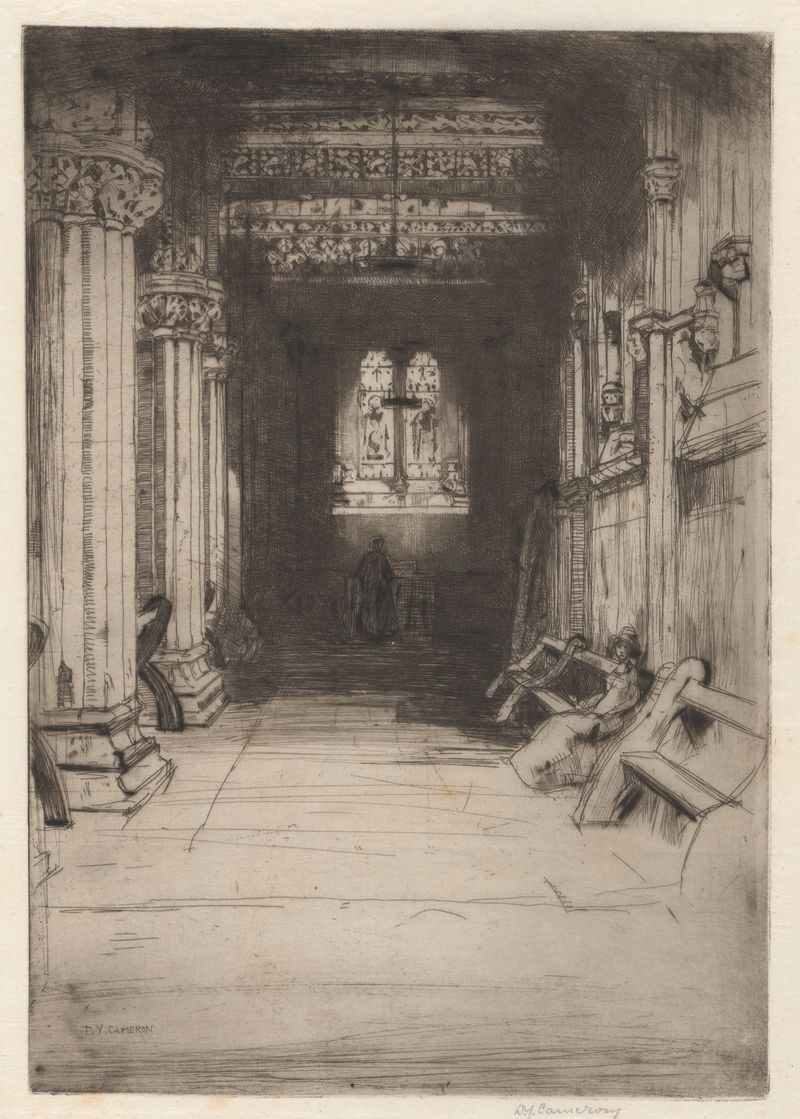
Rosslyn Chapel
David Young Cameron

The Old Museum, Beauvais
David Young Cameron
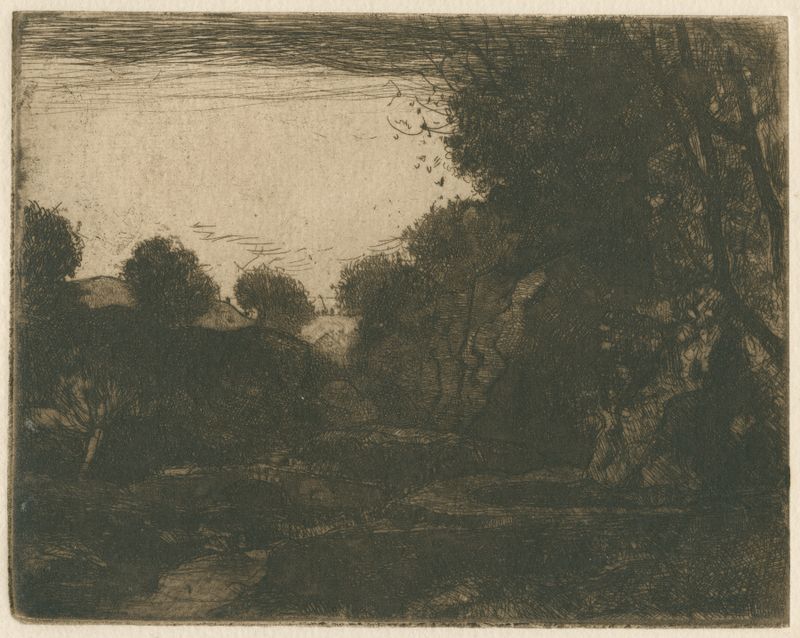
On the Bradford
David Young Cameron

The Smithy
David Young Cameron
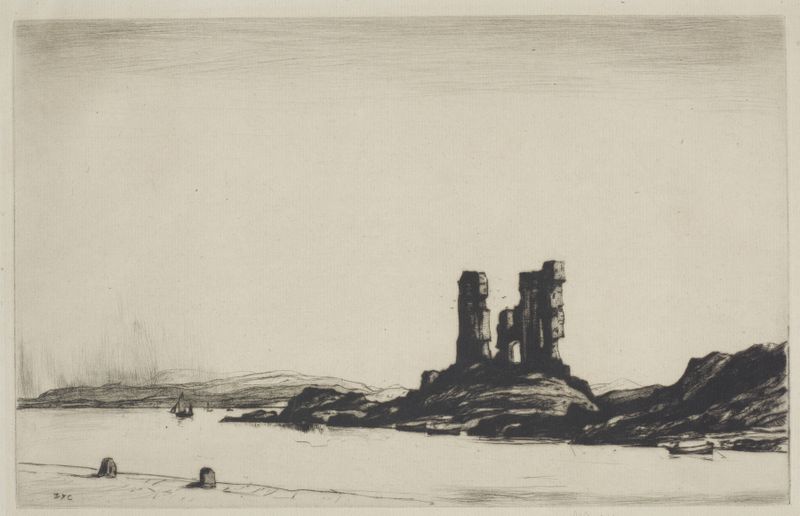
Castle Moyle
David Young Cameron
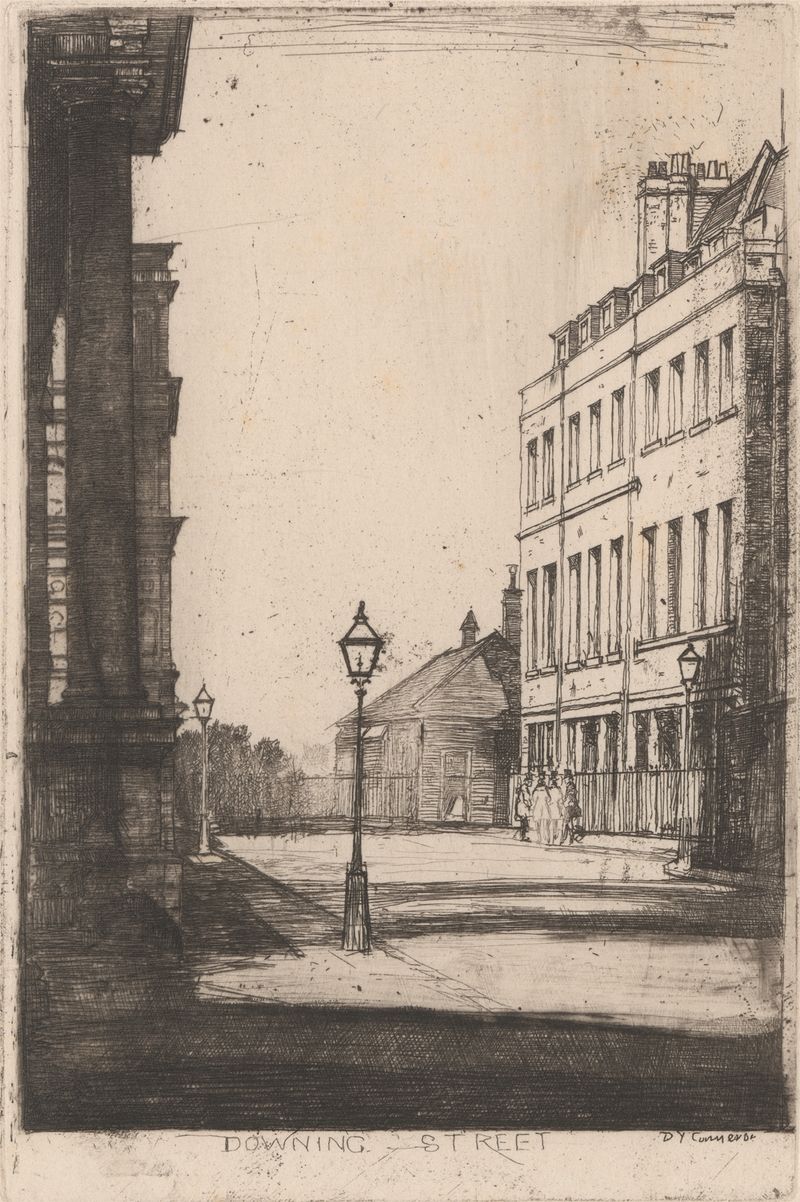
Downing Street
David Young Cameron

Glasgow Cathedral
David Young Cameron





