Apple Tree with Red Fruit — History & Facts
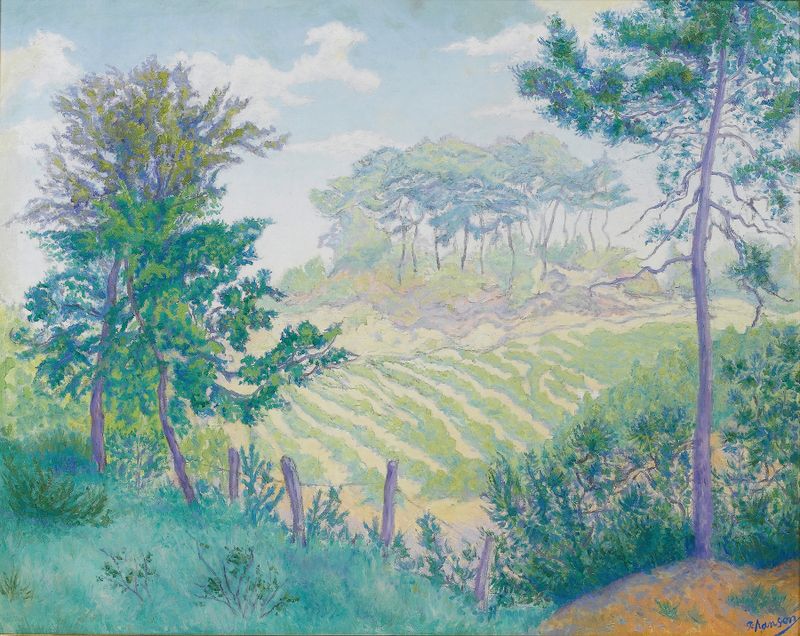
Did the painter know this moment would outlive them? The shadows of life stretch across the canvas, whispering secrets of nature’s fleeting beauty. Focus on the center, where the apple tree stands proudly, its branches heavy with vibrant red fruit. Notice how the sunlight filters through the foliage, casting dappled patterns that dance across the ground. The warm hues of oranges and browns blend seamlessly, creating a harmony that invites the viewer to linger, to feel the gentle caress of the breeze and the promise of harvest.
Each brushstroke seems deliberate, revealing Ranson’s intention to capture not just the image but the very essence of life in this serene moment. In the interplay of light and shadow, contrasts emerge; the bright apples against the darkened leaves convey both richness and the inevitability of decay. The shadows hint at a world beyond, suggesting the transient nature of beauty and the cycles that govern existence. There exists a tension between the lushness of the fruit and the encroaching darkness, perhaps a metaphor for human experience—celebration intertwined with the awareness of life's ephemerality. Paul Ranson created this work in 1902, during a period when he was deeply immersed in the Symbolist movement in France.
At this time, he sought to merge spiritual and natural elements in his art, reflecting a growing interest in the poetic qualities of everyday life. This painting stands as a testament to that exploration, capturing a moment both ordinary and extraordinary, forever preserved on canvas.