
Approach to Cadotte’s Pass — History & Facts
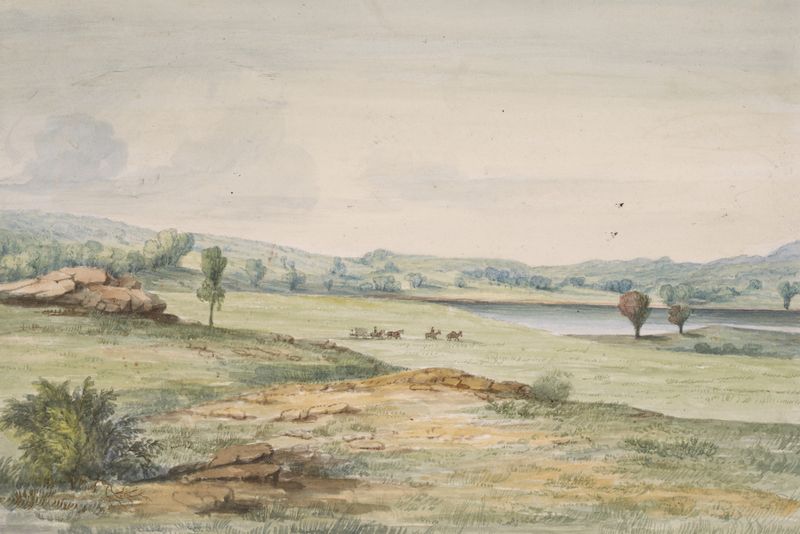
What if beauty was never meant to be finished? In Approach to Cadotte’s Pass, the rugged landscape of the American West evokes a sense of relentless pursuit, as if the mountains themselves are a testament to an unyielding obsession with nature’s grandeur. Look to the foreground, where a winding path leads the eye into the heart of the scene. Notice how the interplay of light and shadow plays across the jagged cliffs, illuminating the vibrant greens and earthy browns of the foliage. The artist's brushwork captures both the texture of the rocky terrain and the softness of the sky, a balance that invites viewers to traverse the painted landscape.
The composition is masterful, with layers of mountains receding into the distance, creating a sense of depth and drawing one into the vastness of the wilderness. Within this artwork lies a tension between serenity and wildness; the lush vegetation suggests abundance, while the imposing mountains represent challenges yet to be overcome. The play of light dances over the peaks, hinting at the passage of time and the pursuit of dreams. Each brushstroke seems to echo a longing for exploration and discovery, a reminder that beauty can often exist in an unfinished journey. In 1854, while residing in the burgeoning art community of the American West, the artist was deeply engaged in capturing the unspoiled landscapes that were rapidly disappearing.
This period saw a growing fascination with the wilderness, as both artists and settlers sought to document the untamed beauty of the frontier. Stanley's work during this time reflected not only a personal quest for artistic expression but also the broader cultural obsession with the exploration and conquest of new territories.
More Artworks by John Mix Stanley
Browse all →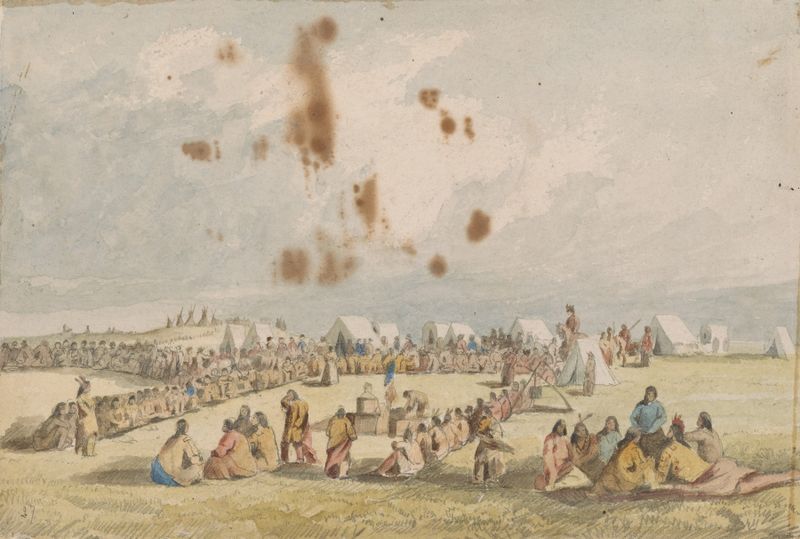
Distribution of Goods to the Assiniboins
John Mix Stanley
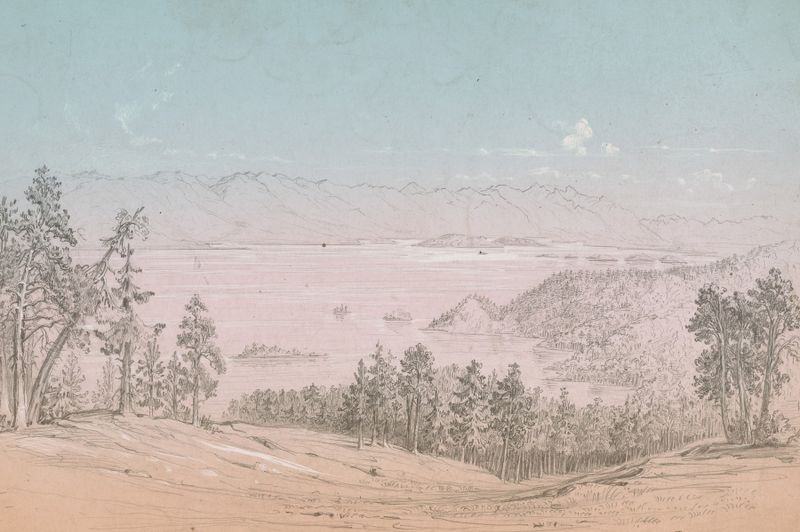
Flathead Lake, Looking toward the South
John Mix Stanley

A Morning in Milk River Valley
John Mix Stanley

Mount Rainier Viewed from Near Steilacoom
John Mix Stanley
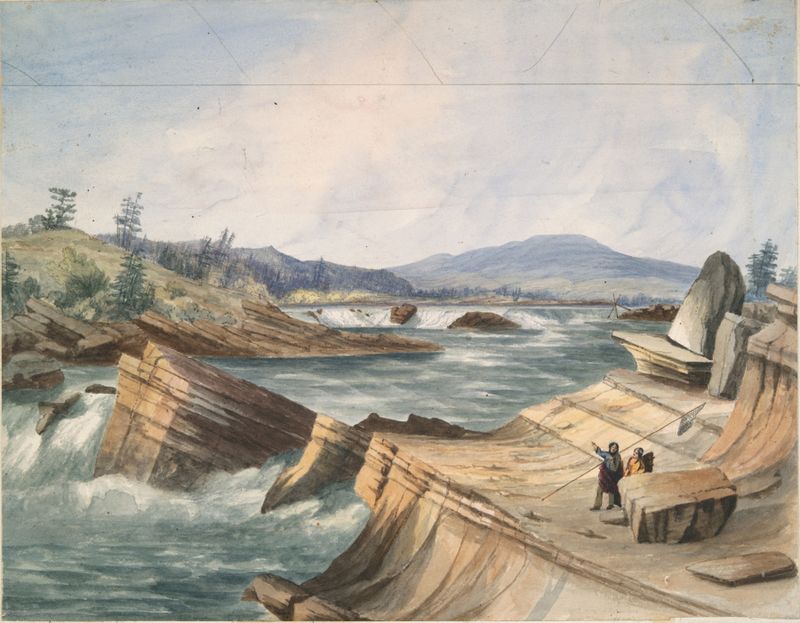
Kettle Falls, Columbia River
John Mix Stanley
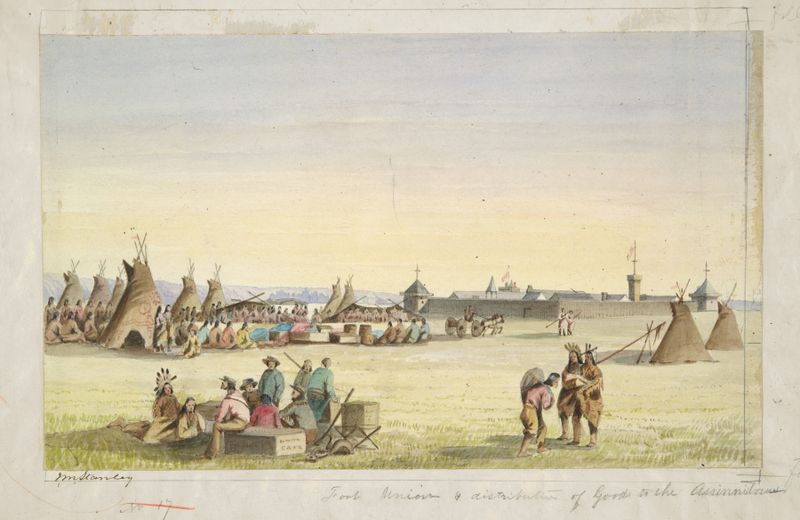
Fort Union and Distribution of Goods to the Assiniboins
John Mix Stanley

Pike Lake M.T.
John Mix Stanley
Sauk River
John Mix Stanley

Milk River – Bear’s Paw Mountain in Distance
John Mix Stanley

Fort Benton
John Mix Stanley





