Approaching Storm — History & Facts
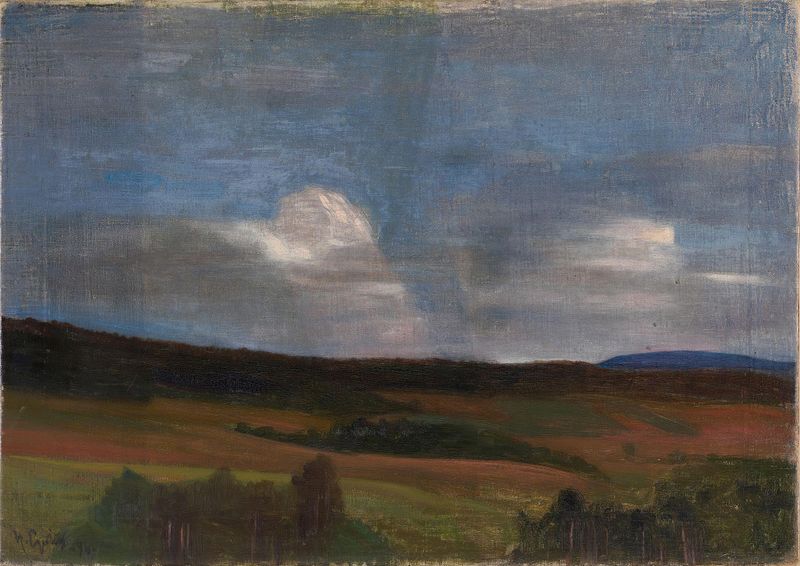
In the stillness of the moment, an awakening unfolds, as nature readies itself for the embrace of a tempest. The horizon shimmers with an unsettling beauty, hinting at the chaos to come, urging us to question what lies beneath the surface of tranquility. Look to the left at the darkening clouds, swirling ominously against a backdrop of muted blues and greens. The brushwork is both fluid and frenetic, capturing the wind’s rising breath.
Notice how the light flickers, illuminating patches of golden grass that seem to dance in anticipation, offering a stark contrast to the heaviness above. This tension between light and shadow creates an intense emotional undercurrent, pulling the viewer deeper into the scene. Within this landscape lies a myriad of contrasts: the foreboding sky clashes with the fleeting light, evoking feelings of both dread and anticipation. The grass, vibrant yet vulnerable, symbolizes resilience in the face of impending turmoil.
Each stroke conveys more than mere observation; it reflects a deeper understanding of nature's duality — its capacity for destruction and renewal, resonating with the very essence of the human experience. Painted in 1896, during a period of great change in the art world, the artist explored themes of nature and emotion within his work. Egedius, influenced by the burgeoning Symbolist movement, infused his landscapes with profound meaning, attempting to capture the essence of psychological depth and spiritual awakening. The approach of the storm symbolizes not just a physical transformation but a moment of introspection, mirroring the artist's own journey amid a rapidly evolving society.