Summer Night, Telemark — History & Facts
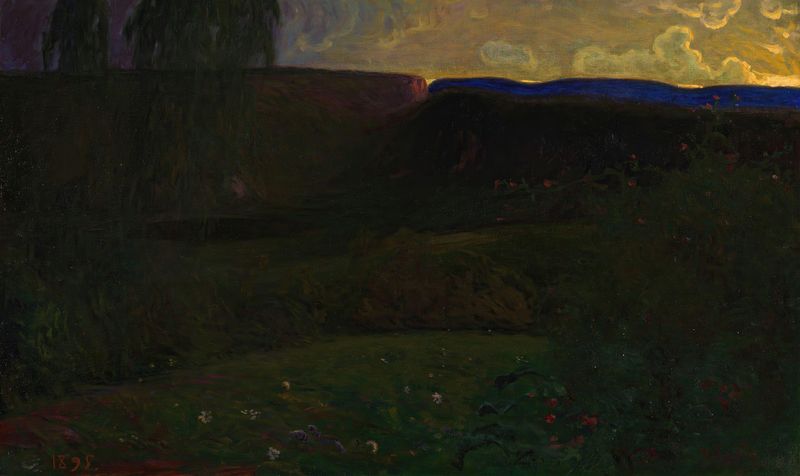
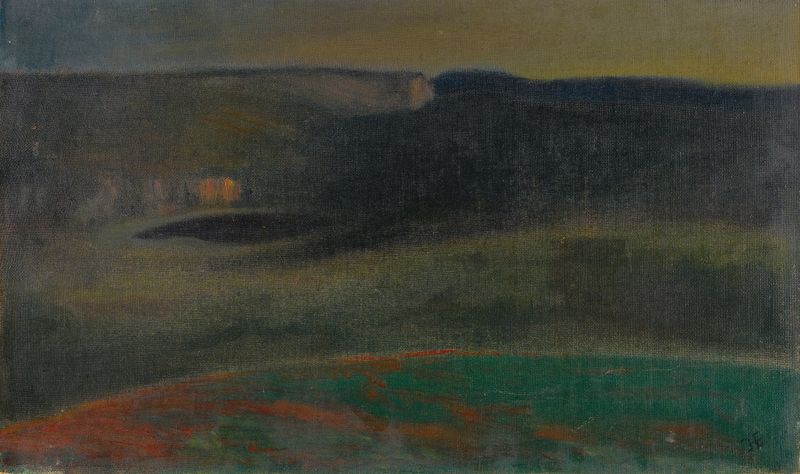
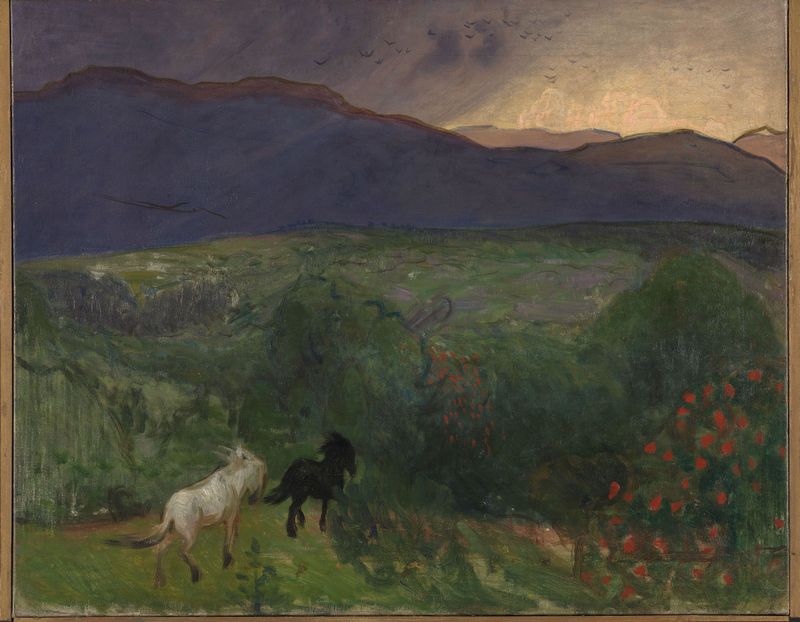
In this stillness, the unspoken truths of a summer night linger, echoing in the spaces between the stars and the water's edge. The painting invites you to explore the essence of a moment where nature reveals its deepest secrets, waiting to be discovered. Look to the center of the canvas, where the serene lake mirrors the twilight sky, pulling your gaze into its depths. The vibrant blues and purples blend seamlessly, creating a dreamlike ambiance that captures the fleeting essence of dusk.
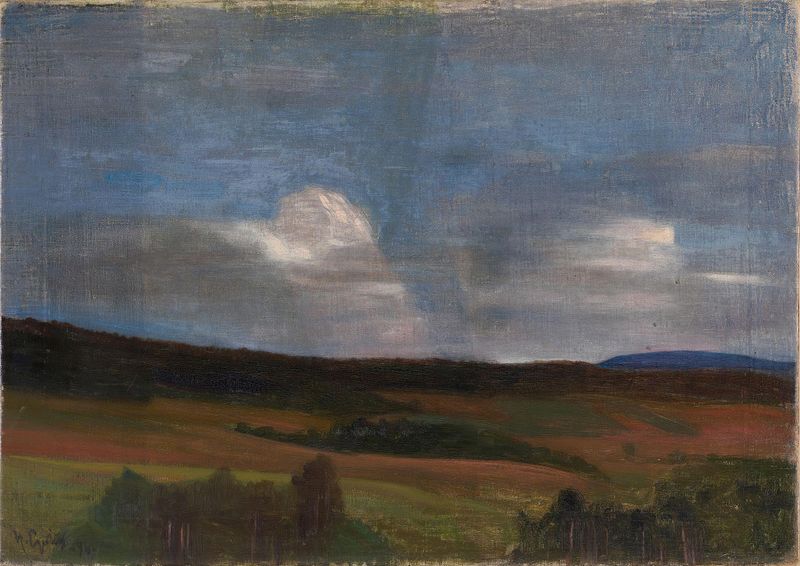
Wisps of clouds, rendered with gentle brushstrokes, float above, their soft contours juxtaposing the sharp silhouettes of distant hills. The coolness of evening descends, and the light dances delicately, lending an ethereal quality to the scene. As you delve deeper, observe the subtle contrasts between shadow and light, reflecting both tranquility and the subtle tension of an approaching night. The quiet expanse of water, while serene, hints at the uncharted depths beneath its surface, suggesting hidden emotions that stir beneath the calm façade.
This interplay of visibility and concealment speaks to the universal struggle between vulnerability and strength, revealing a panoramic landscape that mirrors the inner workings of the human heart. Halfdan Egedius painted Summer Night, Telemark in 1892 during a pivotal time in his artistic journey. Residing in Norway, he sought to capture the beauty of his homeland while embracing the influences of the national romanticism that swept across Europe. His works often reflected a deep connection to nature and an exploration of emotions, resonating with the cultural tensions of his time, as Norway was embracing its distinct identity amid broader European currents.