Sketch of the Farm Äse in Telemark — History & Facts
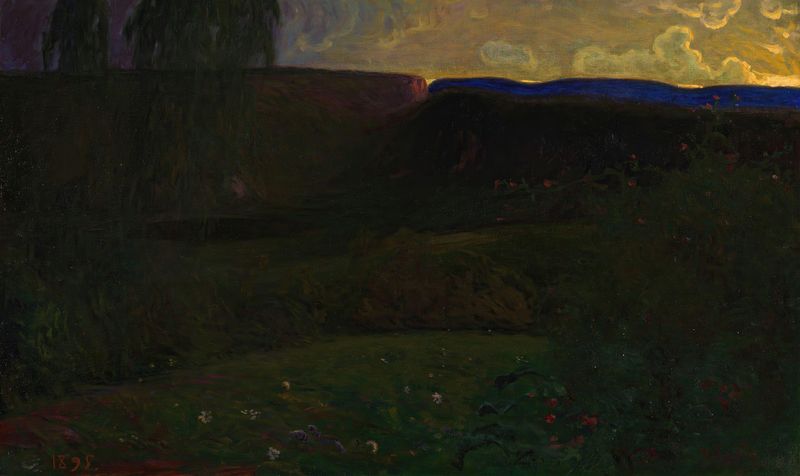
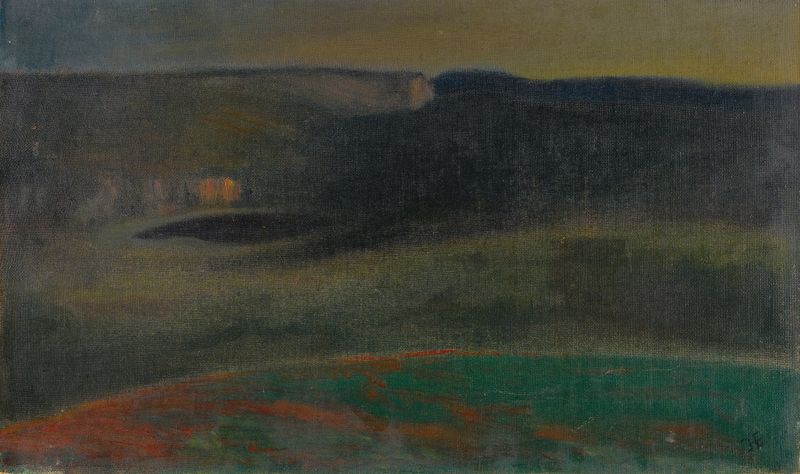
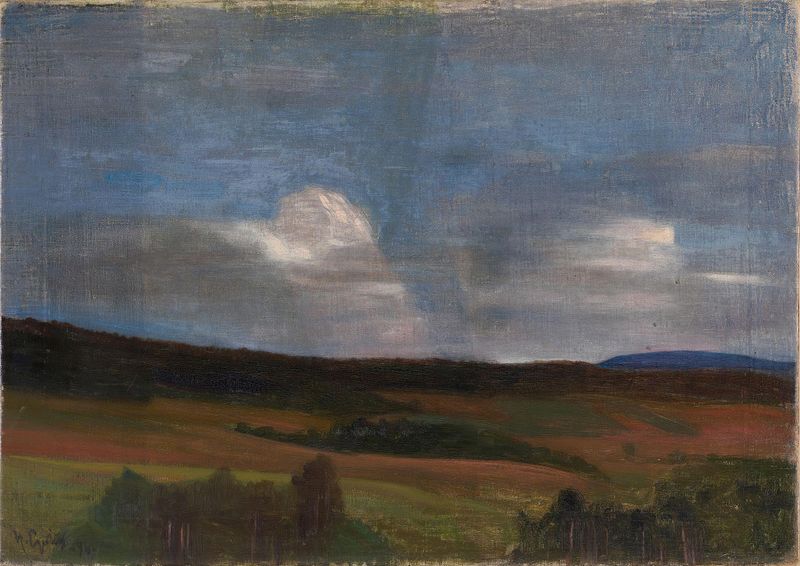
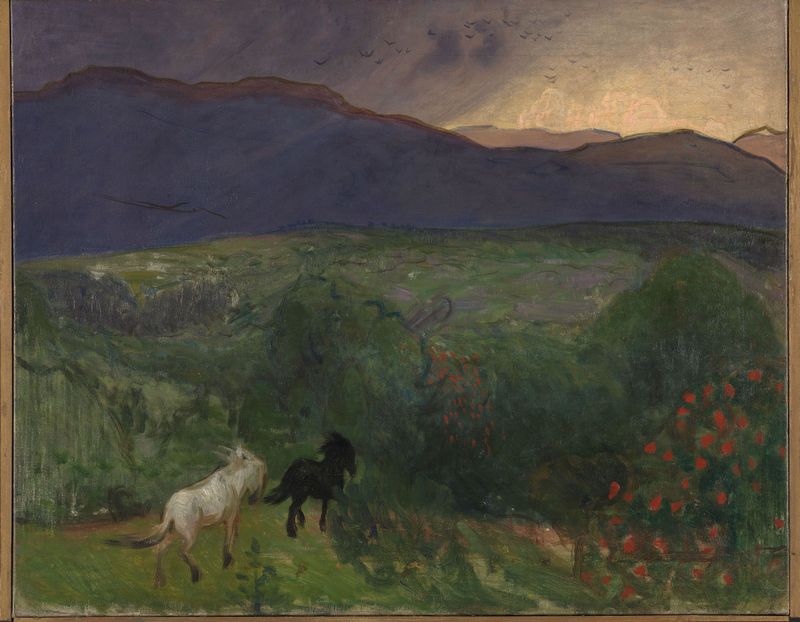
Could beauty survive in a century of chaos? In Halfdan Egedius's Sketch of the Farm Äse in Telemark, the answer emerges through a quiet yet profound portrayal of rural life, where nature’s resilience whispers against the backdrop of decay. Look to the left at the weathered wooden structures, leaning slightly, as if bowing under the weight of time. Notice how the muted tones of the earth blend seamlessly with the soft greens of the surrounding landscape, conveying a harmony that feels both fragile and eternal. Egedius’s use of gentle brush strokes captures the essence of the farmstead, inviting the viewer to linger on the soft shadows that play across the ground, hinting at the passage of seasons and years. Beneath the surface of this bucolic scene lies a tension between beauty and decay.
The farm, once vibrant, now carries a weight of nostalgia and loss, emblematic of a world grappling with change. The fading structure speaks to the inevitability of time, while the verdant foliage encroaching upon it suggests a relentless cycle of life and renewal. Together, these elements evoke a poignant reflection on the fragility of existence and the enduring power of nature. In 1893, Egedius created this piece during a time of great transition in Norway, amidst both political changes and a growing interest in national identity through art.
Living in Oslo and influenced by the emerging naturalism movement, he sought to capture the essence of the Norwegian landscape, reflecting a deep connection to the past while also acknowledging the encroachments of modernity. This work stands as a testament not only to his skill but also to the spirit of a nation at a crossroads.