Thunder Clouds — History & Facts
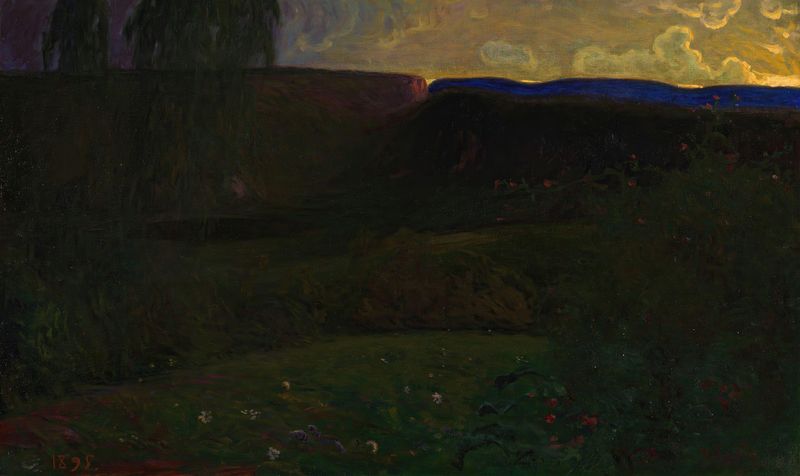
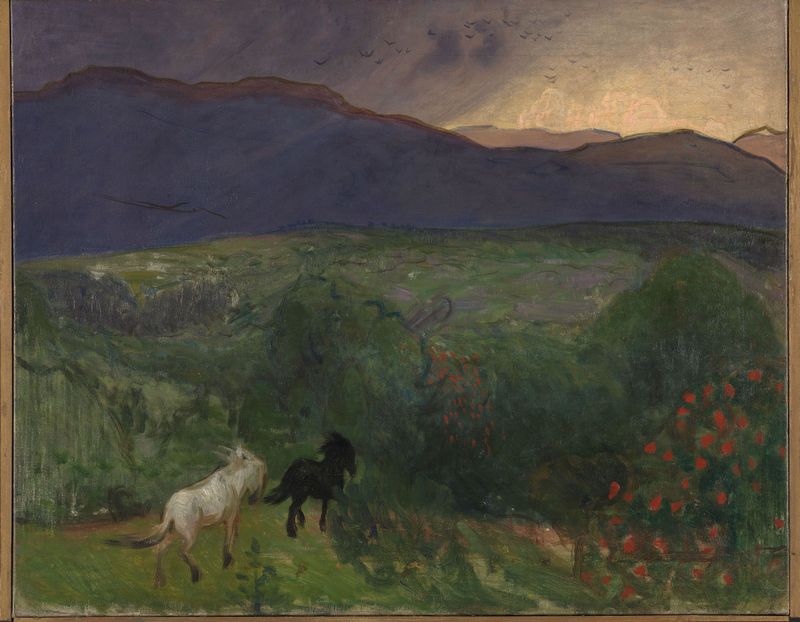
Can beauty exist without sorrow? In Thunder Clouds, the answer lies within the interplay of light and shadow, a delicate balance that awakens the soul to both the joy and tension of existence. Look to the upper left, where dark, billowing clouds loom ominously, their textured brushstrokes suggesting a tempest brewing. The vibrant blues and greens of the landscape below contrast sharply with the foreboding sky, drawing your gaze downward to the lush terrain bathed in soft, golden light. Notice how the light filters through the edges of the clouds, illuminating patches of grass and hinting at the promise of rain, a metaphor for emotional release in the face of inevitable turmoil. Within this composition, the emotional tension is palpable.
The clouds, heavy with potential, seem to hold both the threat of destruction and the hope of renewal, a duality that reflects the complexities of life. The vivid colors of the land, full of life and vitality, stand in stark contrast to the impending storm, inviting contemplation of nature's cycles and our own journeys through adversity and growth. When Thunder Clouds was created in 1896, Halfdan Egedius was immersed in the radical shifts of the art world, navigating between realism and the emerging expressions of symbolism. Living in Norway, he was influenced by the natural landscape around him, capturing the raw beauty of his homeland while grappling with the emotional depths that art could reach during a time of great social change.