
April — History & Facts
Can beauty exist without sorrow? In April, a moment of innocence is frozen in time, evoking a delicate interplay between joy and the shadows of what lies beyond. Look to the left at the young girl, her expression one of quiet wonder as she gazes at the blossoming branches above her. The soft pastel palette of pinks and greens bathes her in a gentle light, highlighting her delicate features and the flowing fabric of her dress. Notice how the artist masterfully uses light to illuminate the scene—each blossom seems to shimmer, almost ethereal, while shadows deepen the background, hinting at an unseen world that contrasts with the purity of her gaze. Within this idyllic moment, the viewer can sense an underlying tension.
The innocence of youth is palpable, yet it is surrounded by hints of impending change—an echo of the fleeting nature of both beauty and life. The blossoms represent spring and renewal, but they also serve as a reminder that all moments are ephemeral. The juxtaposition of light and shadow suggests that within beauty lies the potential for sorrow, as seasons inevitably shift and innocence is tested. Frederik Marinus Kruseman painted April in 1855, a period marked by significant developments in Dutch art, where Romanticism was giving way to Realism.
Living in a time of artistic transition, Kruseman sought to capture the essence of human emotion and the beauty of the natural world, reflecting both personal sentiment and broader societal changes. This painting encapsulates a moment of introspection, inviting viewers to ponder the intertwined nature of joy and melancholy.
More Artworks by Frederik Marinus Kruseman
Browse all →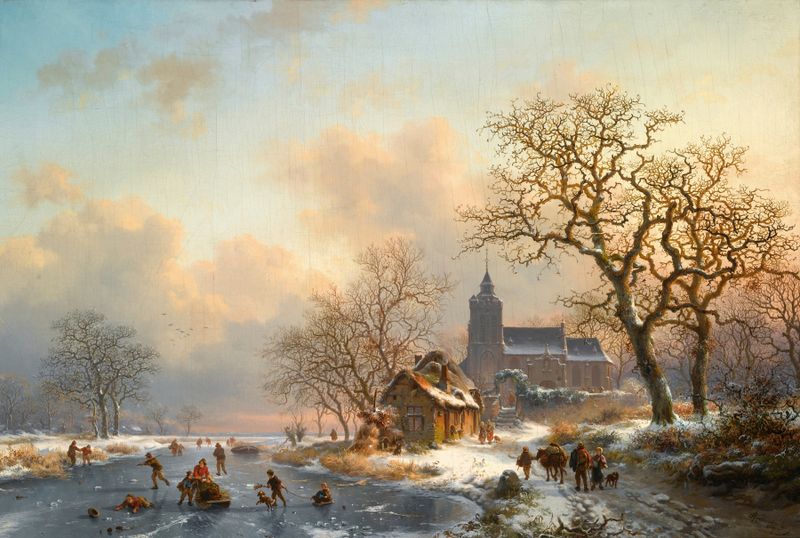
A Winter Landscape With Skaters On A Frozen River
Frederik Marinus Kruseman

Winter Landscape With Strollers And Skaters
Frederik Marinus Kruseman

Monk Meditating near a Ruin by Moonlight
Frederik Marinus Kruseman
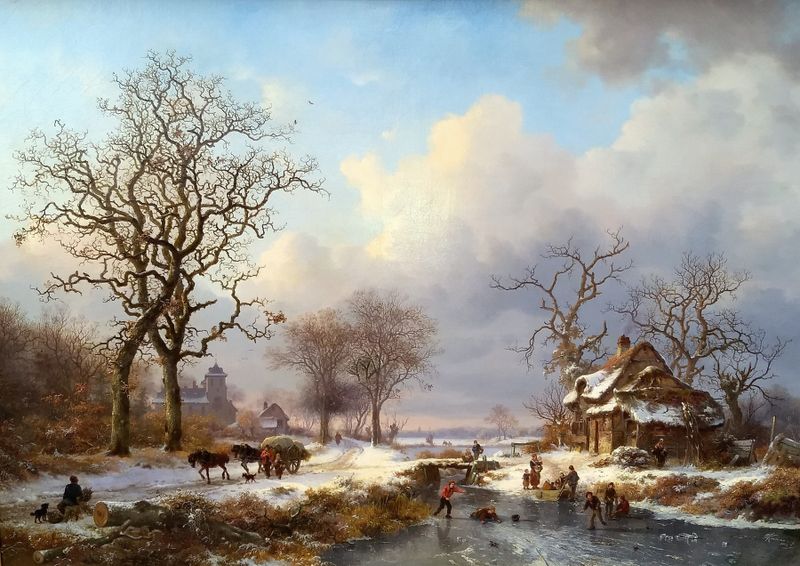
Dutch Winter Landscape with Skaters
Frederik Marinus Kruseman

Winter landscape with figures on a frozen river
Frederik Marinus Kruseman
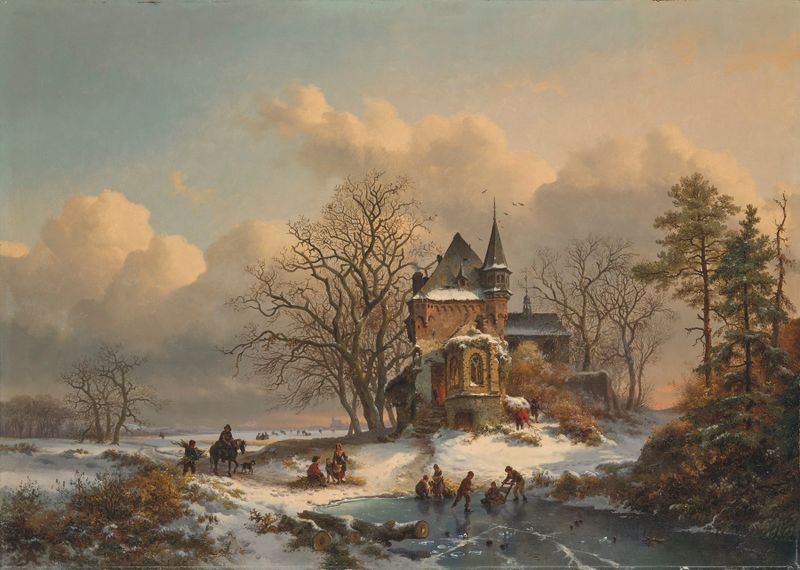
Winter landscape with skaters
Frederik Marinus Kruseman
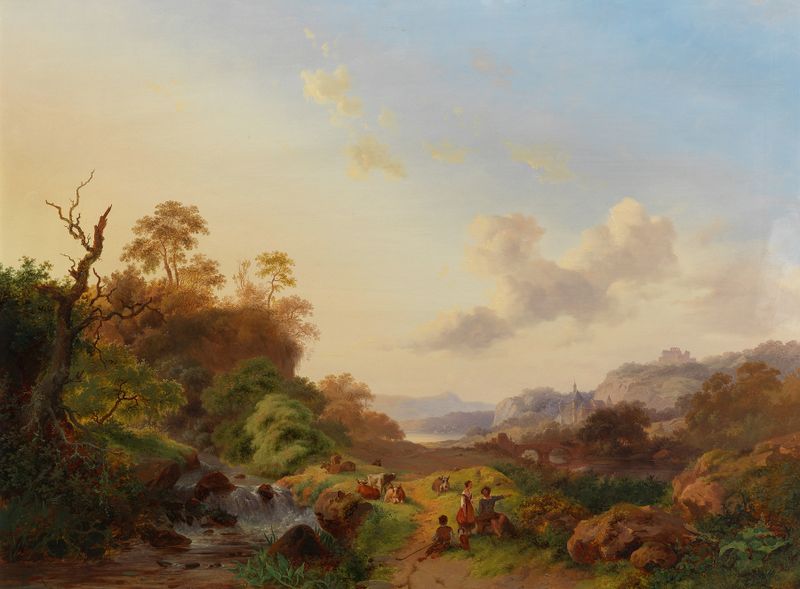
Summer landscape with figures and cattle near a waterfall
Frederik Marinus Kruseman
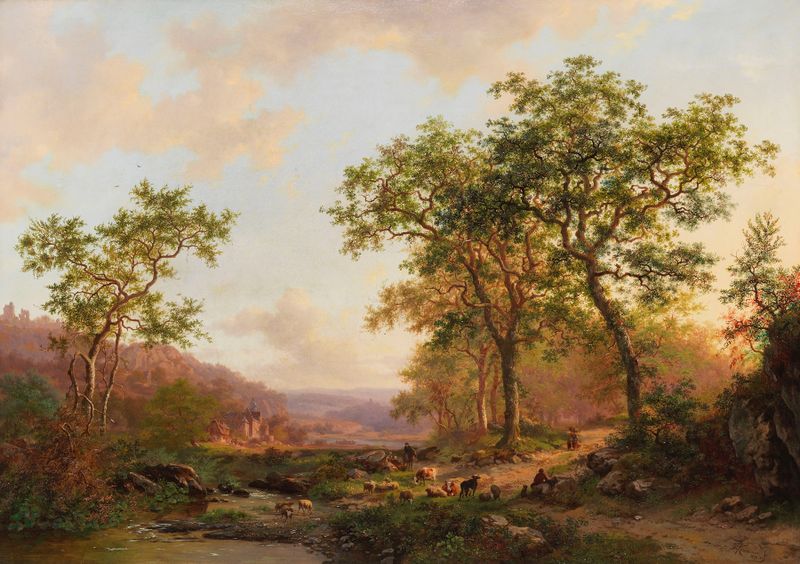
Weite Landschaft im Abendlicht
Frederik Marinus Kruseman
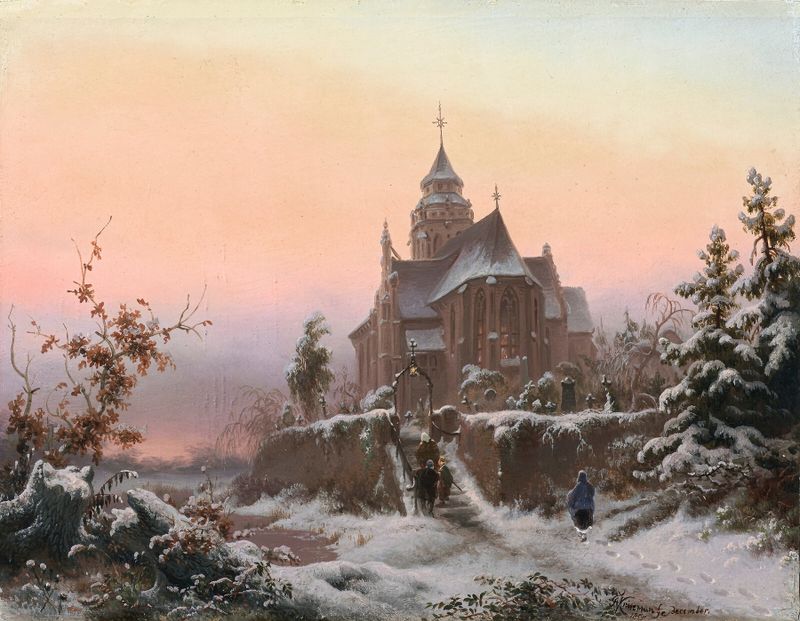
December
Frederik Marinus Kruseman
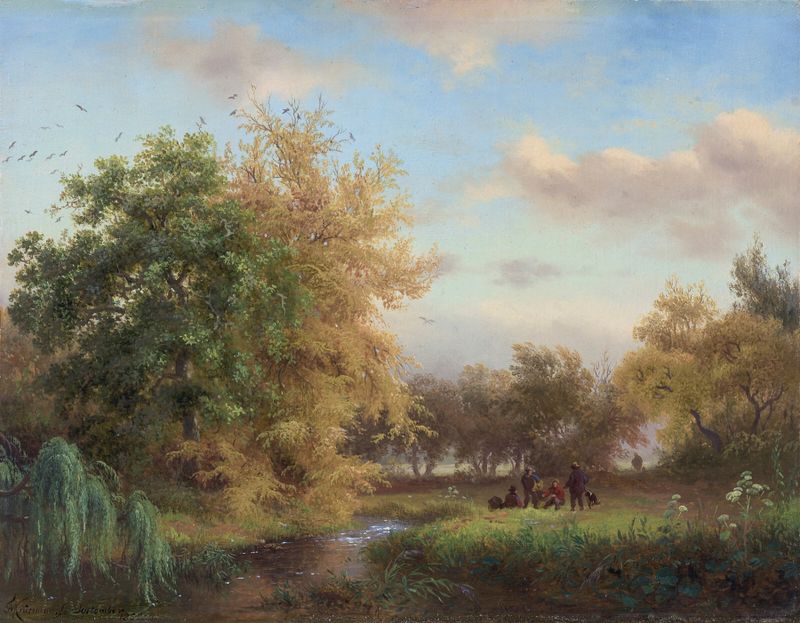
September
Frederik Marinus Kruseman





