
September — History & Facts
In Frederik Marinus Kruseman's September, this sentiment resonates deeply, revealing the layers of betrayal that linger beneath the calm surface. Look to the lush landscape where the golden fields stretch across the canvas, their warm hues contrasting with the deep blues of a fading sky. The gentle brushstrokes create a sense of tranquility, inviting the viewer to wander among the harvest. Notice how the light filters through the trees, illuminating patches of ground while casting delicate shadows that hint at secrets hidden within the idyllic scene.
The composition captures a moment of natural beauty, yet there’s an unease that whispers just below the surface. The slight disarray among the crops, swaying almost imperceptibly in the breeze, speaks to the conflict between abundance and loss. Each stalk of wheat seems to tell a story of promises made and broken, suggesting that even in nature’s bounty, there lies a tension. The juxtaposition of the warm earth tones against the cool palette of the sky reflects a duality—life and decay, trust and betrayal, moments of joy overshadowed by a lingering sense of sorrow. In 1855, Kruseman painted this work during a period of societal change in the Netherlands, as the romantic ideals of nature clashed with the realities of modernization and its accompanying disillusionment.
As he captured the essence of September, an ephemeral moment of harvest, he was also acknowledging the fragility of human relationships—a theme that would echo throughout his career amidst a shifting artistic landscape.
More Artworks by Frederik Marinus Kruseman
Browse all →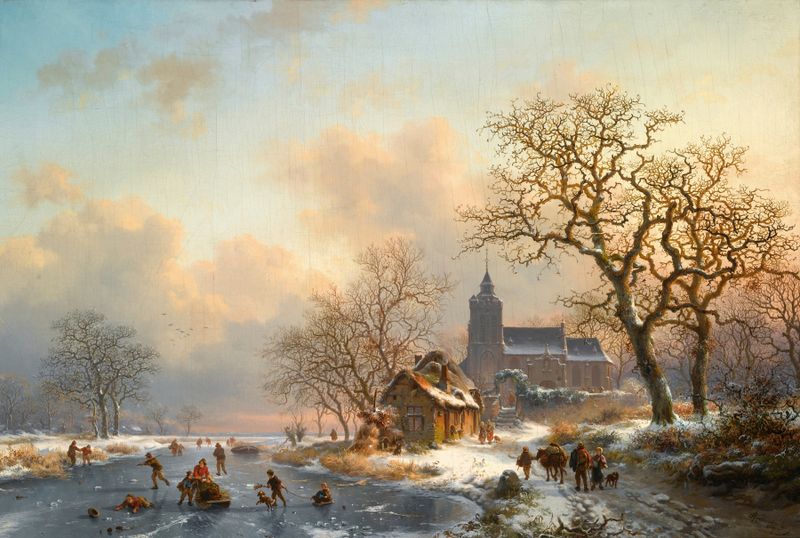
A Winter Landscape With Skaters On A Frozen River
Frederik Marinus Kruseman

Winter Landscape With Strollers And Skaters
Frederik Marinus Kruseman

Monk Meditating near a Ruin by Moonlight
Frederik Marinus Kruseman
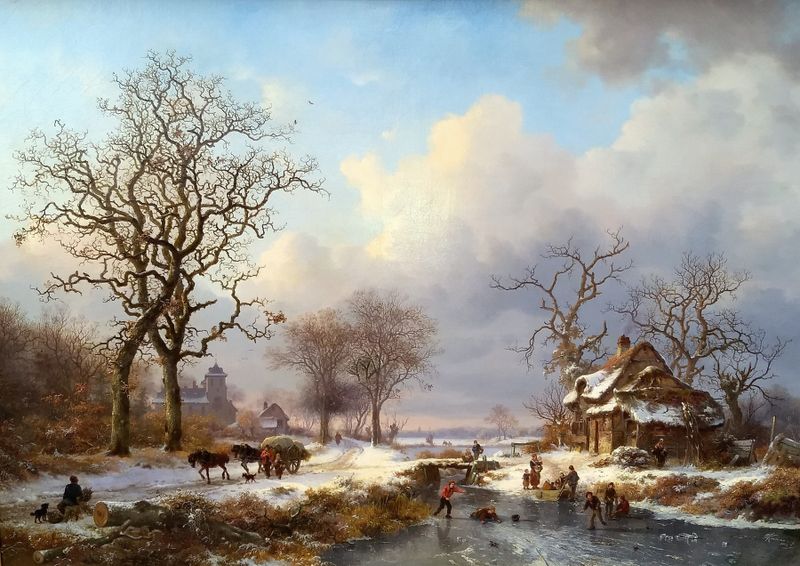
Dutch Winter Landscape with Skaters
Frederik Marinus Kruseman

Winter landscape with figures on a frozen river
Frederik Marinus Kruseman
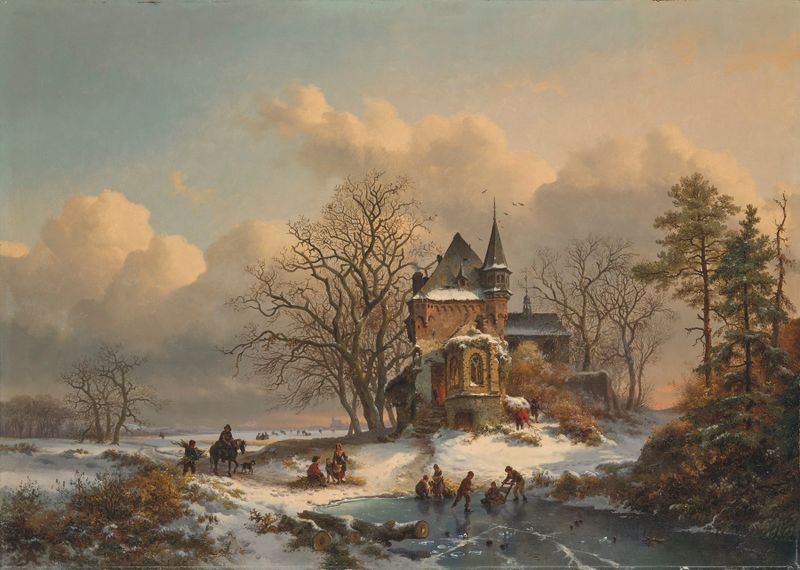
Winter landscape with skaters
Frederik Marinus Kruseman
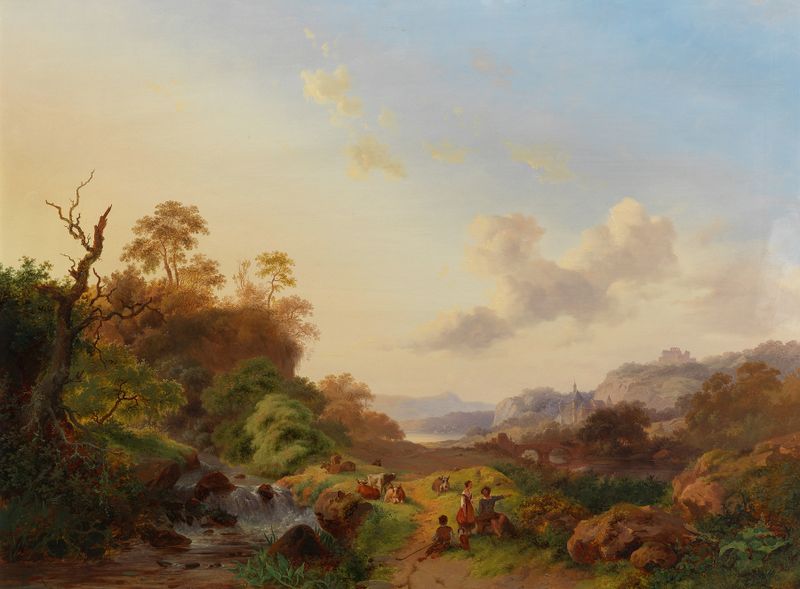
Summer landscape with figures and cattle near a waterfall
Frederik Marinus Kruseman
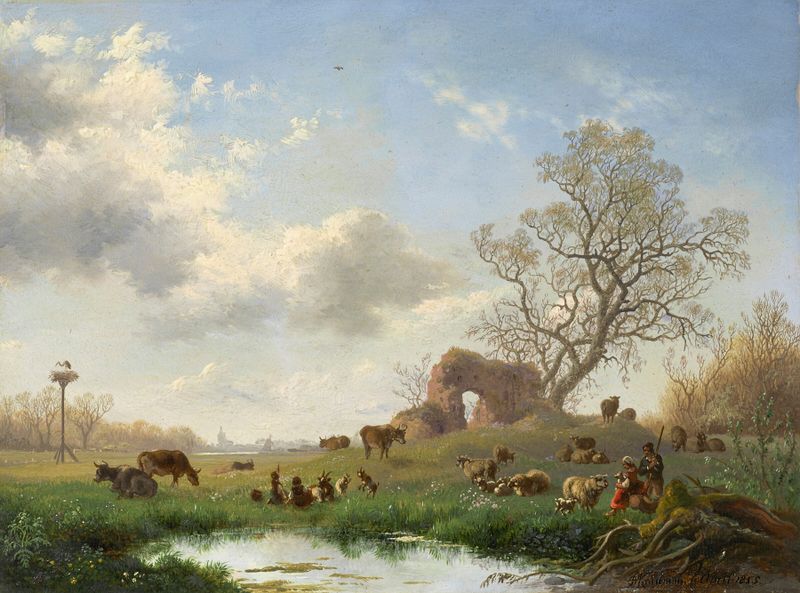
April
Frederik Marinus Kruseman
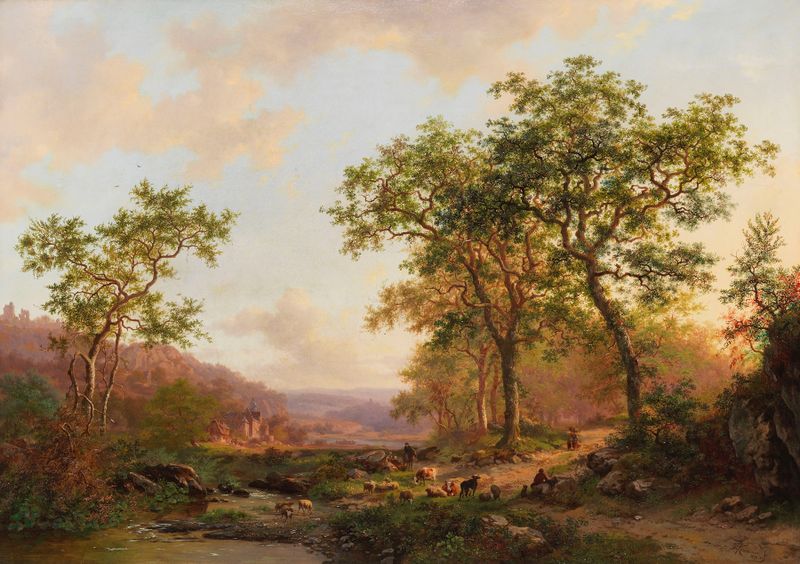
Weite Landschaft im Abendlicht
Frederik Marinus Kruseman
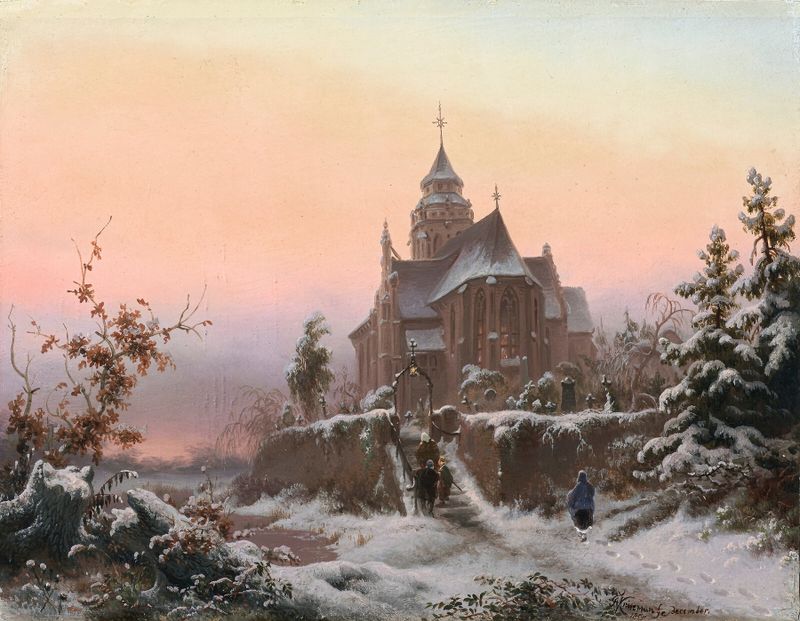
December
Frederik Marinus Kruseman





