
Aquädukt unter der Villa des Maecenas in Tivoli — History & Facts
In a world where truth ebbs away like the fading light of dusk, art serves as our fragile anchor. Focus on the lower left corner of the scene, where the ancient aqueduct rises majestically against a backdrop of lush Italian hills. The intricate arches, masterfully rendered, invite the eye to trace their contours. Notice how the interplay of shadows and light brings depth to the structure, creating a dialogue between the man-made and the natural.
The palette is rich with earthy tones, but soft greens and blues evoke a sense of serenity, reminiscent of the verdant oasis that once surrounded the villa. Yet, amid this beauty, one can sense the tension of time itself. The aqueduct, a symbol of progress, stands resilient against the passage of years, while the delicate foliage hints at nature's relentless reclamation. The juxtaposition of stone and vegetation speaks of the inevitable cycle of decay and renewal, urging the viewer to ponder the impermanence of human achievement.
Every brushstroke whispers secrets of the past, reminding us that even the grandest structures fade in the face of time’s relentless march. In this work, created during the late 18th century, Ducros found himself at the intersection of neoclassicism and romanticism. This period was marked by a fascination with the classical past and the sublime beauty of nature. As he painted this composition, the artist was immersed in the cultural revival of Italy, drawing inspiration from both the ruins around him and the evolving artistic landscape of Europe, where the search for truth in art was becoming increasingly vital.
More Artworks by Abraham-Louis-Rodolphe Ducros
Browse all →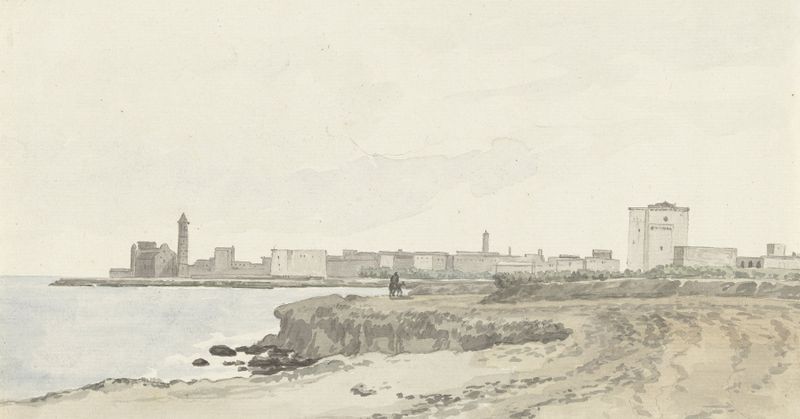
Gezicht op Trani gelegen aan de kust
Abraham-Louis-Rodolphe Ducros
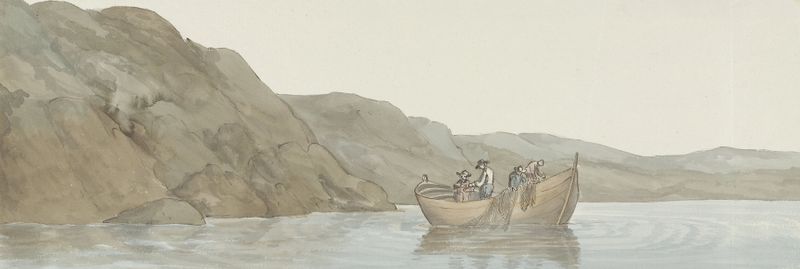
Gezicht op Kaap Paceco in Calabrië nabij de stad Scilla
Abraham-Louis-Rodolphe Ducros
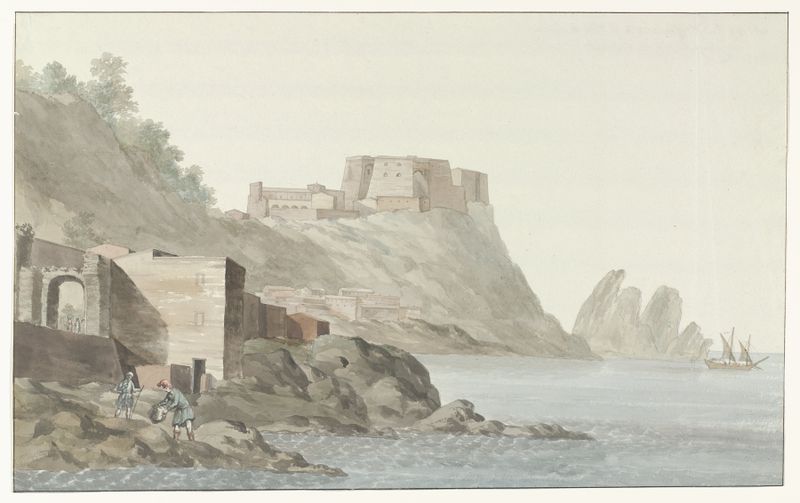
Rots en stad Scilla in de regio Calabrië aan de oostkust
Abraham-Louis-Rodolphe Ducros
Gezicht op Golf van Napels vanaf kade bij kerk Santa Maria del Carmine
Abraham-Louis-Rodolphe Ducros
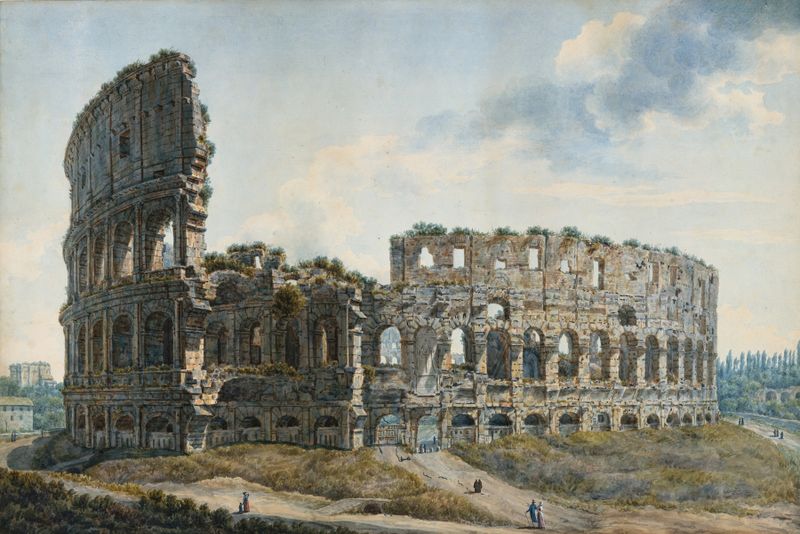
The Colosseum, Rome.
Abraham-Louis-Rodolphe Ducros
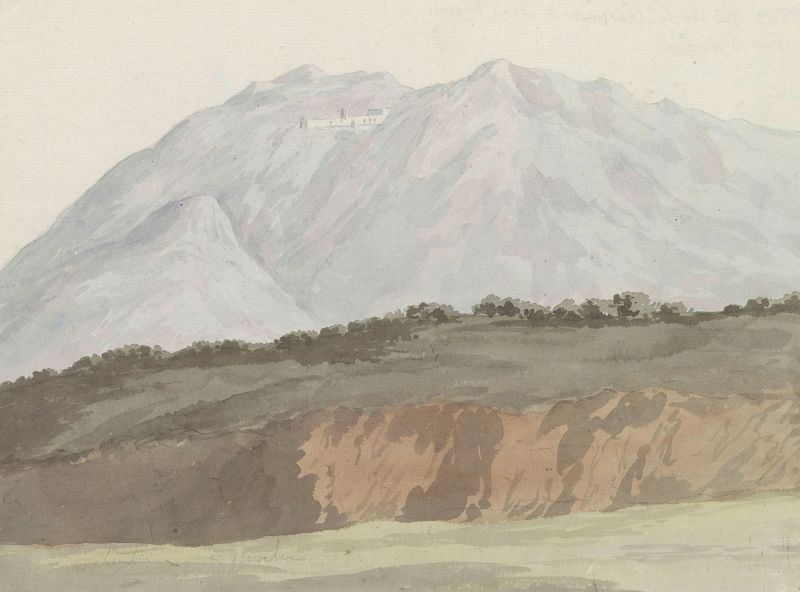
Gezicht op kartuizerklooster van Monte Vergine hoog gelegen boven Avellino
Abraham-Louis-Rodolphe Ducros
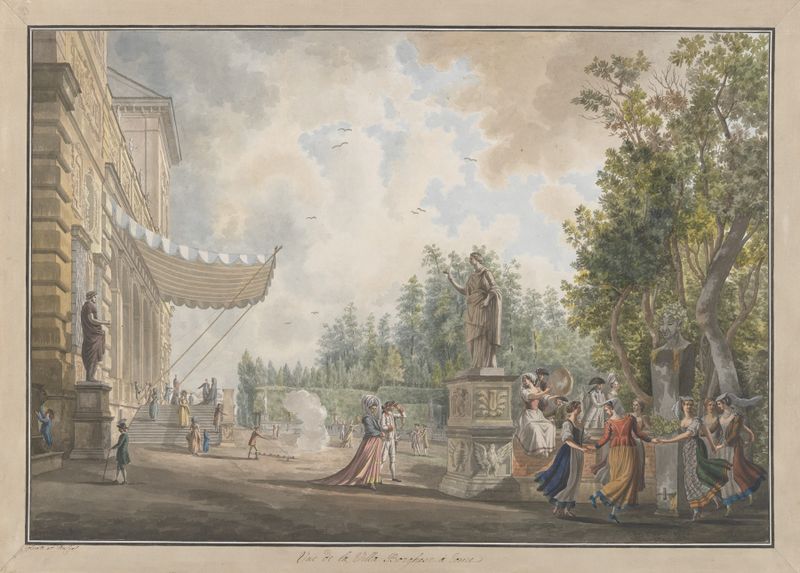
Villa Borghese
Abraham-Louis-Rodolphe Ducros
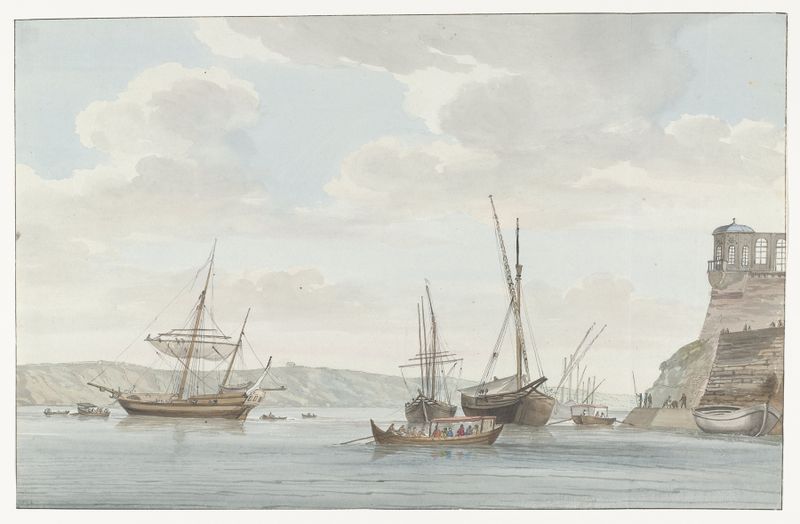
Tuinhuis van de Jardin du Grand Maître uittorend boven de haven met galei schepen op Malta
Abraham-Louis-Rodolphe Ducros
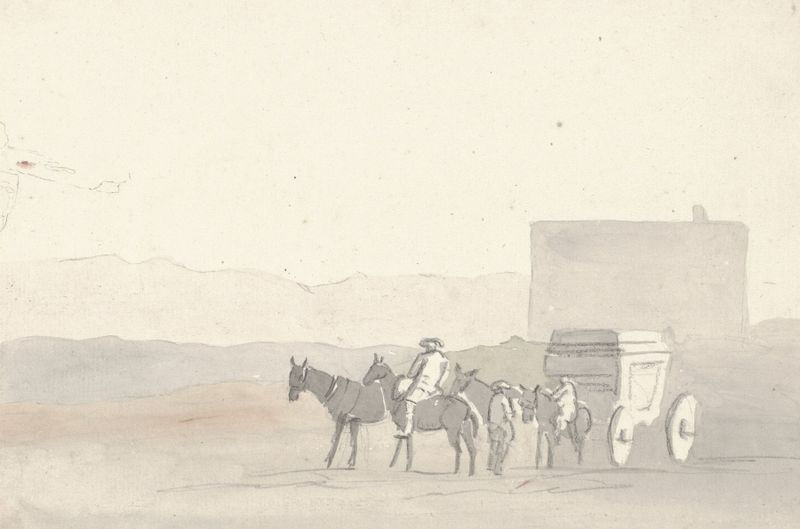
Halteplaats onderweg voor aankomst in Terracina
Abraham-Louis-Rodolphe Ducros
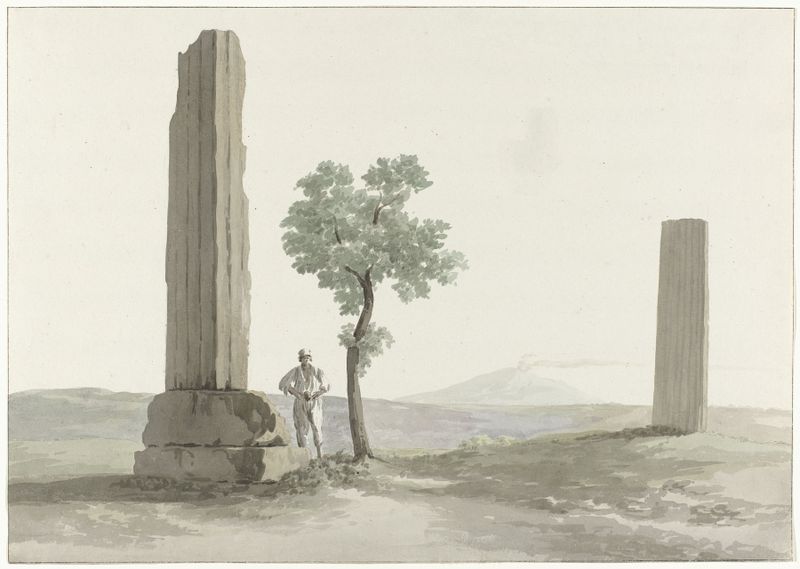
Twee fragmenten van zuilen van de tempel van Zeus Olympus op afstand van halve mijl van rivier Anapus
Abraham-Louis-Rodolphe Ducros
More Architecture Art
Browse all →
The statue of Liberty
Frédéric Auguste Bartholdi

View of Houses in Delft, Known as ‘The Little Street’
Johannes Vermeer

View of Houses in Delft, Known as ‘The Little Street’
Johannes Vermeer

The Cathedral in Rouen. The portal, Grey Weather
Claude Monet

The yellow house
Vincent van Gogh

The Church in Auvers-sur-Oise, View from the Chevet
Vincent van Gogh