
Arcadisch landschap — History & Facts
In the quiet of an artist’s studio, desire mingles with the complexities of a pastoral dream, where lush landscapes beckon the viewer into their embrace. Look to the left, where a serene river meanders, its gentle curves guiding the eye deeper into the verdant expanse. Notice how the sunlight dances playfully on the water’s surface, shimmering like scattered diamonds, illuminating the soft greens and earthy browns of the surrounding foliage. The composition draws you in, with towering trees framing the scene, creating a sense of both enclosure and freedom, while delicate strokes capture the essence of tranquility. Yet, amidst this idyllic scenery, a tension hums beneath the surface.
The figures placed throughout the landscape — a shepherd with his flock, a couple sharing an intimate moment — embody a yearning that transcends mere existence. They hint at stories untold, dreams suspended in time, and the universal quest for belonging. The contrast between the wild beauty of nature and the frail humanity within it evokes a longing that resonates deeply with the viewer. In 1742, Isaac de Moucheron was immersed in the vibrant art scene of the Dutch Golden Age, a time when landscapes flourished as a genre.
Painting in Amsterdam during this period, he drew inspiration from the interplay of light and nature, reflecting the evolving tastes of his audience. This work embodies his mastery of capturing not just a moment, but an emotion — a longing for an idealized world.
More Artworks by Isaac de Moucheron
Browse all →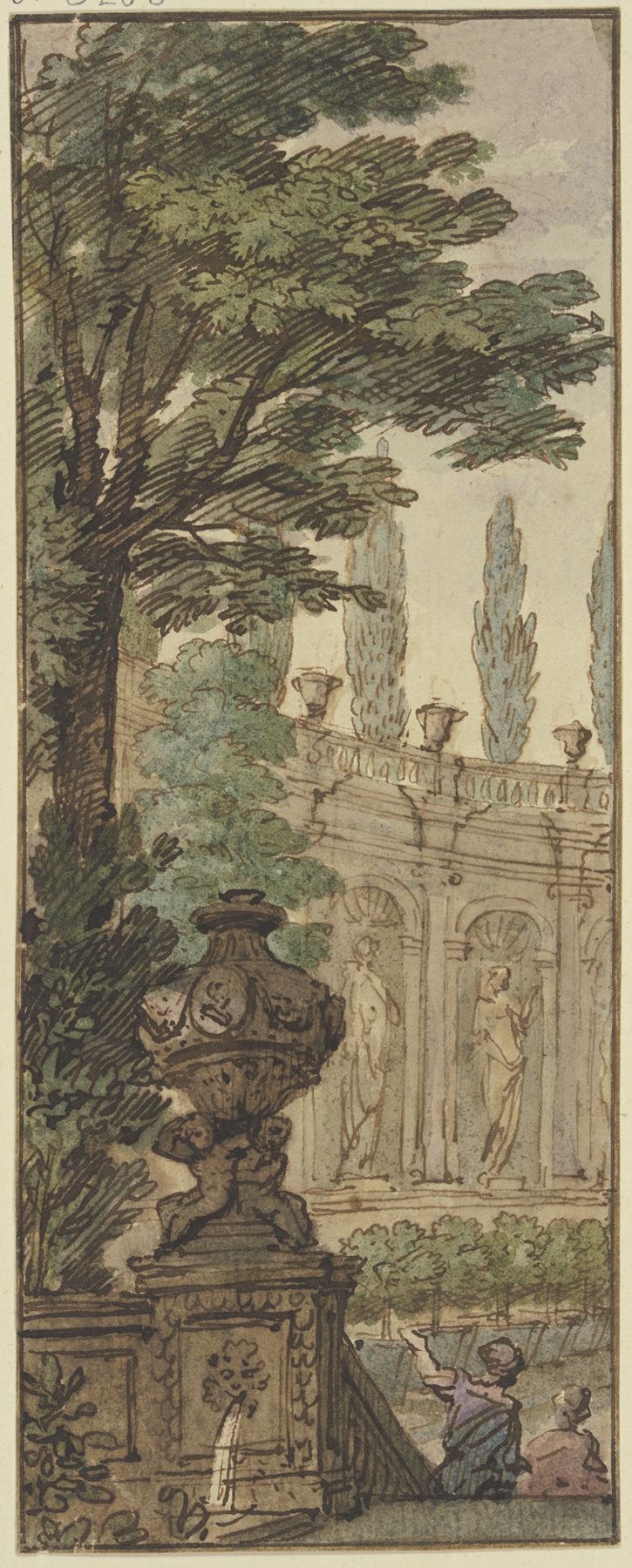
Panneau, im Vordergrund eine Vase, im Hintergrund ein Orangeriegebäude
Isaac de Moucheron
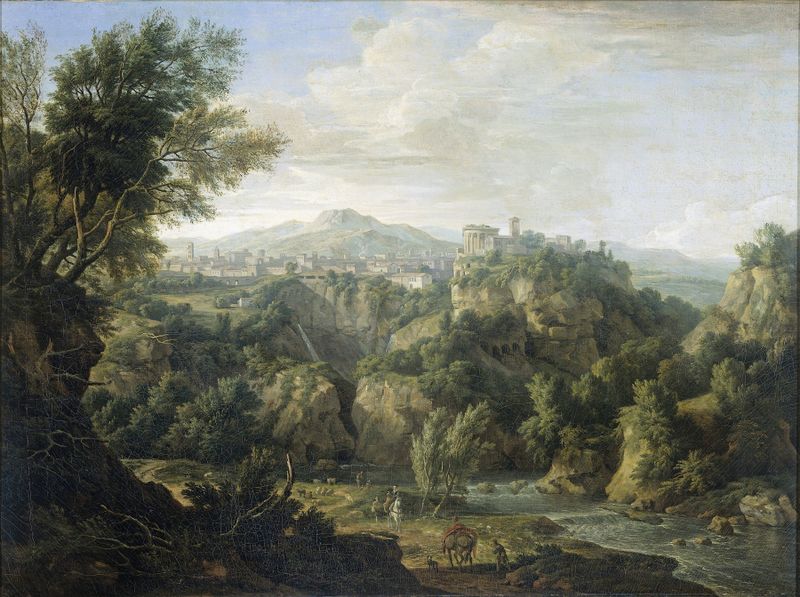
View of Tivoli
Isaac de Moucheron
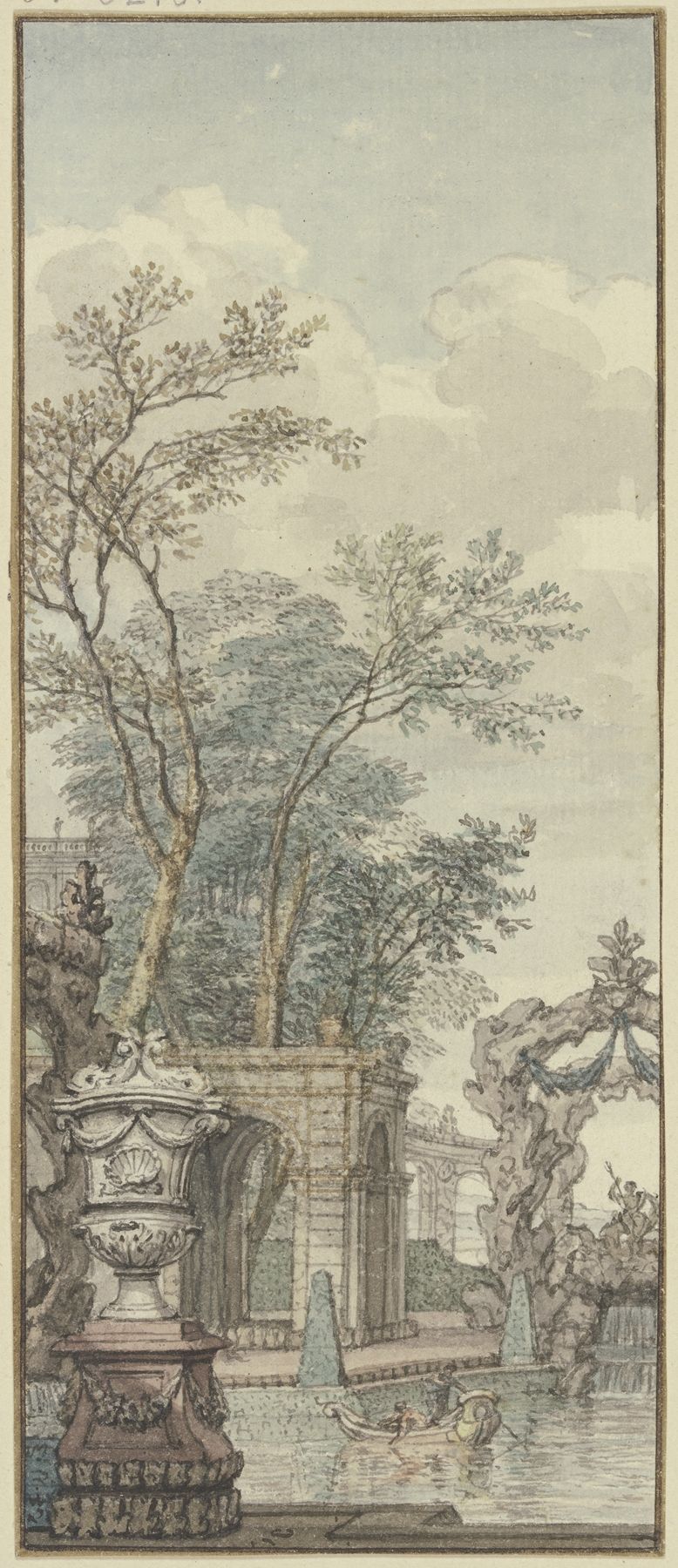
Panneau, Parkansicht mit Wasserwerken und künstlichem Felsen
Isaac de Moucheron

Gezicht op het kasteel van Bentheim
Isaac de Moucheron

Paysage classique animé de personnages
Isaac de Moucheron
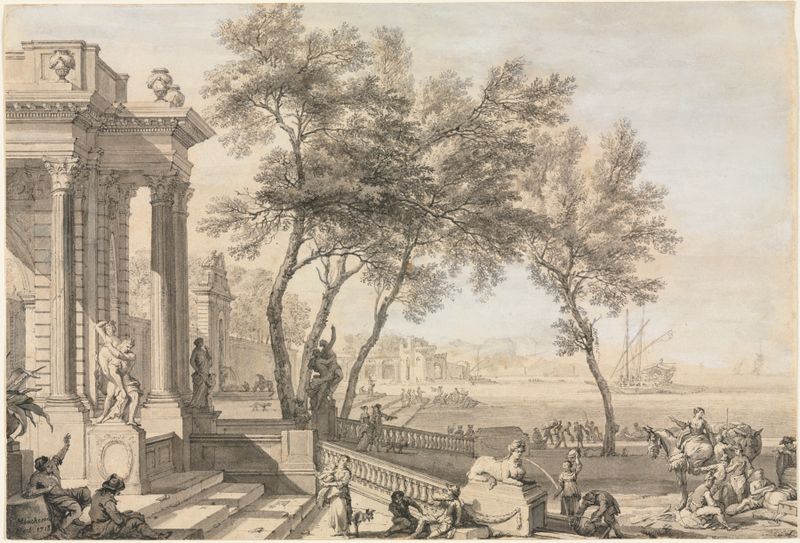
Fantastic Harbor Scene with Architecture and Figures
Isaac de Moucheron

Panneau, im Vordergrund eine Vase, im Hintergrund ein Orangeriegebäude.
Isaac de Moucheron
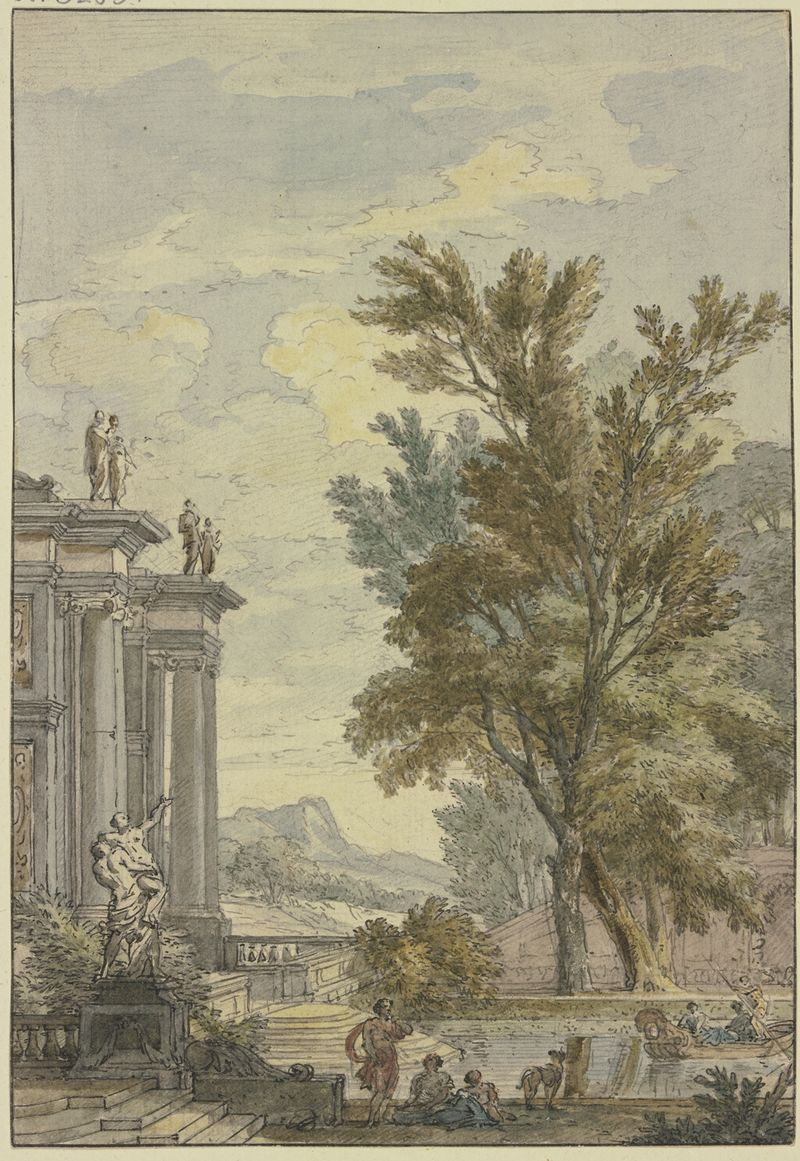
Parkansicht, links ein Gebäude mit Säulen und Statuen, davor ein Bassin, auf welchem eine Gondel fährt
Isaac de Moucheron

An Italianate Garden with a Parrot,a Poodle,and a Man
Isaac de Moucheron
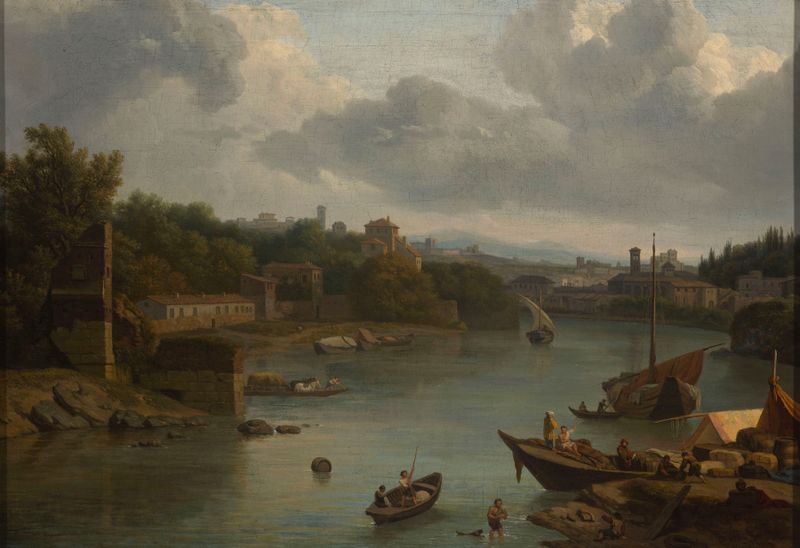
View of the Tiber from the south – Ripa Grande
Isaac de Moucheron





