
An Italianate Garden with a Parrot,a Poodle,and a Man — History & Facts
Sunlight filters through the lush foliage, casting dappled patterns on the cobblestone path. A man stands at the edge of an idyllic garden, seemingly lost in thought, while a parrot and a poodle frolic nearby, their playful antics a stark contrast to his stillness. The air is thick with the scent of blooming flowers, yet a palpable silence wraps around the figures, hinting at an underlying emptiness beneath the facade of beauty. Look to the left at the verdant trees that frame the garden, their rich greens illuminated by the soft glow of afternoon light.
The man, dressed in fine attire, appears slightly out of focus, emphasizing his disconnection from the vibrant life surrounding him. Notice how the parrot's vivid feathers clash beautifully against the muted palette of the path, inviting the viewer to dwell on the contrast between nature's exuberance and the man's apparent solitude. This painting evokes a deep sense of introspection, where the harmony of the garden belies the man’s isolation. The playful parrot and poodle are not just companions but symbols of a carefree existence that he seems unable to embrace.
The stark juxtaposition between their vitality and his stillness echoes an emotional tension, suggesting the artist's commentary on the human condition—caught between the allure of beauty and the weight of inner emptiness. In the 1730s, Isaac de Moucheron painted An Italianate Garden with a Parrot, a Poodle, and a Man during a time of burgeoning interest in landscapes within the Dutch Golden Age. Living in Amsterdam, he was influenced by the popularization of garden culture among the elite, yet his works often reveal a contemplative perspective on the human experience, reflecting a society that wrestled with both opulence and isolation.
More Artworks by Isaac de Moucheron
Browse all →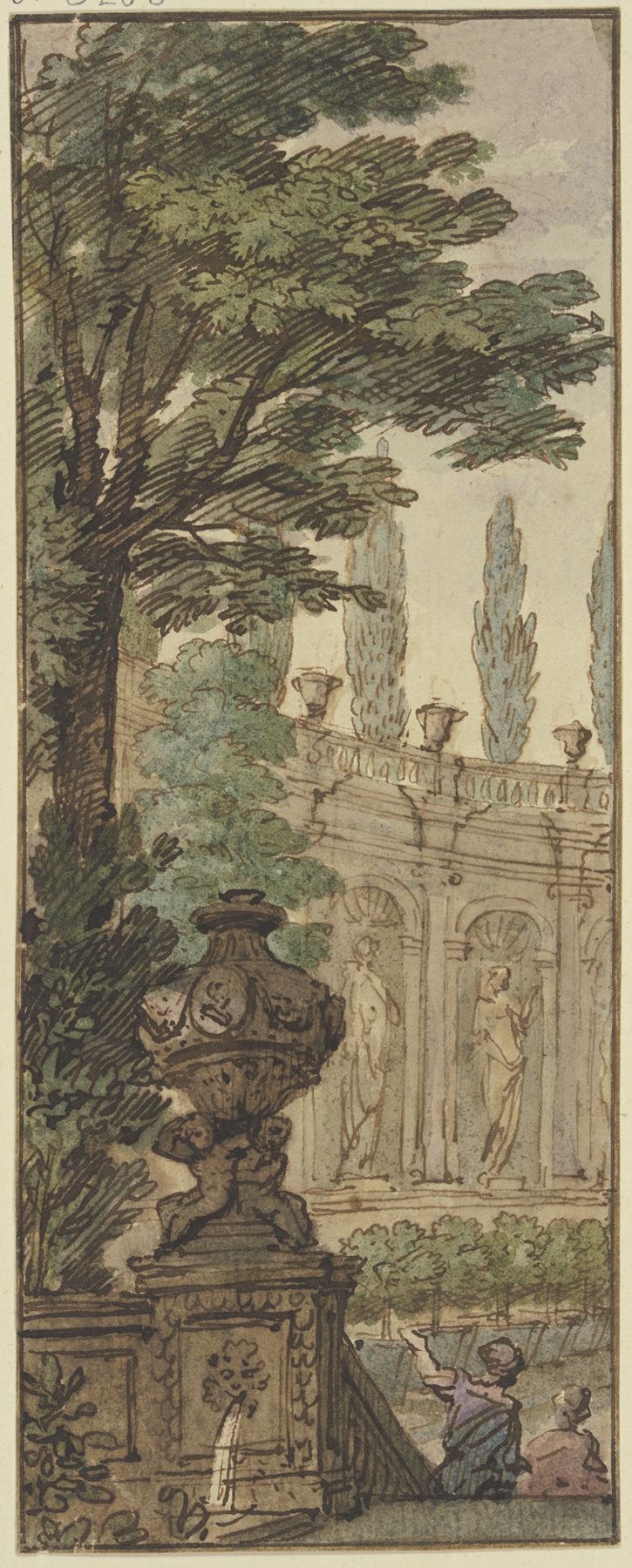
Panneau, im Vordergrund eine Vase, im Hintergrund ein Orangeriegebäude
Isaac de Moucheron
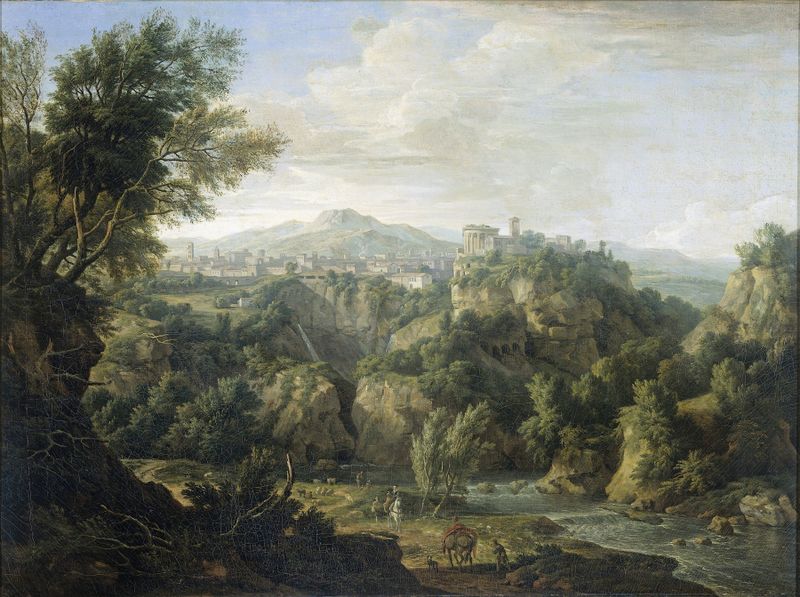
View of Tivoli
Isaac de Moucheron
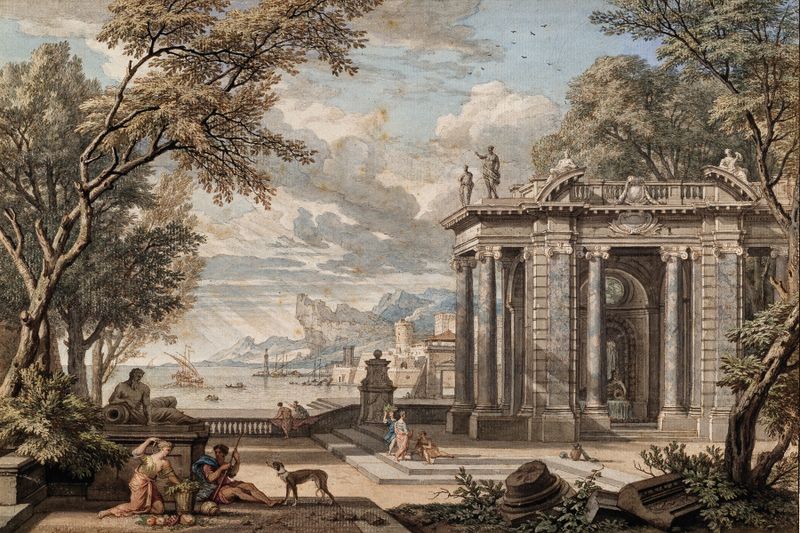
Arcadisch landschap
Isaac de Moucheron
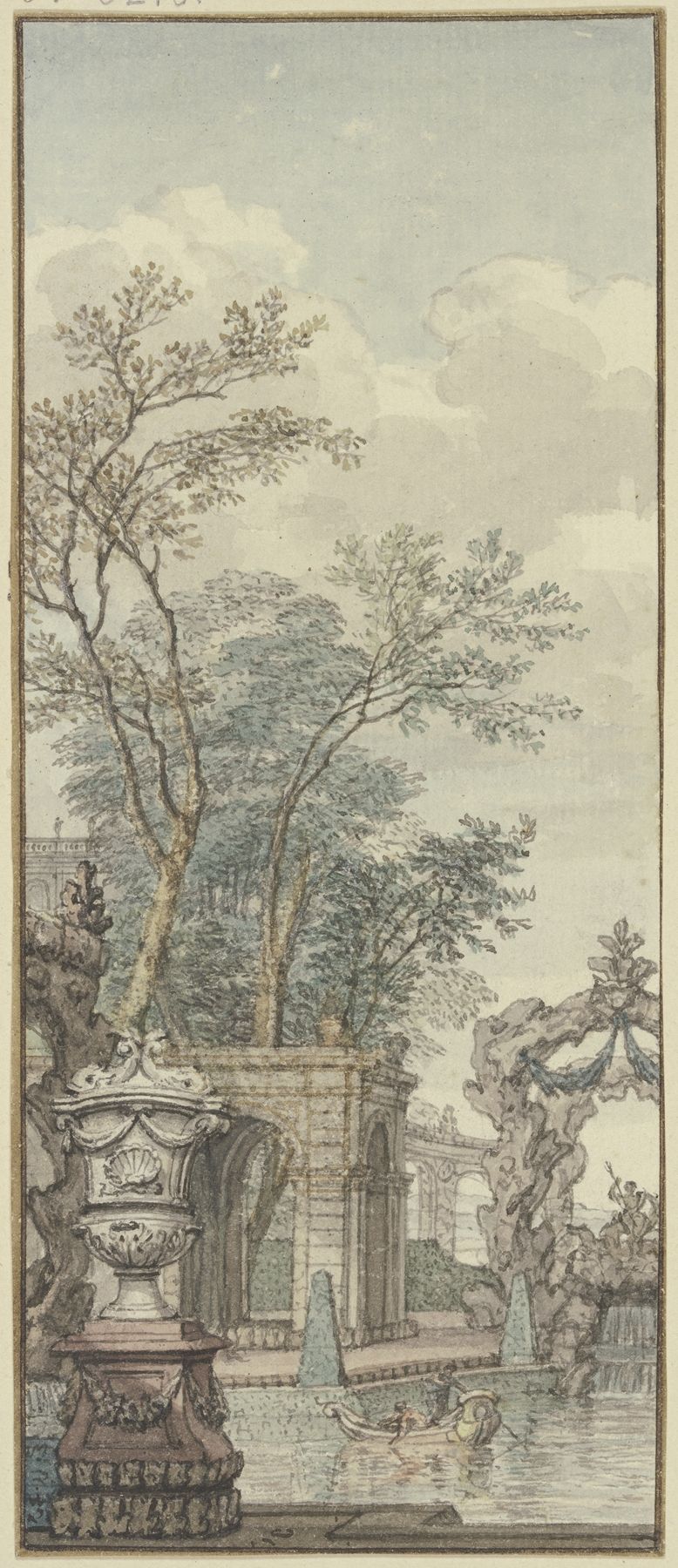
Panneau, Parkansicht mit Wasserwerken und künstlichem Felsen
Isaac de Moucheron

Gezicht op het kasteel van Bentheim
Isaac de Moucheron

Paysage classique animé de personnages
Isaac de Moucheron
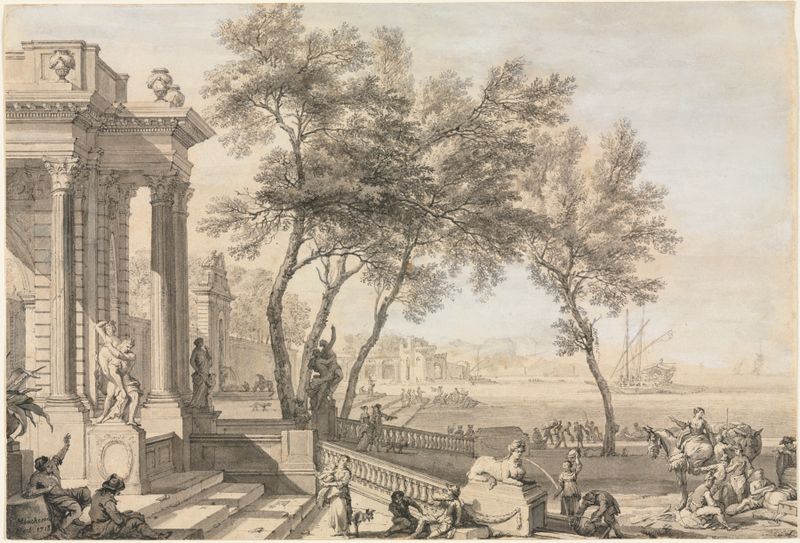
Fantastic Harbor Scene with Architecture and Figures
Isaac de Moucheron

Panneau, im Vordergrund eine Vase, im Hintergrund ein Orangeriegebäude.
Isaac de Moucheron
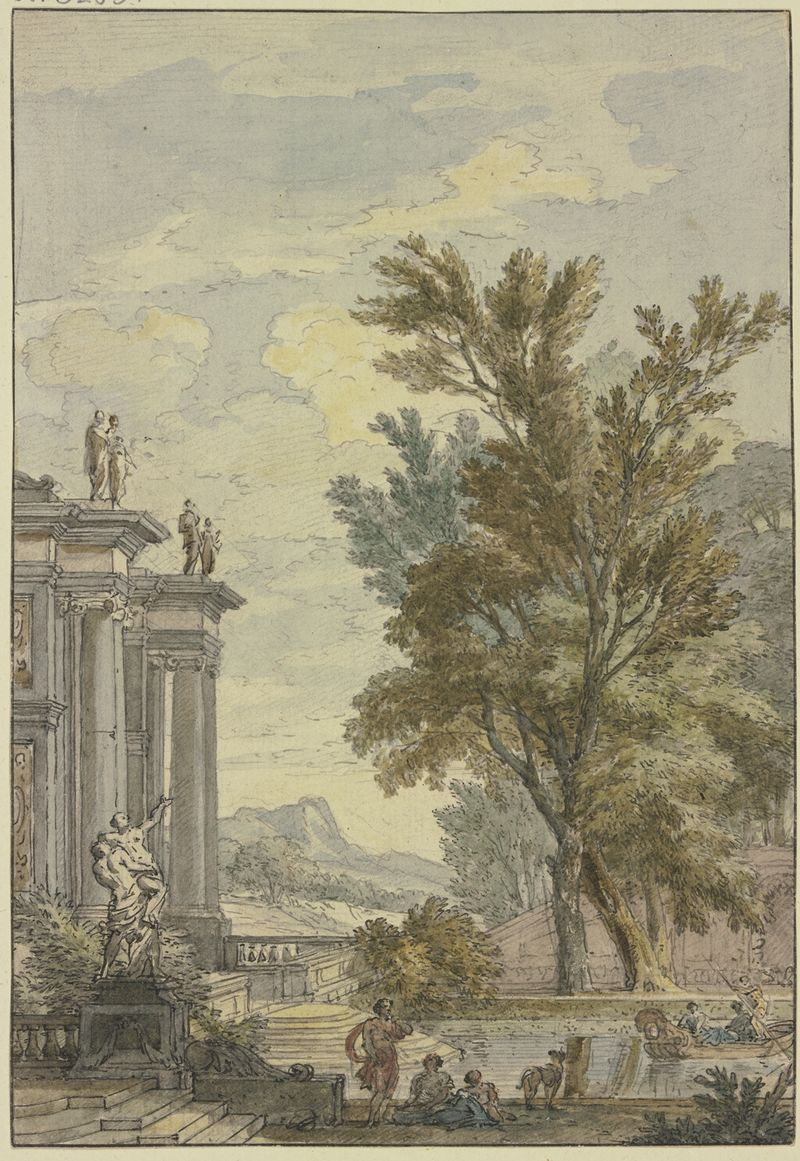
Parkansicht, links ein Gebäude mit Säulen und Statuen, davor ein Bassin, auf welchem eine Gondel fährt
Isaac de Moucheron
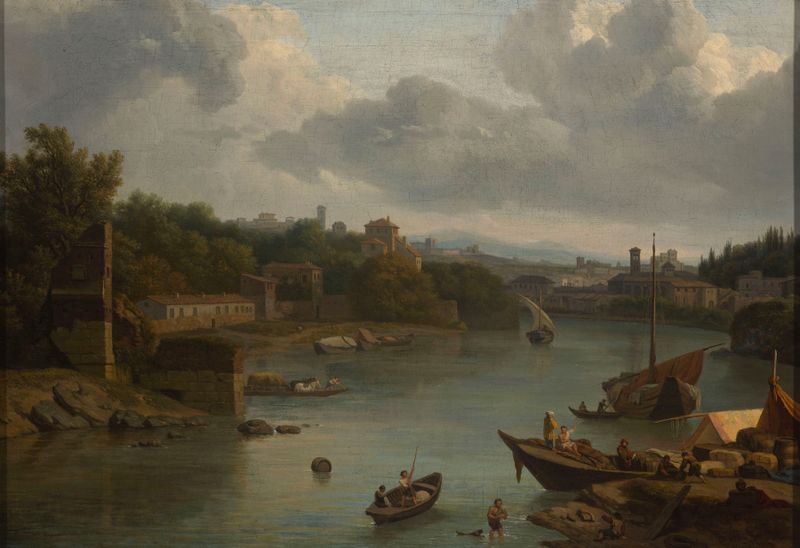
View of the Tiber from the south – Ripa Grande
Isaac de Moucheron





