Panneau, im Vordergrund eine Vase, im Hintergrund ein Orangeriegebäude. — History & Facts
Can beauty exist without sorrow? The delicate balance between joy and melancholy often intertwines within the human experience, much like the enchanting scene before us. Look to the center of the composition, where a porcelain vase cradles a bouquet of blooms, their vivid colors practically pulsating against the muted tones of the surrounding space. The vase serves as a focal point, drawing your gaze upward, while the sprawling Orangerie building looms elegantly in the background, its grandeur softened by the play of light and shadow. Notice how the artist employs a gentle palette—creams, soft greens, and hints of gold—which harmonizes the foreground and background, inviting contemplation on the transience of beauty. Beneath the surface, layers of meaning emerge.
The vase, filled with fresh blooms, symbolizes the fleeting nature of life and beauty, while the Orangerie's stately presence echoes the permanence of constructed grandeur. Together, they illustrate a dialogue between the ephemeral and the eternal, evoking a sense of longing reminiscent of a dream, where time bends and the heart swells with unfulfilled desires. The quiet atmosphere suggests a world paused, where beauty, though vibrant, is steeped in a wistful ache. Isaac de Moucheron painted this work during the late 17th century, a time when Dutch artists were exploring the subtleties of light and texture.
Living in a period of artistic innovation, he sought to capture the serenity and tranquility of nature amidst the evolving landscape of Baroque art. This piece is a testament to his mastery of balance and beauty, embodying a moment in art history where dreams and realities intertwine seamlessly.
More Artworks by Isaac de Moucheron
Browse all →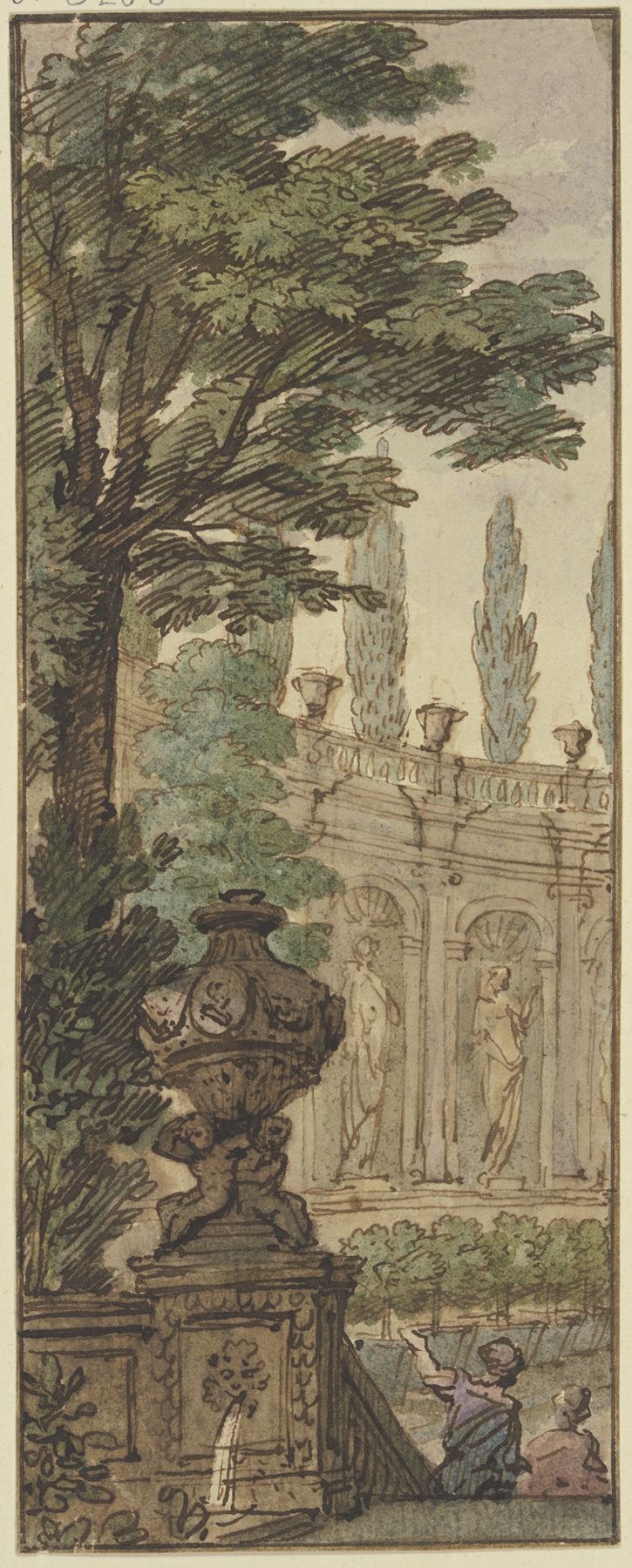
Panneau, im Vordergrund eine Vase, im Hintergrund ein Orangeriegebäude
Isaac de Moucheron
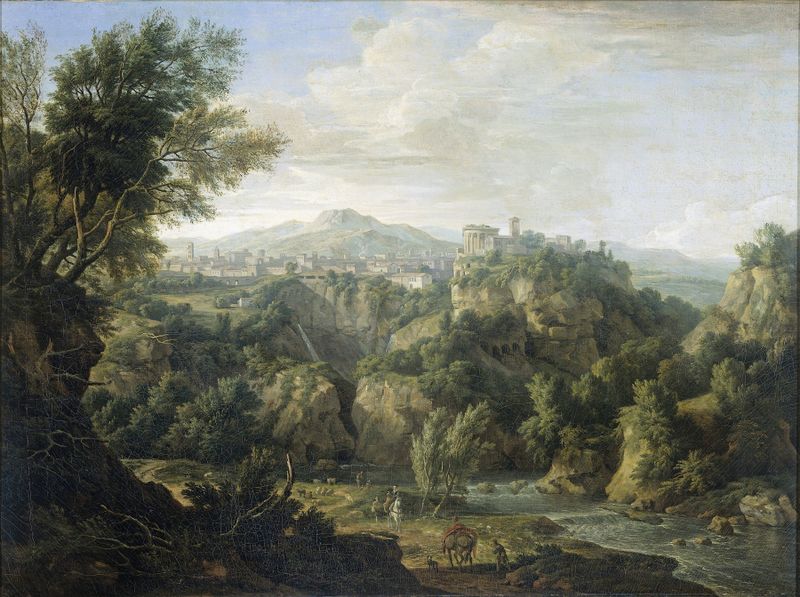
View of Tivoli
Isaac de Moucheron
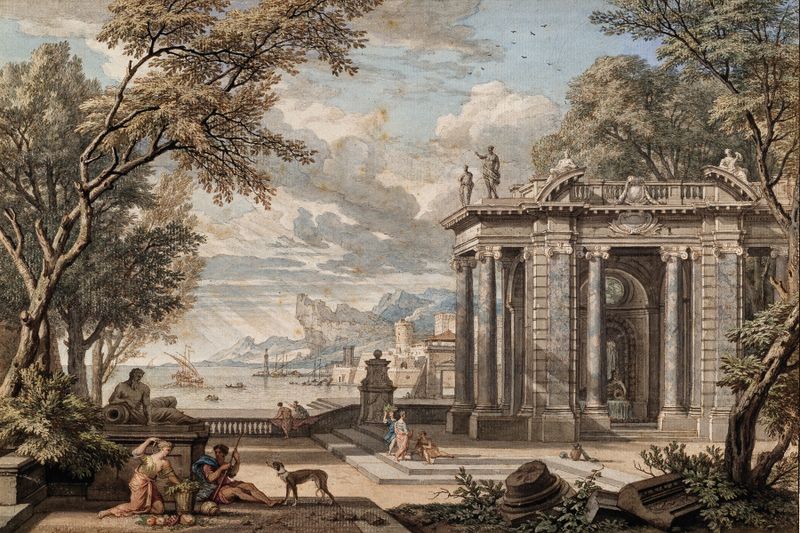
Arcadisch landschap
Isaac de Moucheron
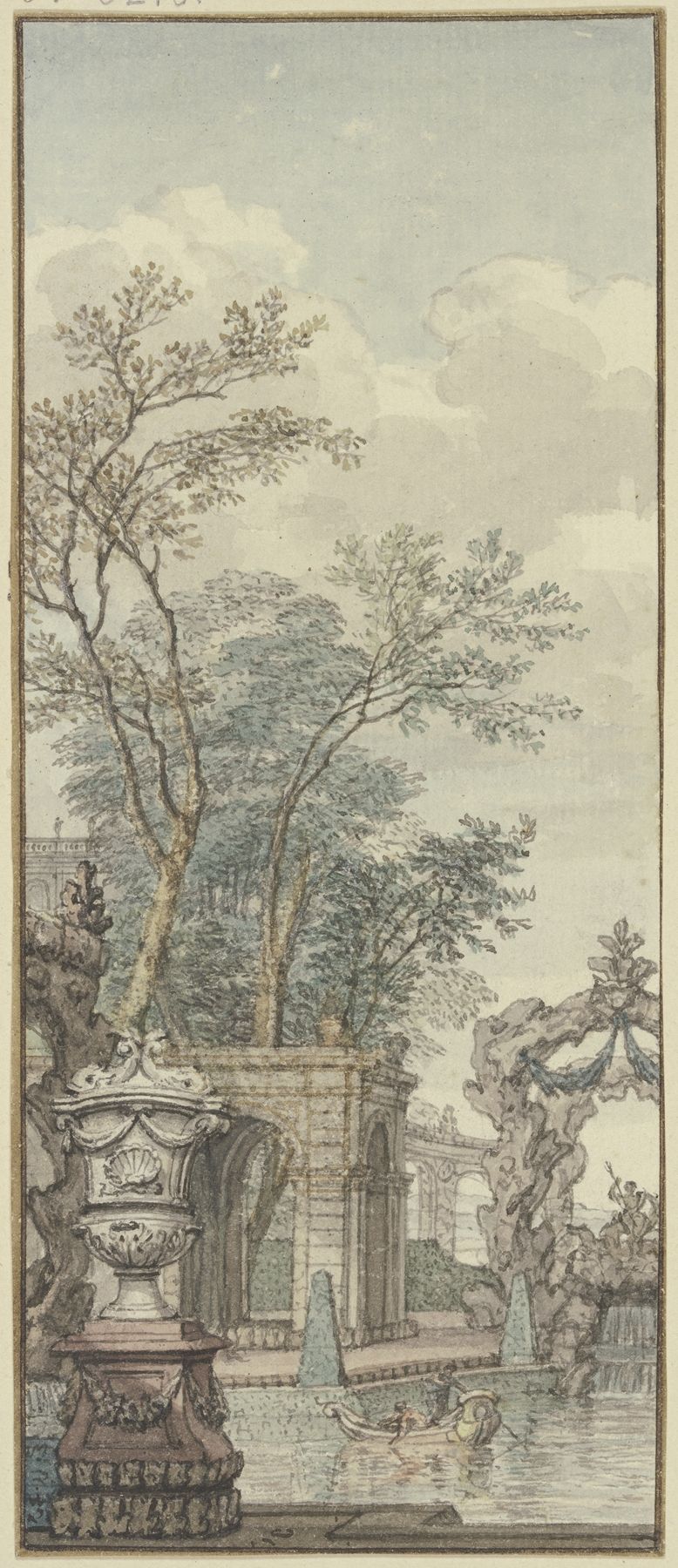
Panneau, Parkansicht mit Wasserwerken und künstlichem Felsen
Isaac de Moucheron

Gezicht op het kasteel van Bentheim
Isaac de Moucheron

Paysage classique animé de personnages
Isaac de Moucheron
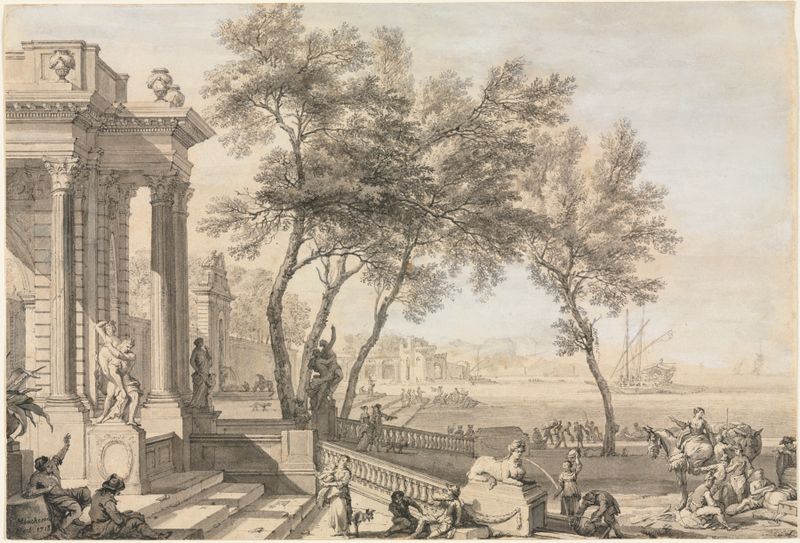
Fantastic Harbor Scene with Architecture and Figures
Isaac de Moucheron
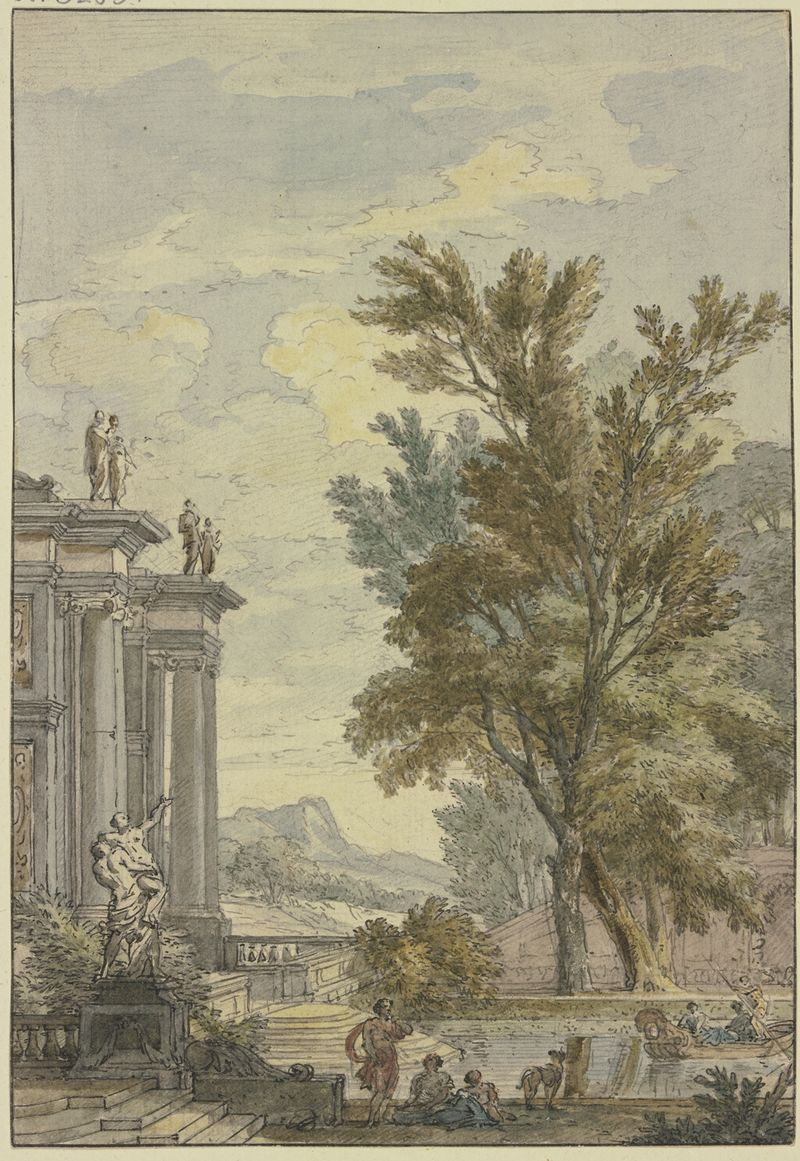
Parkansicht, links ein Gebäude mit Säulen und Statuen, davor ein Bassin, auf welchem eine Gondel fährt
Isaac de Moucheron

An Italianate Garden with a Parrot,a Poodle,and a Man
Isaac de Moucheron
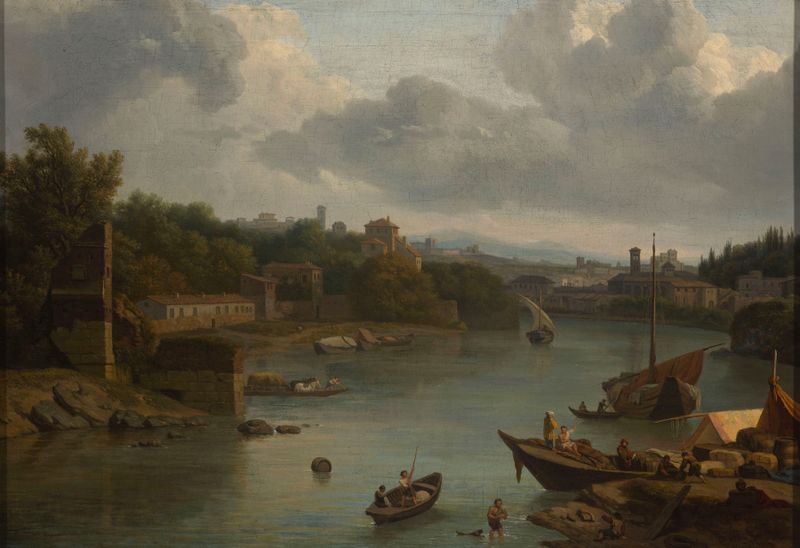
View of the Tiber from the south – Ripa Grande
Isaac de Moucheron