
View of Tivoli — History & Facts
In the captured stillness of a landscape, movement is subtly woven into the fabric of nature, inviting the viewer to linger and reflect. Look to the left where the cascading waters of a distant waterfall break the silence, glistening in the warm embrace of sunlight. Notice the interplay of light and shadow across the verdant hills, guiding your gaze toward the gently swaying trees, their branches almost dancing in the breeze. The artist employs a soft palette of greens and blues, punctuated by the warm earthiness of the pathways that lead the eye deeper into the scene. Within this tranquil vista, contrasts emerge—between the serenity of the landscape and the suggestion of life beyond its borders.
The figures in the foreground appear almost statuesque, grounded in their surroundings yet hinting at a world full of motion and possibility. The delicate clouds floating overhead seem to connect this earthly tranquility with the sky, reminding us of the transience of beauty and the fleeting moments of life that define our existence. In 1725, during a time of shifting artistic paradigms, the artist captured this enchanting view while residing in the Netherlands. His surroundings were alive with the influence of Baroque ideals, and he sought to create a sense of harmony between nature and human experience.
This painting reflects both personal exploration and broader artistic movements, showcasing the transition toward an appreciation of landscape that would resonate through generations.
More Artworks by Isaac de Moucheron
Browse all →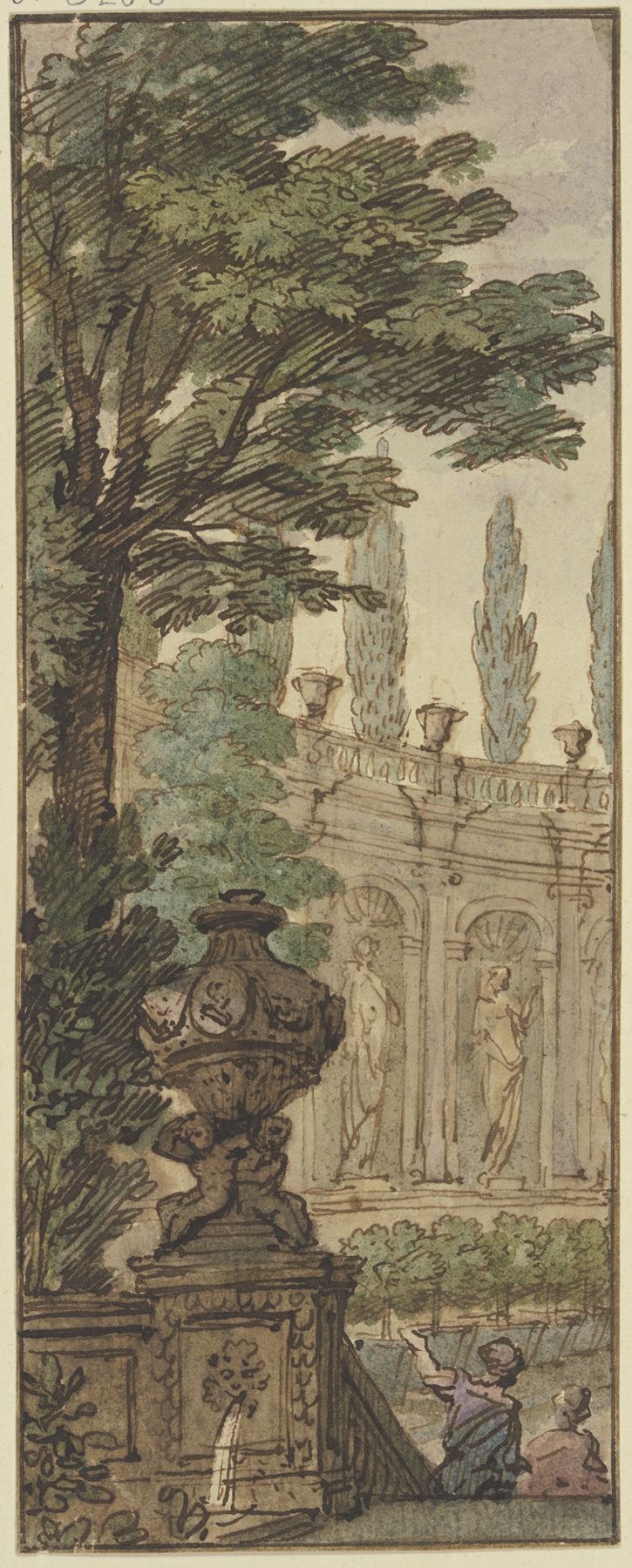
Panneau, im Vordergrund eine Vase, im Hintergrund ein Orangeriegebäude
Isaac de Moucheron
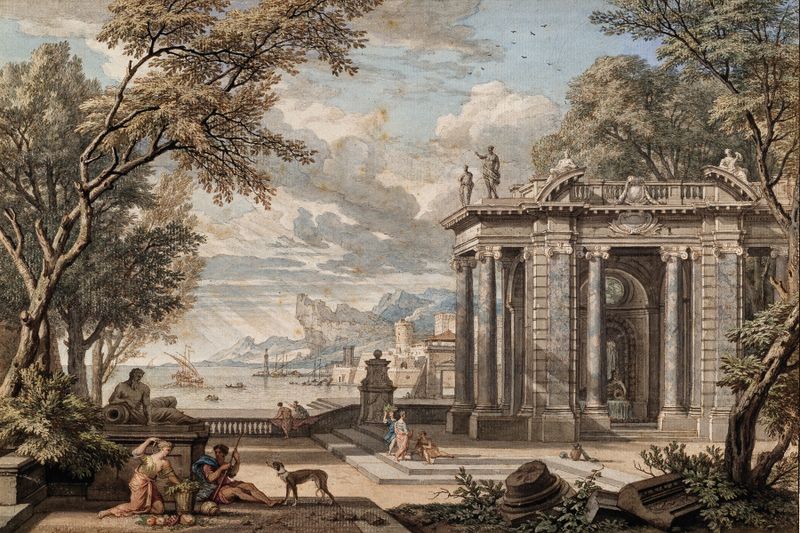
Arcadisch landschap
Isaac de Moucheron
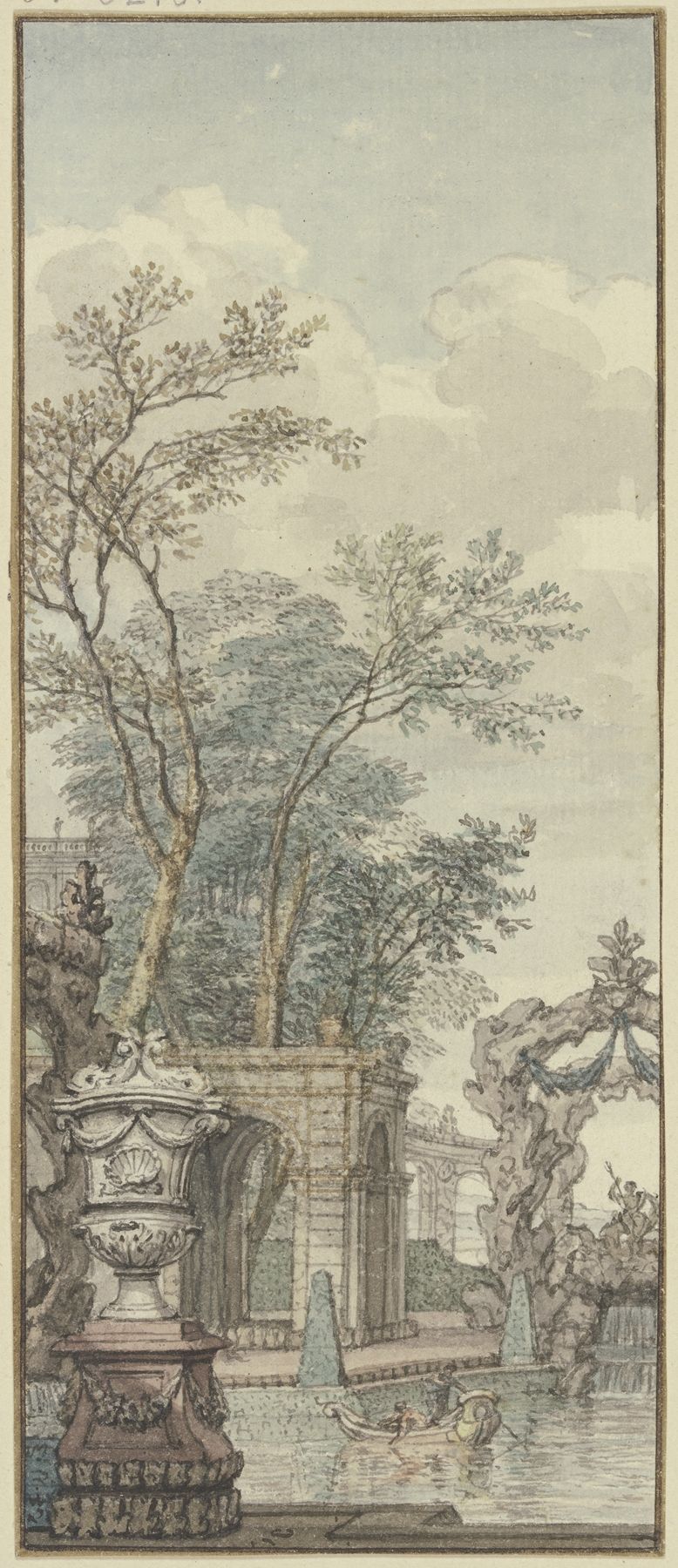
Panneau, Parkansicht mit Wasserwerken und künstlichem Felsen
Isaac de Moucheron

Gezicht op het kasteel van Bentheim
Isaac de Moucheron

Paysage classique animé de personnages
Isaac de Moucheron
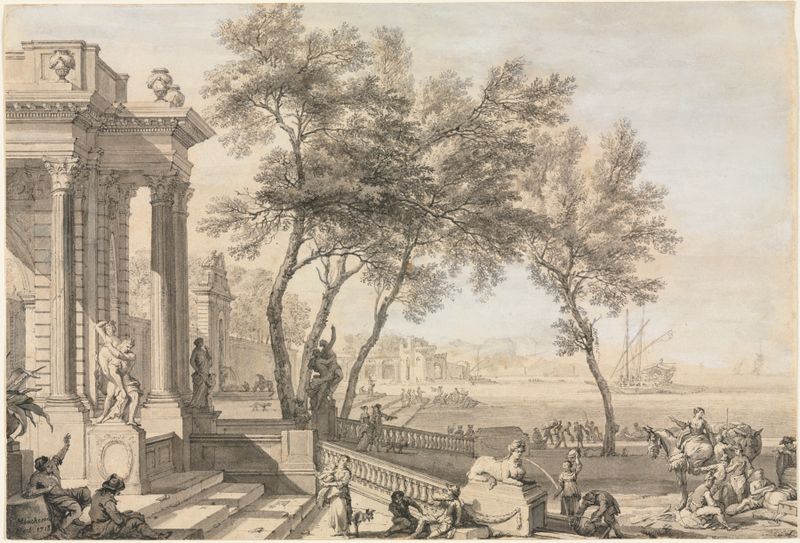
Fantastic Harbor Scene with Architecture and Figures
Isaac de Moucheron

Panneau, im Vordergrund eine Vase, im Hintergrund ein Orangeriegebäude.
Isaac de Moucheron
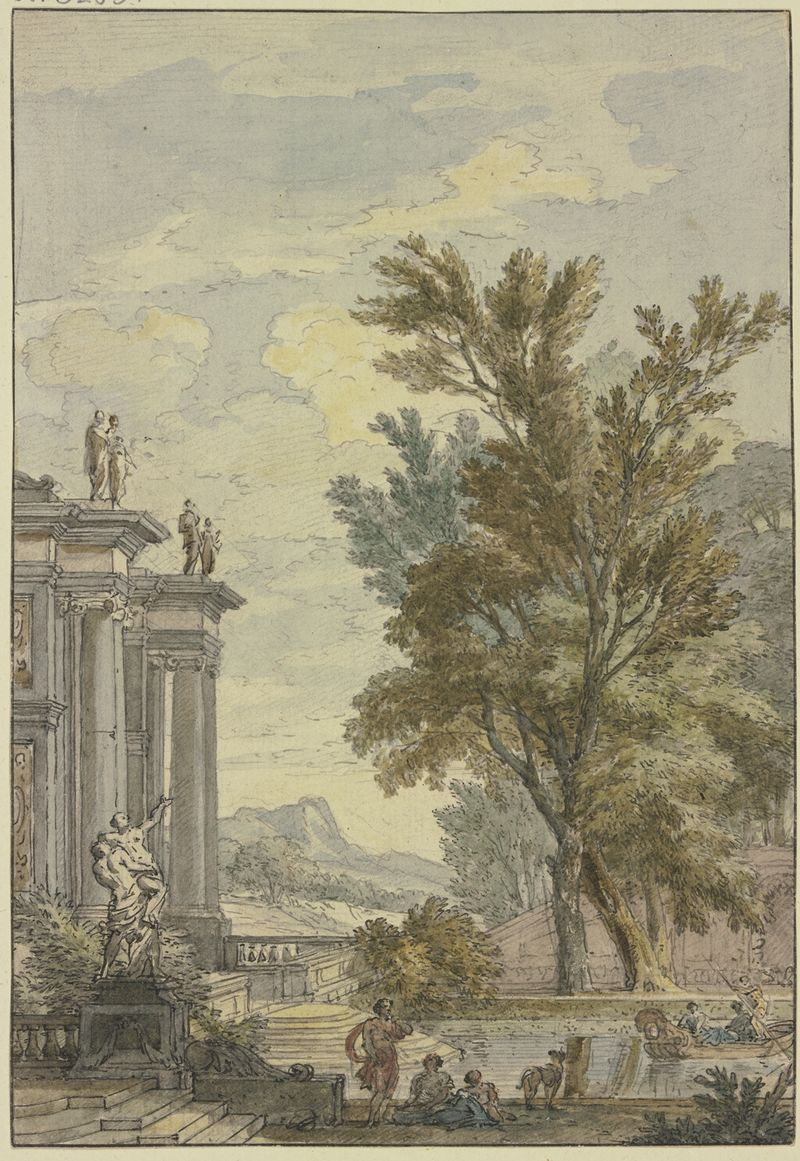
Parkansicht, links ein Gebäude mit Säulen und Statuen, davor ein Bassin, auf welchem eine Gondel fährt
Isaac de Moucheron

An Italianate Garden with a Parrot,a Poodle,and a Man
Isaac de Moucheron
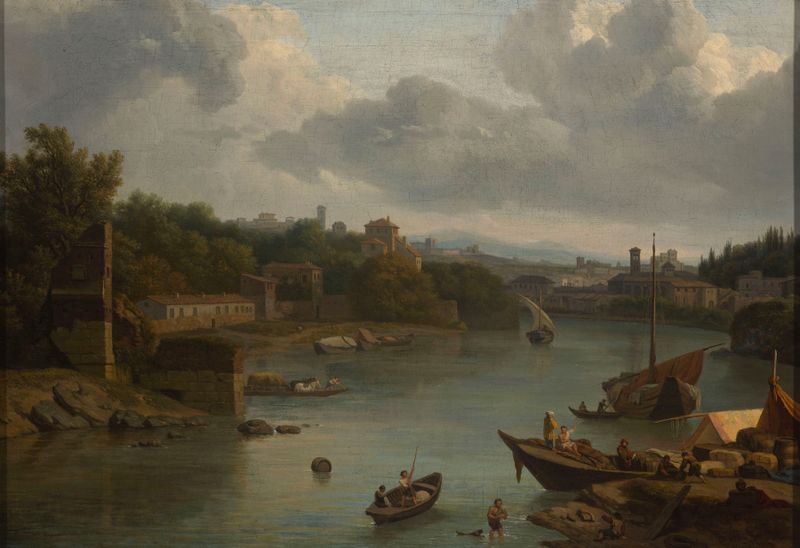
View of the Tiber from the south – Ripa Grande
Isaac de Moucheron





