
Astor House — History & Facts
Can paint confess what words never could? In Astor House, the depths of loss and transition are rendered with a quiet, haunting beauty that speaks volumes without uttering a single syllable. Look to the left at the sun-drenched facade of the building, where warm hues of ochre and soft greens intermingle to evoke a sense of nostalgia. The brushwork, both delicate and deliberate, captures the architectural details with precision, while shadows creep into the corners, hinting at the passage of time. Notice how the light filters through the trees that stand sentinel, their branches casting intricate patterns against the wall, enhancing the emotional weight of the scene. In the foreground, the solitary figure, seemingly lost in thought, embodies the weight of unresolved emotions.
The contrast between the vibrancy of the surroundings and the stillness of the figure echoes themes of isolation amidst familiarity. There’s a tension between the life outside and the grief contained within, suggesting that while the world moves forward, some moments remain frozen in the past. Each brushstroke reveals a narrative of remembrance, enveloping the viewer in a shared sense of longing. Frederick Frank Durand painted Astor House in 1869 during a period of personal reflection and artistic maturation.
Living in New York, he was influenced by the burgeoning American Impressionist movement, which sought to capture light and atmosphere in new ways. At this time, themes of memory and loss were becoming increasingly significant in art, allowing Durand to explore these profound emotions through his work.
More Artworks by Frederick Frank Durand
Browse all →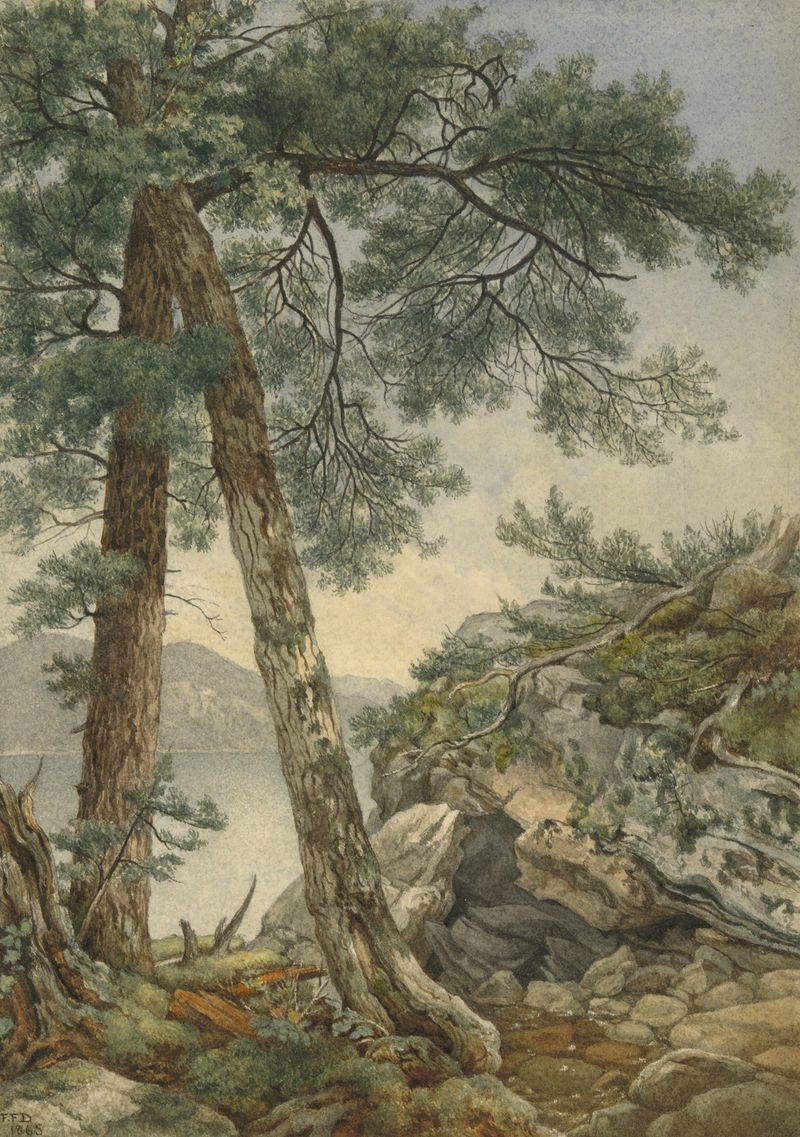

More Architecture Art
Browse all →
The statue of Liberty
Frédéric Auguste Bartholdi

View of Houses in Delft, Known as ‘The Little Street’
Johannes Vermeer

View of Houses in Delft, Known as ‘The Little Street’
Johannes Vermeer

The Cathedral in Rouen. The portal, Grey Weather
Claude Monet

The yellow house
Vincent van Gogh

The Church in Auvers-sur-Oise, View from the Chevet
Vincent van Gogh