Tanglewood – Catskill Mountains — History & Facts
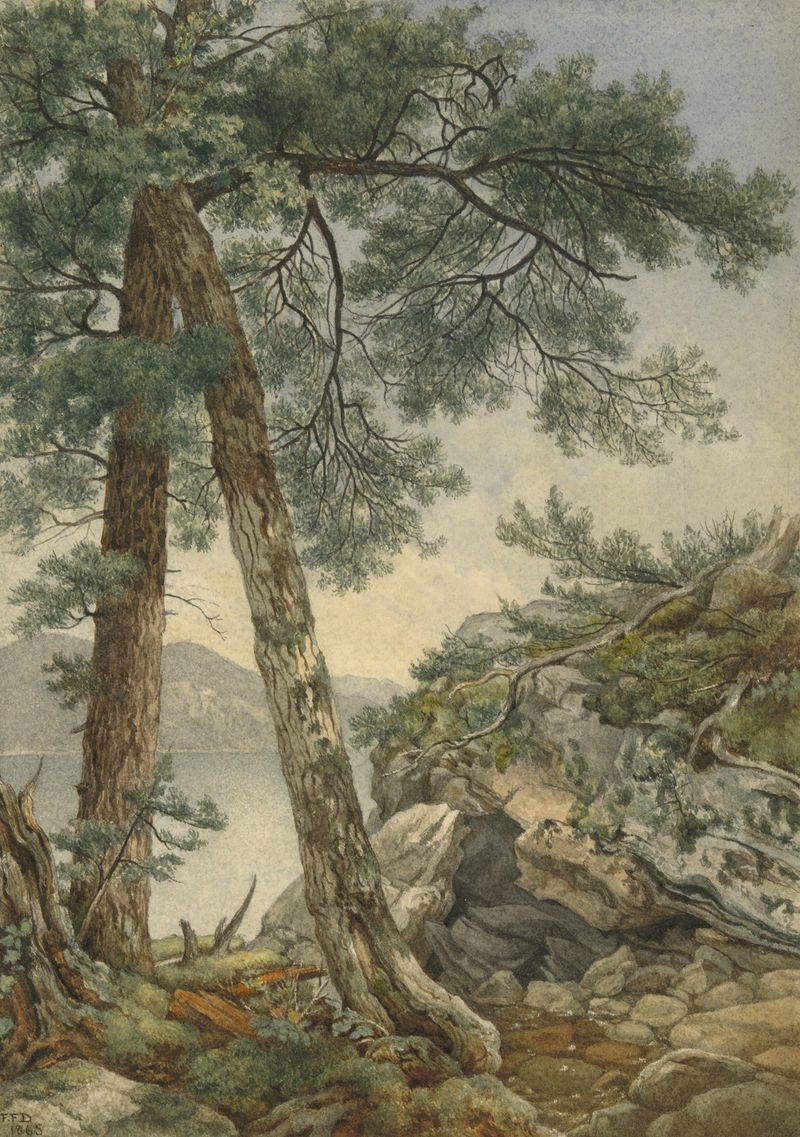
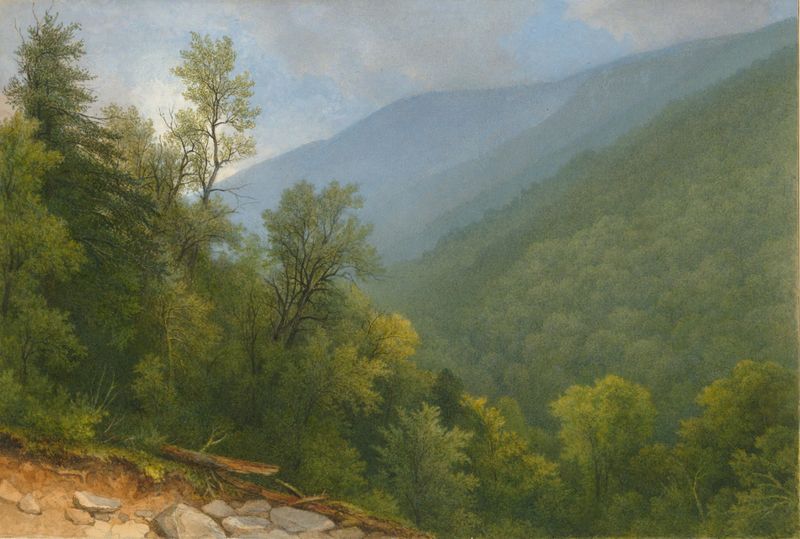
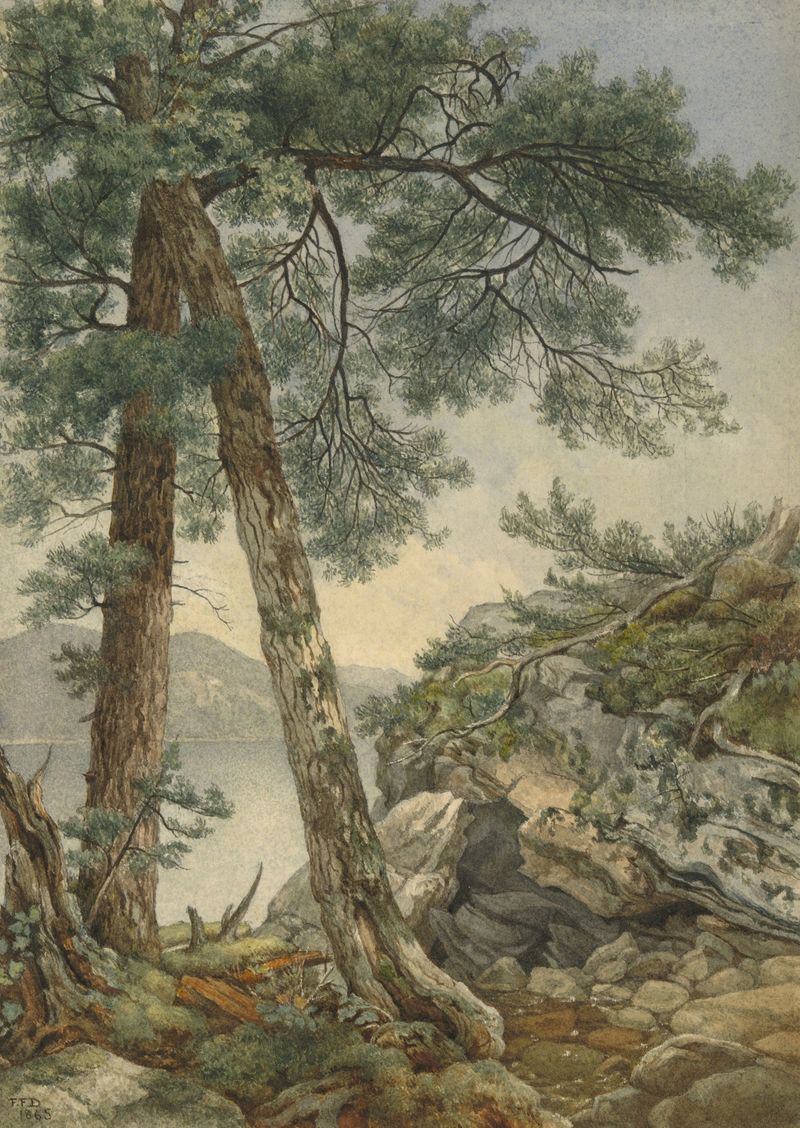
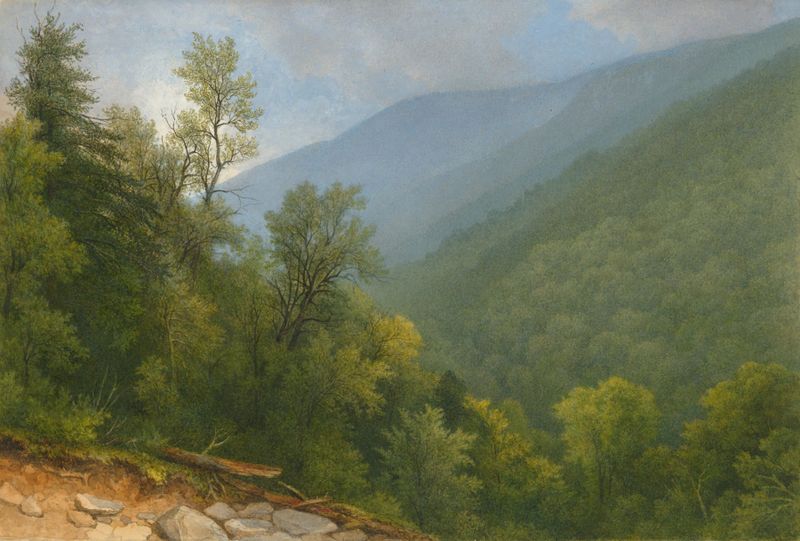
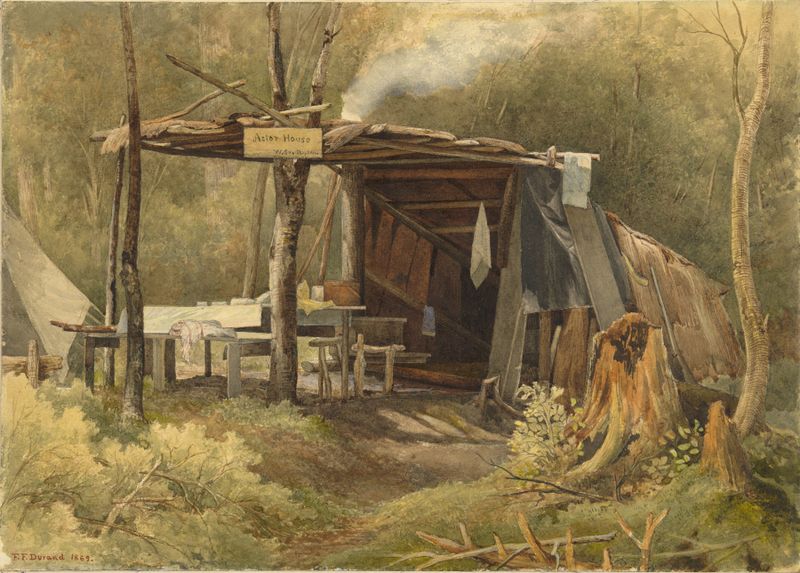
What if beauty was never meant to be finished? In Frederick Frank Durand's Tanglewood – Catskill Mountains, the artist captures an ethereal glimpse of nature, a moment suspended between the divine and the transient. Look to the left at the soft, dappled light filtering through the trees, illuminating the forest floor. The rich greens and browns evoke a sense of serenity, while the gentle meandering stream invites the eye to travel deeper into the scene. Notice how the delicate brushstrokes create a sense of movement, as if the leaves are whispering secrets to one another, and the clouds above float lazily, holding the promise of rain.
Each detail, from the rugged mountain backdrop to the slender trunks, reflects Durand's commitment to capturing not just a landscape, but a feeling of harmony and belonging. At first glance, one may simply admire the serene beauty of nature, but deeper exploration reveals layers of emotional tension. The interplay between light and shadow suggests a divine presence, hinting at the complex relationship between humanity and the natural world. The almost tangible edge of the wilderness serves as a reminder of the sacredness embedded within these landscapes, urging viewers to reflect on their own connection to the divine.
The painting invites contemplation about how beauty exists in both the seen and the unseen, reminding us that nature's majesty often lies beyond our grasp. Durand created Tanglewood – Catskill Mountains during a pivotal time in American art, specifically in 1865, a period marked by a burgeoning interest in the Hudson River School movement, which celebrated the American landscape. Working primarily in the Catskills, he sought to convey not merely a representation of the scenery, but an emotional resonance that reflects the spiritual undercurrents of the era.