View Down the Valley — History & Facts
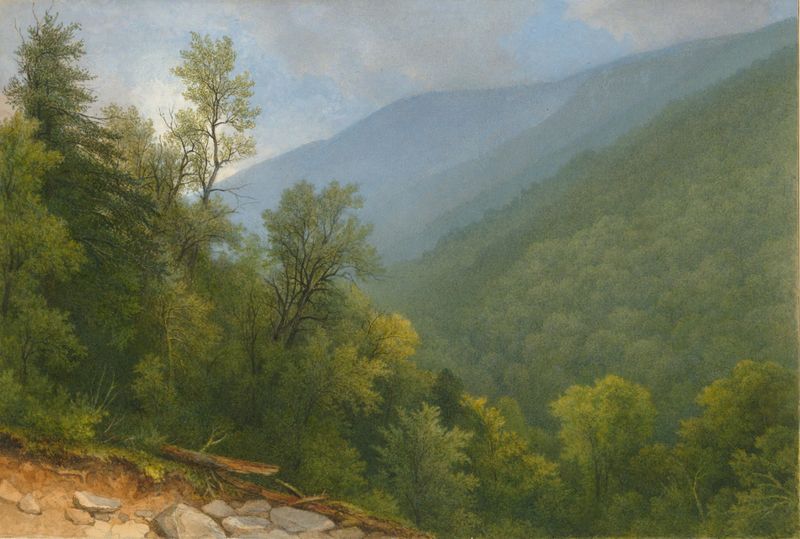
Can beauty exist without sorrow? In View Down the Valley, Frederick Frank Durand invites us to ponder this question, capturing a moment that teeters delicately between longing and contentment. The landscape, rich with verdant hills and a sky painted in soft pastels, speaks of both the allure and the melancholy inherent in nature's splendor. Look to the horizon, where rolling hills cascade into a gentle valley, leading the eye deeper into the serene expanse. The muted greens intermingle with subtle hints of gold, suggesting the warmth of sunlight filtering through a late afternoon haze.
Durand’s brushstrokes evoke a textured surface, allowing light to dance upon the canvas, illuminating the scene with a soft glow that feels almost ethereal. This careful attention to color and composition draws the viewer into a tranquil embrace, providing a momentary escape from the chaos of life. Yet beneath this picturesque facade lies a profound tension—the valley’s beauty becomes a vessel for unfulfilled desire. The absence of human figures hints at solitude, while the expansive sky suggests infinite possibilities that remain just out of reach.
Each element, from the towering trees to the winding path, subtly conveys a narrative of yearning, prompting reflection on the delicate balance between joy and sorrow that defines our own existence. Durand created View Down the Valley in the 19th century, amidst a burgeoning interest in the American landscape and the transcendental movement. At this time, he was exploring the potential of the outdoor experience, channeling his observations of nature into his art. This painting reflects both the romantic idealism of the era and Durand’s personal journey as he sought to capture the emotional truths hidden within the beauty of the world around him.