
At the edge of the city and the desert. From the journey to Palestine — History & Facts
Can paint confess what words never could? In At the edge of the city and the desert, innocence meets the vast complexity of the human experience, inviting contemplation of a fragile existence on the brink of transformation. Look to the center, where an arched adobe doorway opens to a sunlit expanse. The warm hues of ochre and gold convey an inviting yet stark contrast to the cool blues of the distant horizon. The meticulous brushwork captures the texture of the walls while shadows play upon the ground, revealing a depth of space that draws the viewer inward.
Notice how the desert’s undulating forms creep just beyond the urban confines, hinting at the imminent encroachment of nature upon civilization. The juxtaposition of the city and desert encapsulates a tension between security and vulnerability. The doorway serves as a threshold, symbolizing both separation and connection, where innocence resides amidst the encroaching unknown. The figures, subtly rendered, evoke a sense of longing and reflection, embodying the universal struggle of humanity grappling with its place in an ever-changing world. Painted in 1901, this work emerged during a time when Jan Ciągliński sought to portray the complexities of life in Palestine, a region marked by political and cultural upheaval.
Living in Paris as an immigrant artist, he was keenly aware of the challenges faced by individuals caught between tradition and modernity, embedding these themes within his art to express a poignant narrative of belonging and innocence amid shifting landscapes.
More Artworks by Jan Ciągliński
Browse all →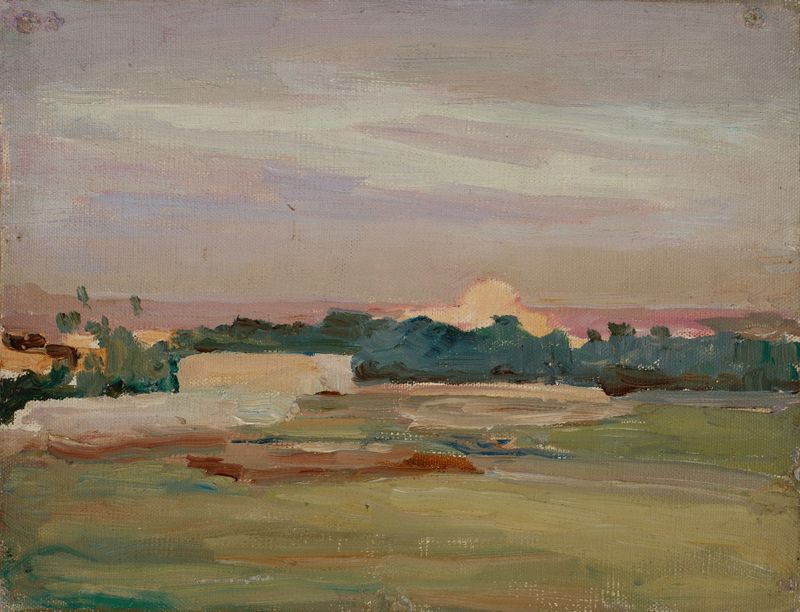
The Sirocco
Jan Ciągliński
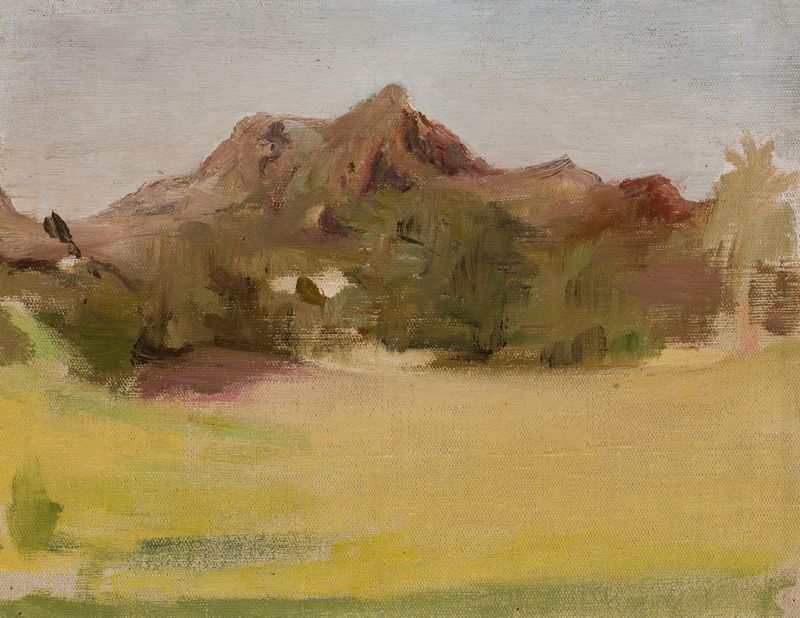
Mountain landscape. From the journey to India
Jan Ciągliński
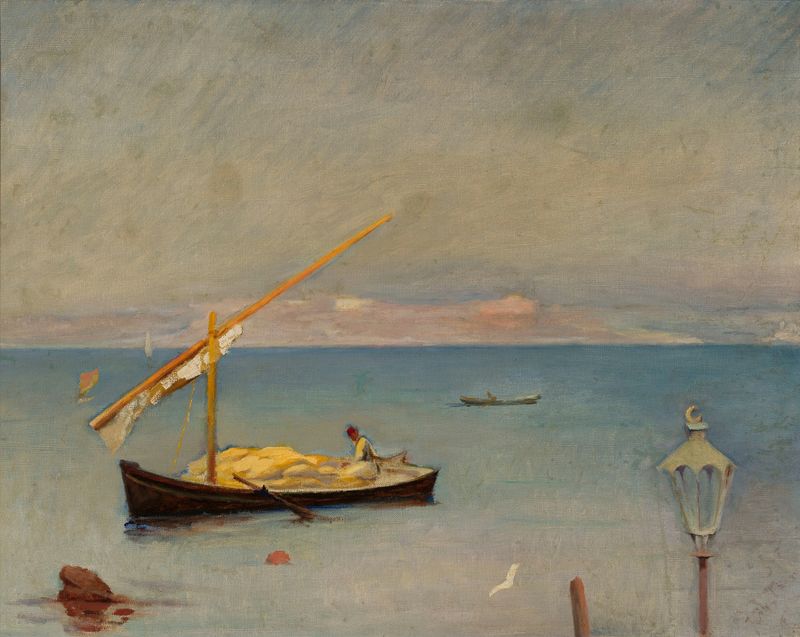
At Bosporus
Jan Ciągliński
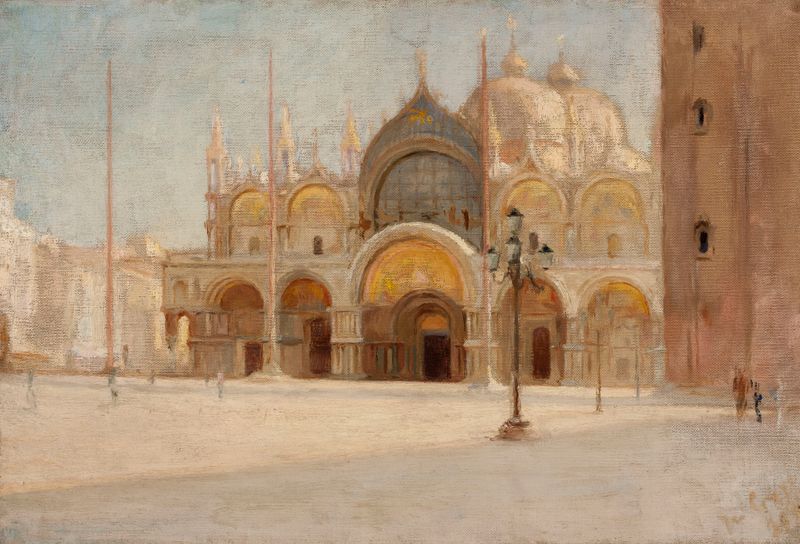
St Mark’s Square in Venice
Jan Ciągliński
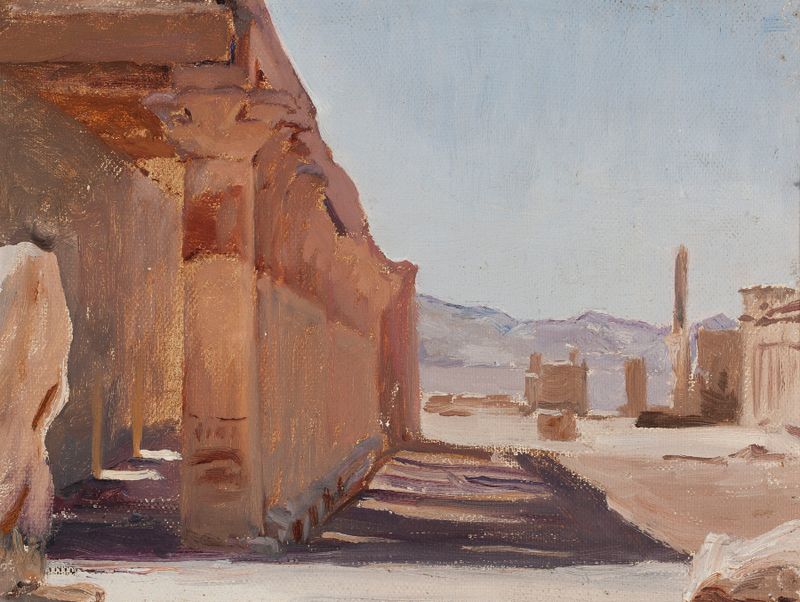
Temple. From the journey to Egypt
Jan Ciągliński
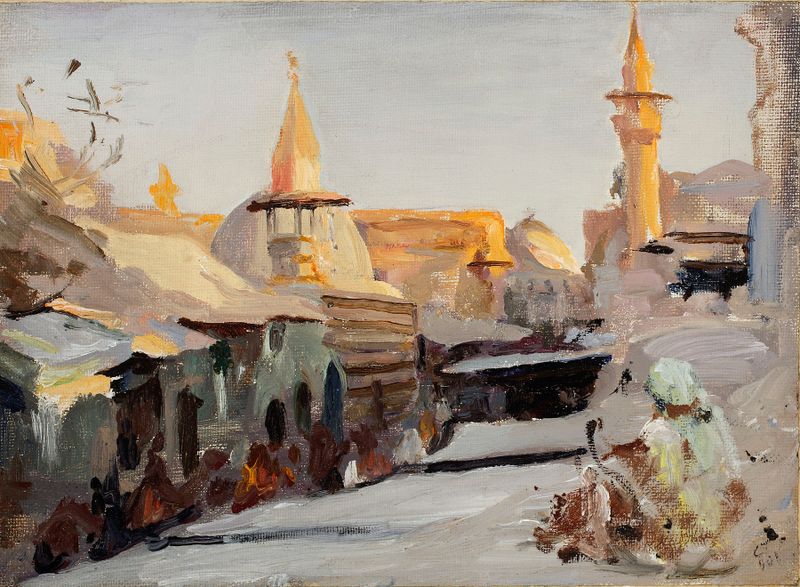
Street in Damascus. From the journey to Palestine
Jan Ciągliński
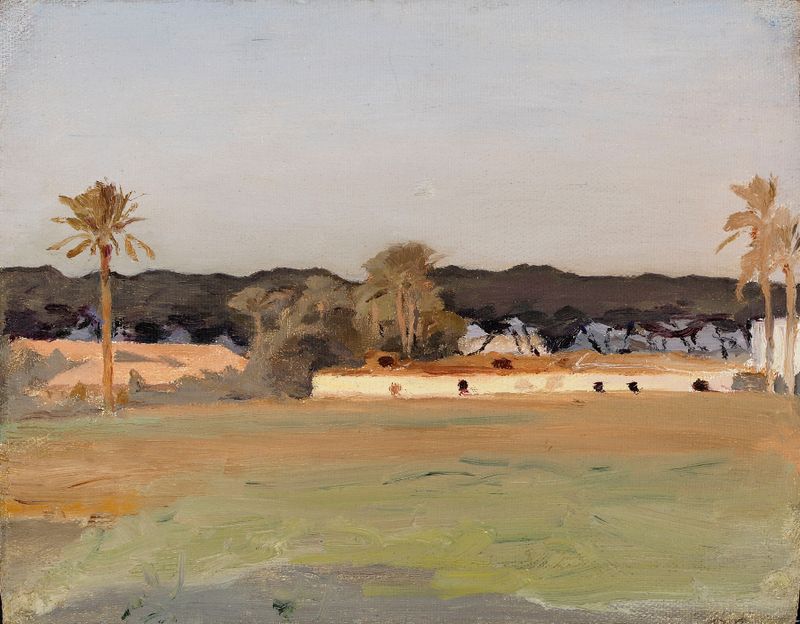
Evening. From the journey to Egypt
Jan Ciągliński
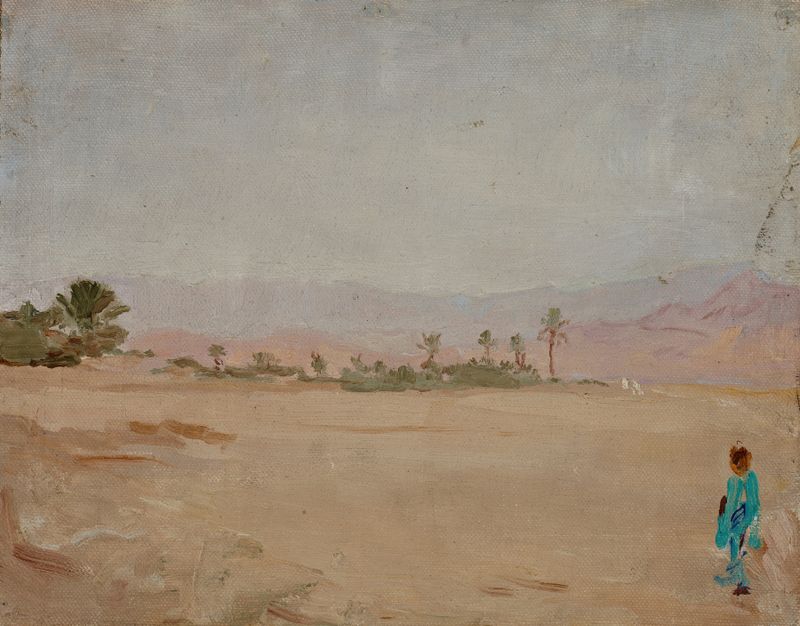
Sahara (Desert)
Jan Ciągliński
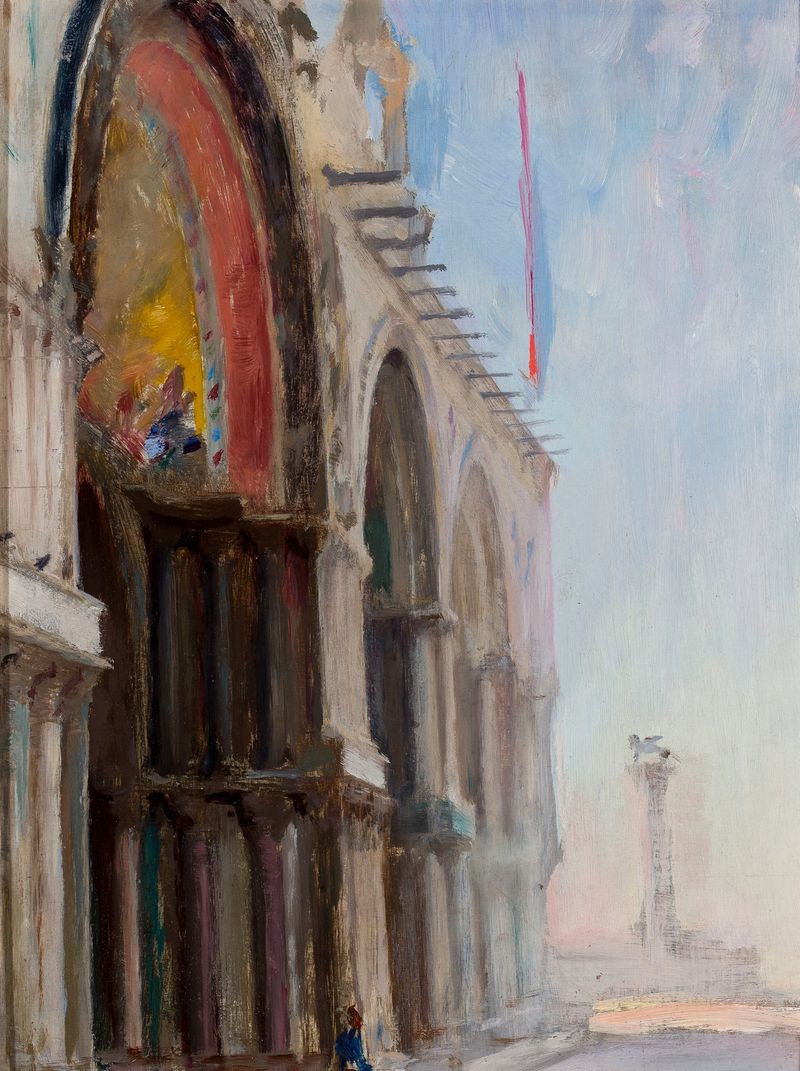
Venice – San Marco. From the journey to Italy
Jan Ciągliński
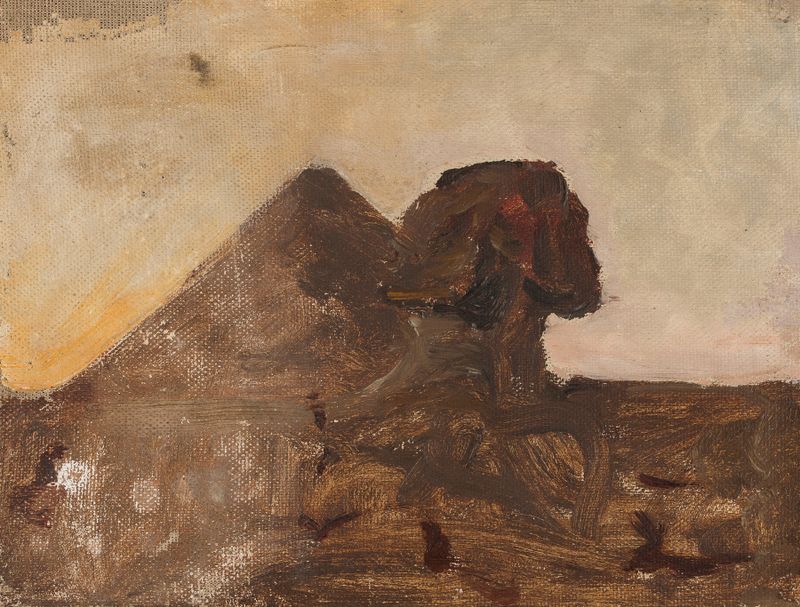
Evening in the desert – Sphinx and pyramid. From the journey to Egypt
Jan Ciągliński





