At the Hammersbach — History & Facts
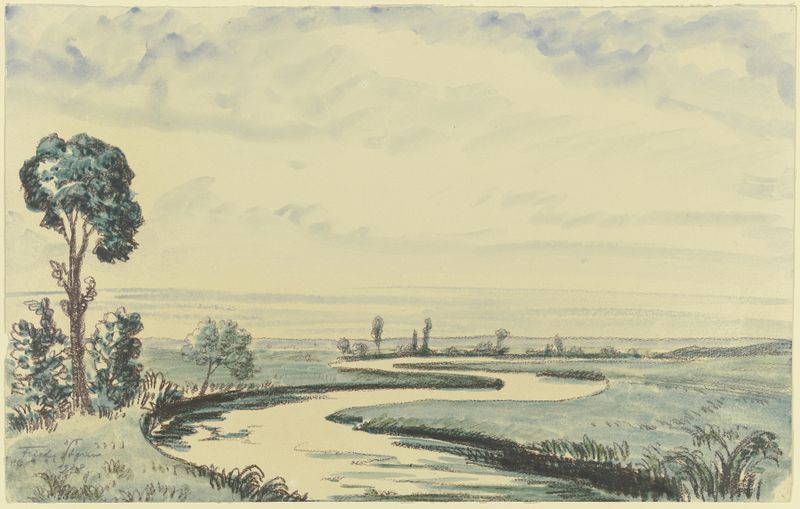
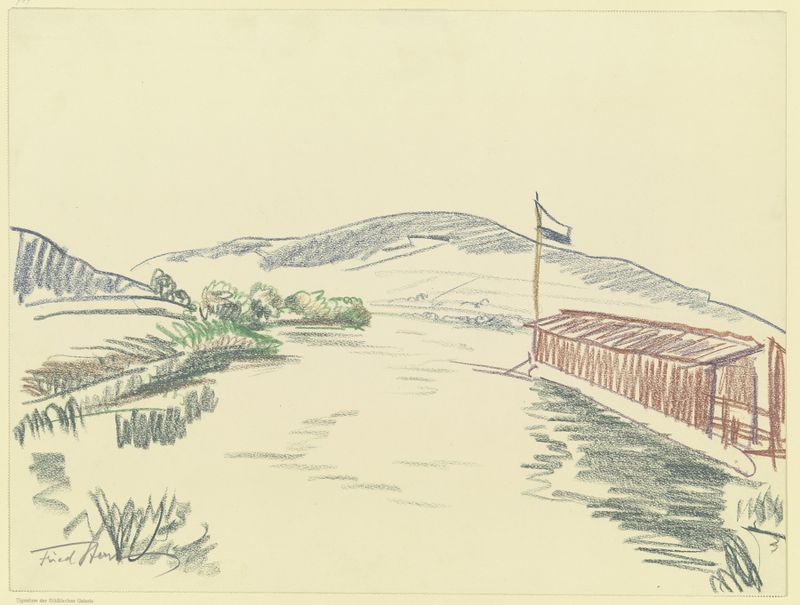
In the stillness of memory, we often find ourselves yearning for a moment long past, one that lingers like the scent of rain on warm earth. Nostalgia is a tender ache, a bridge to the fleeting joys of what once was, captured forever in the strokes of a brush. Look closely to the left where a gentle stream meanders, its shimmering surface reflecting a soft pale light. The artist’s meticulous brushwork invites your gaze to dance along the water's edge, where delicate leaves float lazily, and the verdant greens evoke a sense of tranquil abundance.
As your eyes wander upward, the gentle hills cradle the sky, painted in soft blues and muted pastels, suggesting a place untouched by time, a sanctuary of peace. Beneath the serene surface lies a poignant contrast; the idyllic landscape speaks to both beauty and transience. The interplay of light and shadow creates a subtle tension between the vibrancy of life and the inevitability of change. Each detail, from the wavering light on the water to the stillness of the trees, encapsulates the fleeting nature of existence, inviting the viewer to reflect on their own memories intertwined with the passage of time. Fried Stern created At the Hammersbach in 1911 while living in Germany, a period marked by both artistic innovation and looming societal shifts.
At that time, the Impressionist movement was gaining momentum, influencing many artists to explore the emotional resonance of landscape painting. Stern, with his unique perspective, sought to capture not merely the scene before him but the deeper, often unspoken feelings that such natural beauty could evoke in the hearts of those who encounter it.