Gemünden am Main — History & Facts
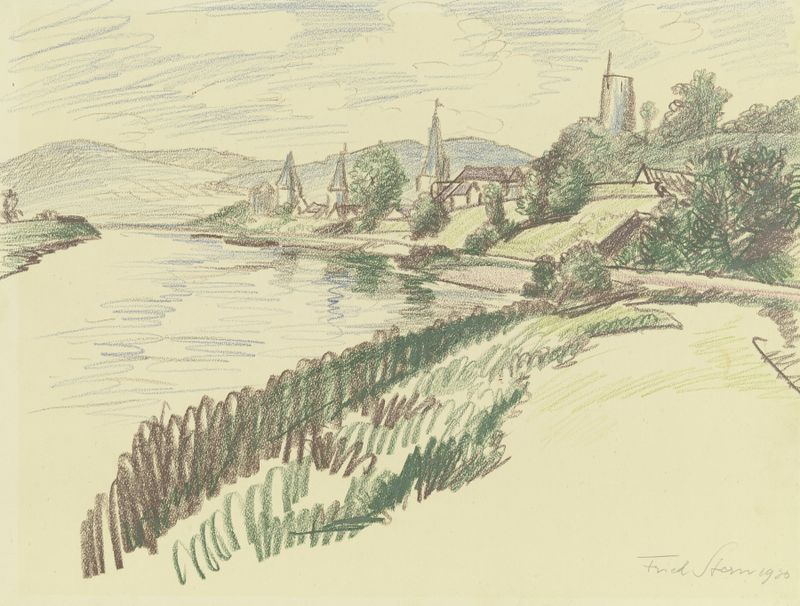
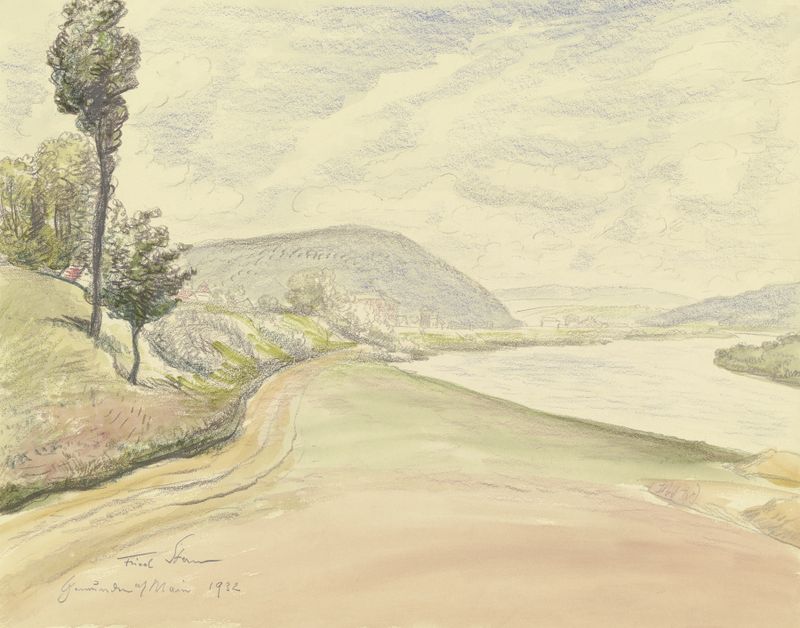
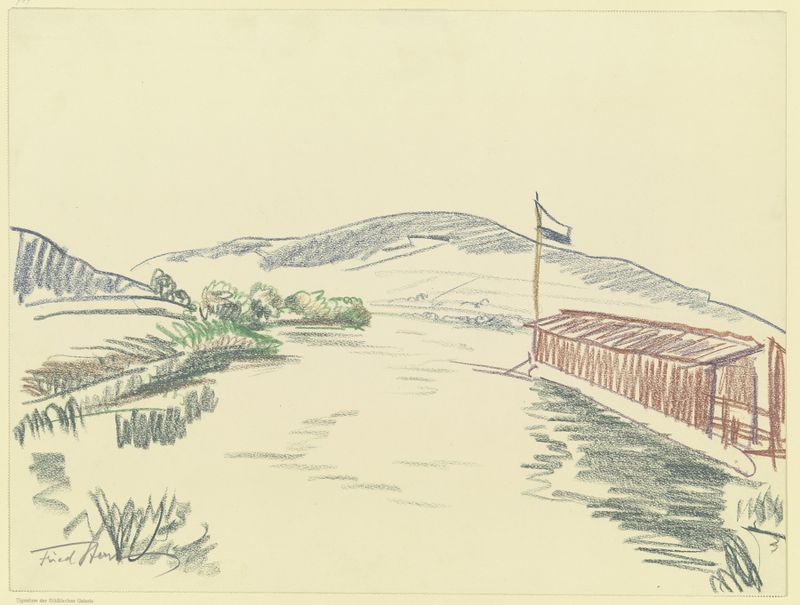
Could beauty survive in a century of chaos? In Gemünden am Main, Fried Stern offers a delicate answer, revealing a world that transcends the turmoil surrounding it. With every brushstroke, he invites viewers to find solace in the unassuming moments of life, even as uncertainty looms beyond the canvas. Look to the center of the painting, where the gentle curve of the river embraces a quaint town nestled against a backdrop of rolling hills. The soft pastels of dawn break against the cool blues of the water, inviting warmth even before the sun fully rises.
Notice how the rooftops, kissed by early light, reflect a serene harmony, while the graceful lines of the trees stand as sentinels of time. Every detail, from the rippling water to the distant church steeple, is meticulously crafted, showcasing Stern's deft technique and intimate understanding of color. Yet, beneath this tranquil façade lies an emotional complexity. The juxtaposition of the calm river and the encroaching shadows suggests an underlying tension — a reminder that beauty often flourishes amidst adversity.
The interplay of light and dark accentuates the fleeting nature of peace, hinting at the fragility of hope in uncertain times. Each element, while picturesque, emphasizes a poignancy that resonates deeply, urging the viewer to reflect on their own experiences of beauty against a backdrop of chaos. In 1930, Fried Stern created this painting during a period marked by political and social upheaval in Germany. As the Weimar Republic faced tremendous challenges, artists sought new means to express their realities.
Stern's work captured not only the idyllic landscape of Gemünden am Main but also a broader desire for stability and beauty in an increasingly tumultuous world. This painting stands as a testament to the strength of the human spirit, even in the face of impending change.