At the Nidda — History & Facts
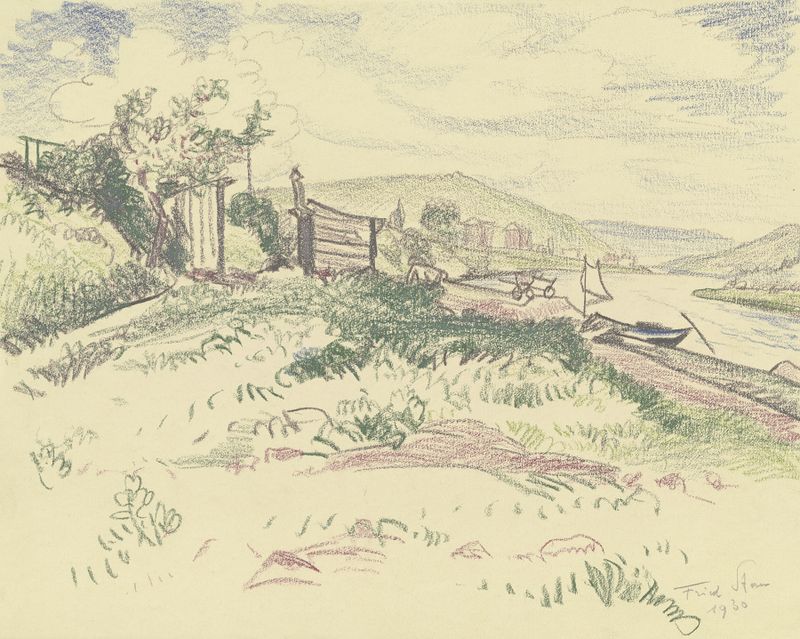
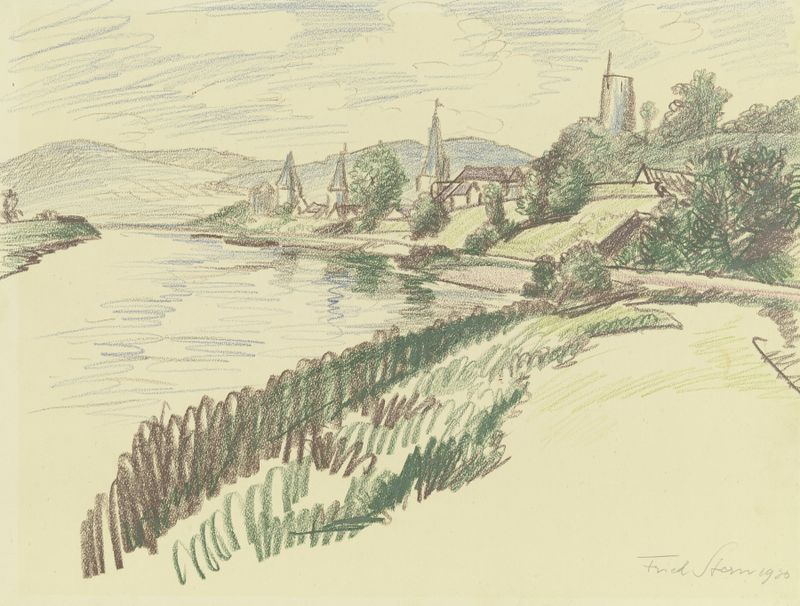
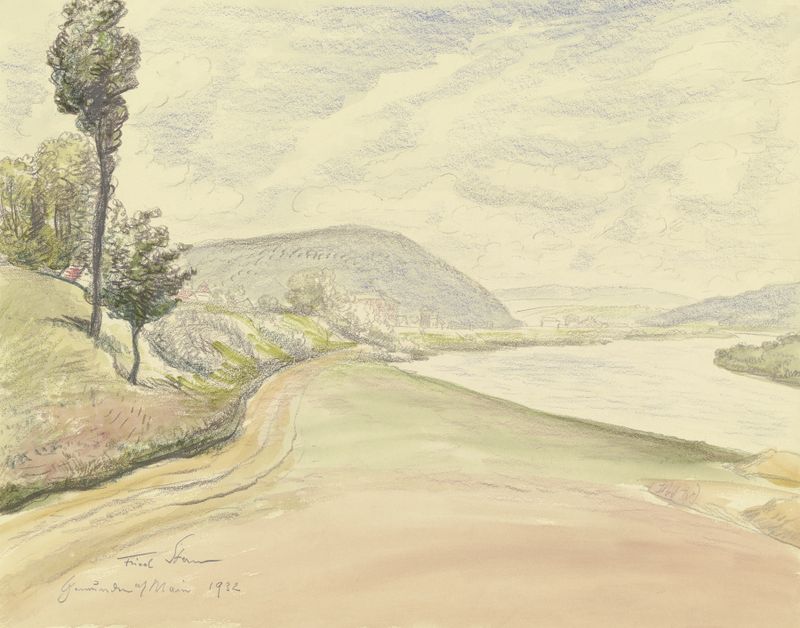
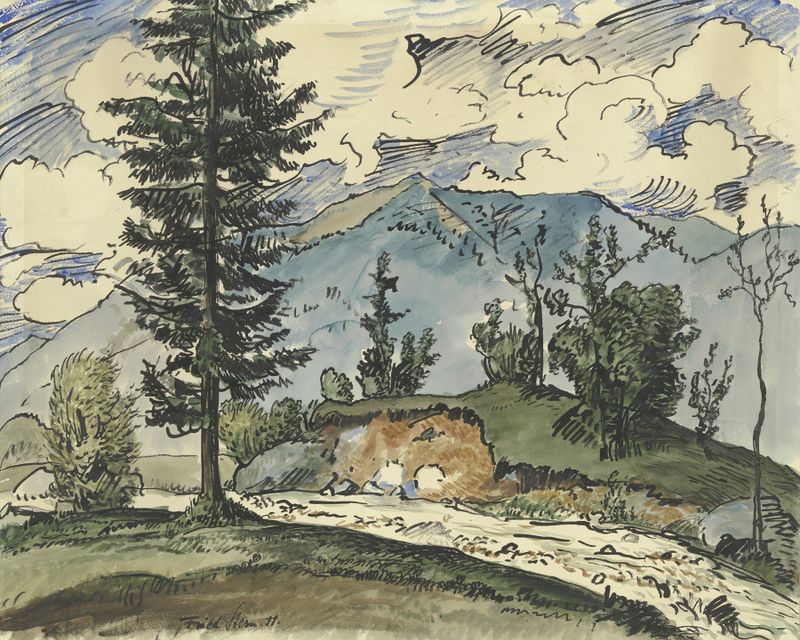
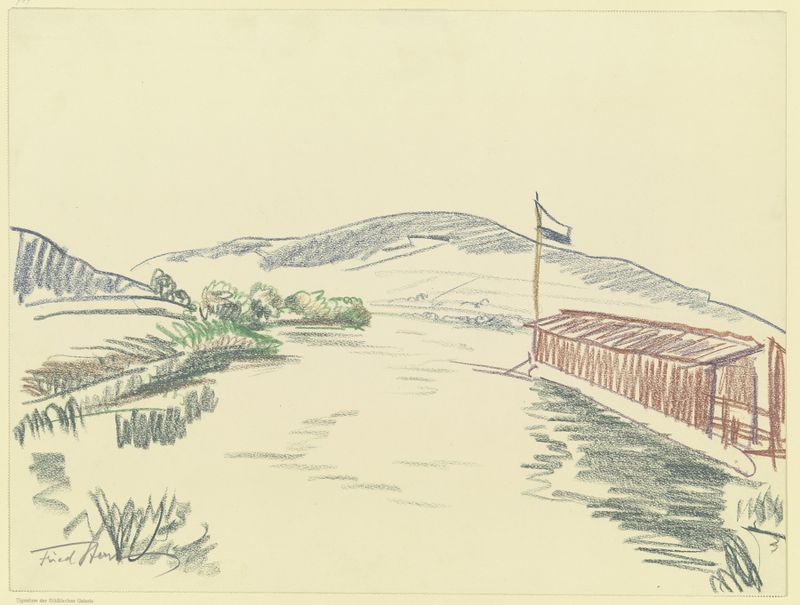
Could a single brushstroke hold eternity? In At the Nidda, bold colors intertwine to evoke a sense of timelessness, inviting the viewer to linger in the moment captured. Look to the bottom left, where vibrant greens and deep blues coalesce, forming the tranquil waters of the Nidda River. The way the light dances across the surface creates an illusion of movement, while the surrounding foliage bursts forth in a symphony of warm yellows and earthy browns. Notice how the palette shifts, a harmonious blend revealing the artist's masterful command of color, a technique that draws the eyes across the canvas, creating a visual rhythm that soothes yet excites. The interplay of light and shadow speaks of dichotomies—stillness and flow, warmth and coolness, nature and human presence.
Abstracted shapes suggest figures amid the trees, hinting at fleeting moments of connection, while reflections in the water whisper of secrets shared in quiet solitude. Each brushstroke conveys an emotion, a story waiting to be uncovered, as if inviting viewers into a deeper dialogue with the landscape. Fried Stern painted At the Nidda in 1928, during a transformative period in the art world, marked by the rise of modernism and a resurgence of interest in nature. Living in Germany, he was influenced by the artistic shifts around him, drawing inspiration from both expressionism and impressionism.
This piece reflects his exploration of vibrant color and the emotional resonance of the natural world, encapsulating a moment in time that resonates still today.