
At the hill of the Norbertines’ monastery — History & Facts
Could beauty survive in a century of chaos? The question lingers as one gazes upon the serene yet haunting landscape that unfolds beneath the artist's brush. Shadows stretch and bend, hinting at the tumultuous undercurrents of a world caught between tradition and modernity. Look to the center of the canvas, where the majestic hill rises, anchored by the solemnity of the Norbertines' monastery. Notice how the light dapples through the trees, creating a dance of contrast between illumination and shadow.
The palette, rich with earth tones and muted greens, evokes a sense of tranquility, yet the looming shadows suggest an unspoken tension, as if the landscape is both a sanctuary and a reminder of the darkness encroaching upon it. Delve deeper into the intricate details—notice the figures in the foreground, their postures a blend of reverence and introspection. They are not mere spectators but participants in a narrative that hints at the clash of faith and doubt. The interplay of light and shadow throughout the piece mirrors the emotional complexities of existence—moments of hope intertwined with the inevitability of loss, reflecting the artist's own grappling with the era's existential crises. In 1910, while painting this work in Poland, Jacek Malczewski was navigating a transformative period in his life and the art world—a time marked by a search for identity amid political upheaval.
The artist was deeply influenced by Symbolism, seeking to convey profound meanings through allegory and symbolism. As he painted, he wrestled with the notion of permanence in a society facing rapid change, allowing his brush to capture a moment that is both timeless and transient.
More Artworks by Jacek Malczewski
Browse all →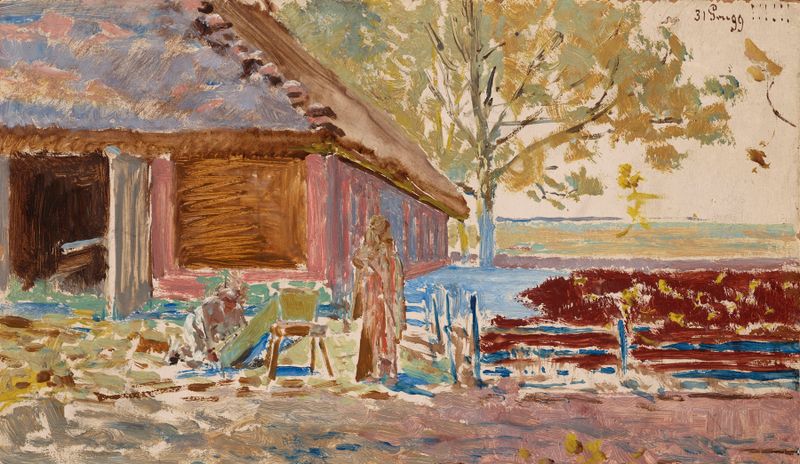
End of the century – 31 December 1899, landscape with a coffin
Jacek Malczewski
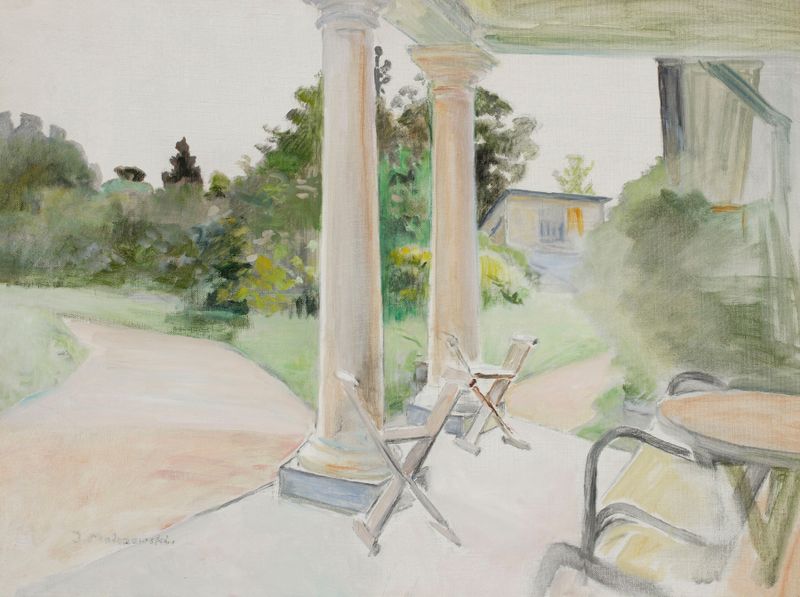
View from the porch in Lusławice
Jacek Malczewski

Valley of the Vistula from Zwierzyniec
Jacek Malczewski
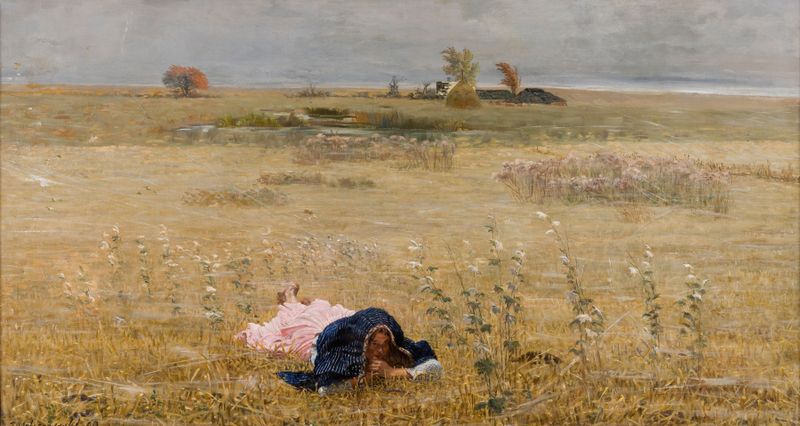
In Autumn
Jacek Malczewski

Landscape from the Vistula
Jacek Malczewski

Landscape from the Banks of the Vistula
Jacek Malczewski

Manor house in Lusławice
Jacek Malczewski

Landscape
Jacek Malczewski
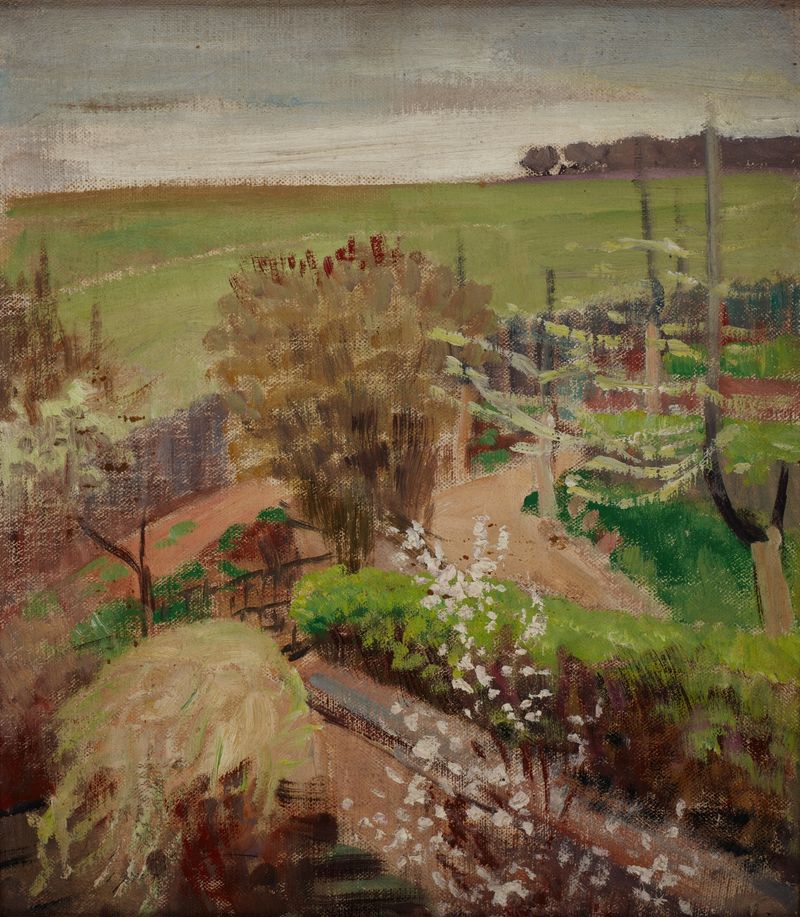
Spring Landscape from the Countryside
Jacek Malczewski

Country Farm
Jacek Malczewski





