Autumn — History & Facts
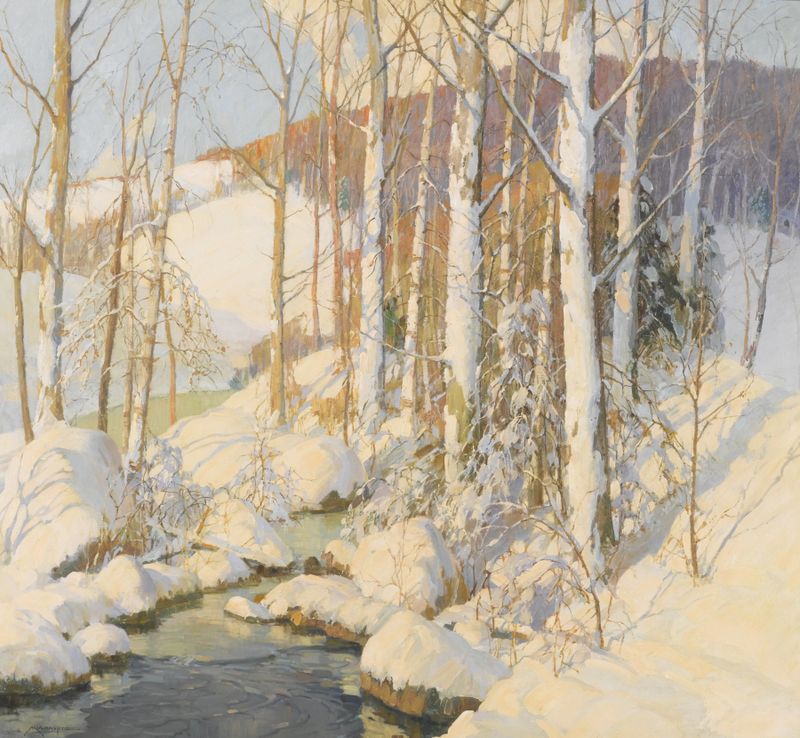
What if silence could speak through light? In the delicate interplay of hues and shadows, we find a moment where the world seems to pause, inviting us to reflect. Look to the left at the warm embrace of golden yellows and ochres that stretch across the canvas, where soft light filters through branches. Notice how it bathes the landscape in a gentle glow, casting elongated shadows that dance across the ground. The composition is masterfully balanced, with the rhythmic arrangement of trees drawing the eye deeper into the scene, while the subtle blending of colors evokes a sense of serene transition, as if nature itself is breathing in sync with the viewer. Amidst the beauty lies a poignant juxtaposition: the vibrancy of autumn leaves against the encroaching stillness of winter.
The fallen foliage whispers of decay, yet it also vibrates with a fierce energy, illustrating life’s cyclical nature. The brushwork varies from meticulous detail in the foreground to looser strokes in the background, creating depth and inviting contemplation. Each layer of paint serves as a reminder of the fleeting moments we often overlook, reminding us that transcendence can emerge from what is seemingly mundane. Frederick John Mulhaupt created this piece during a period when American art was evolving, likely influenced by the Impressionist movement, which emphasized capturing light and atmosphere.
Working predominantly in the early 20th century, he found inspiration in the natural landscapes of New England. His pursuit of capturing the ethereal quality of light, particularly in autumn, resonated with contemporary artists seeking to convey emotion through their work.